Storied Interiors
Some houses announce themselves before you ever cross the front door. Cliveden is one of them. From its formal terraces to the sweep of the front drive, every line hints at power and just good taste. Perched above the Thames in Buckinghamshire, the estate was rebuilt in the 1850’s by Sir Charles Barry, whose command of proportion also defines London’s Houses of Parliament. Four decades later, William Waldorf Astor would make it his own—layering Italianate architecture with English romanticism, sculpted gardens, and storied interiors. Dive into the interiors below, and check out this link for the gardens and exteriors.
The Great Hall | Setting the Tone
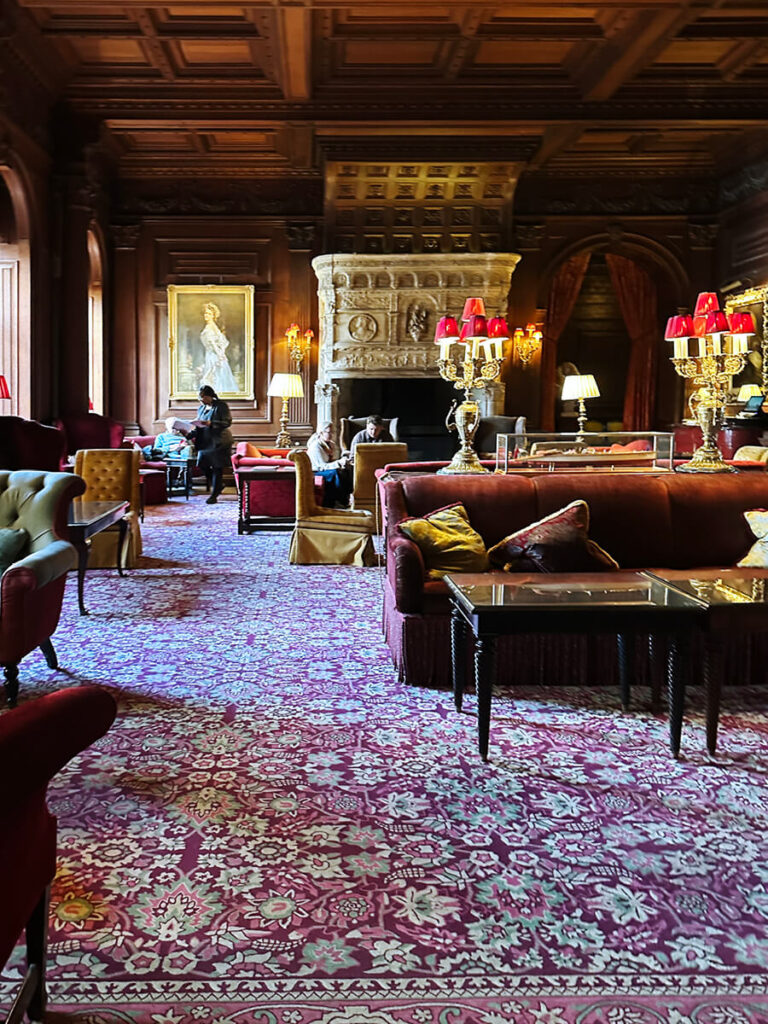
The Great Room—or Great Hall—sets the tone for the interiors. Lord Astor created this double-height space by combining three original rooms, transforming the house’s core into a grand reception hall. Architect Frank Pearson paneled the walls and ceiling in English oak, adding carved Corinthian columns and floral garlands. The effect is richly layered but still proportioned.
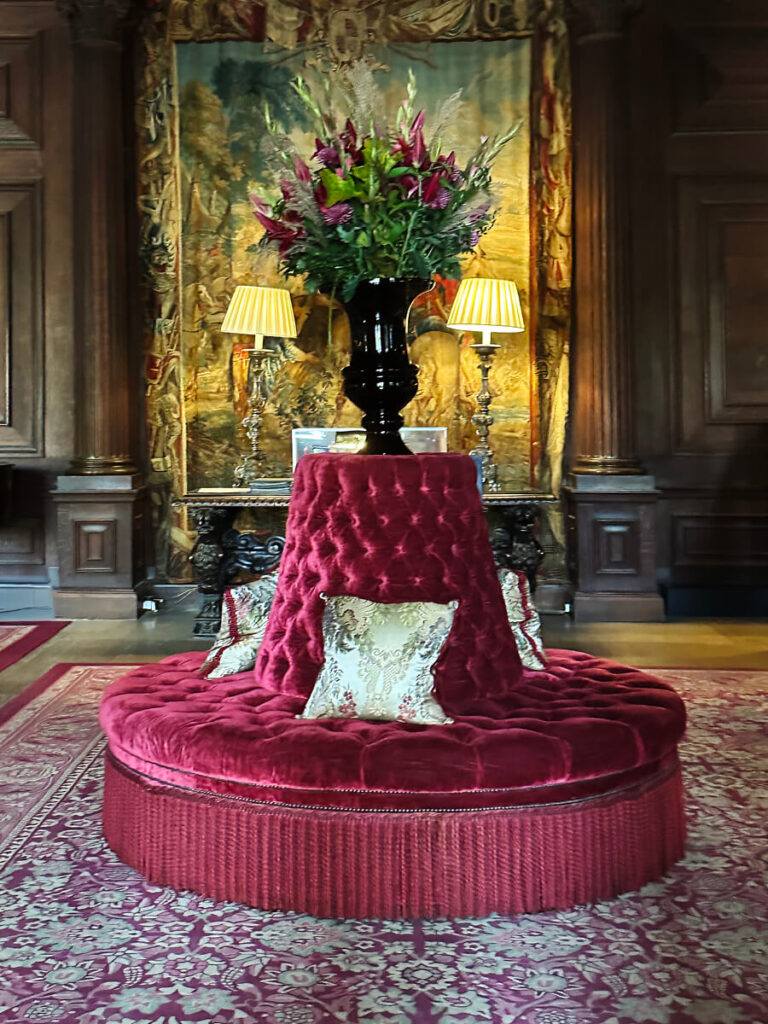
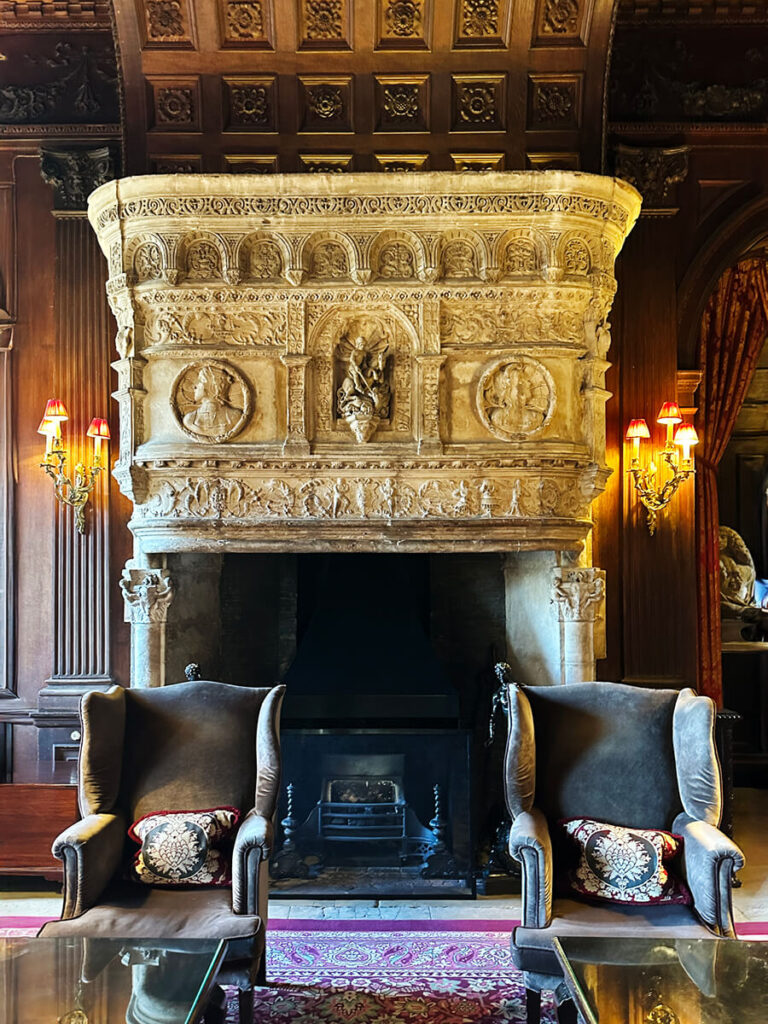
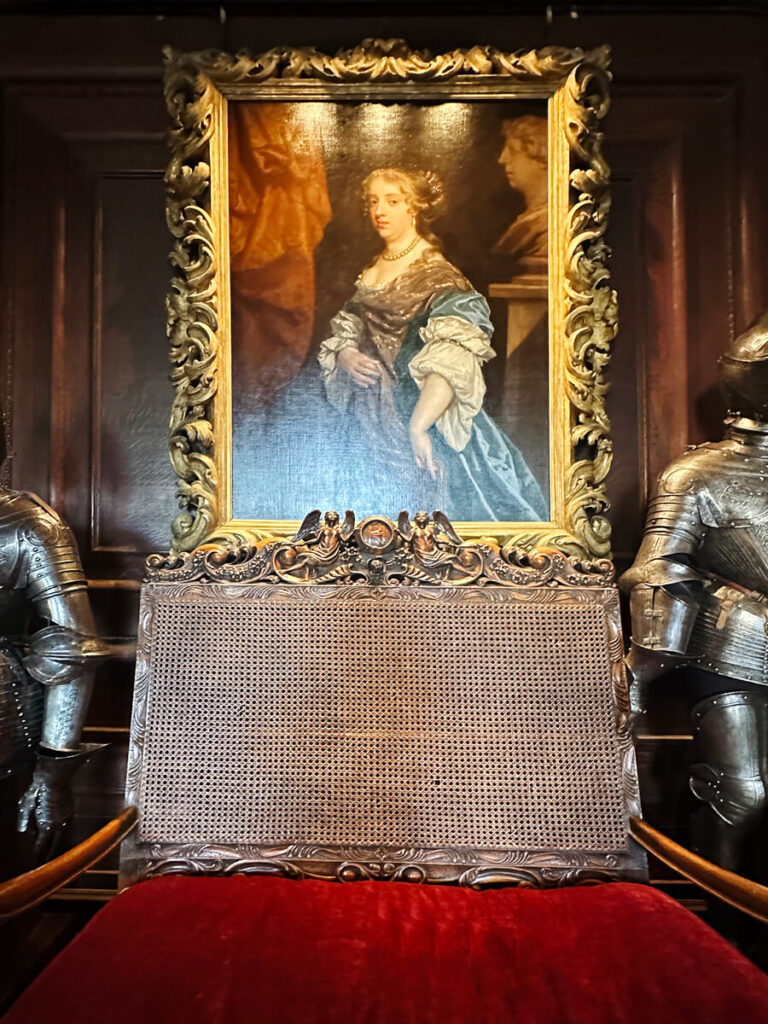
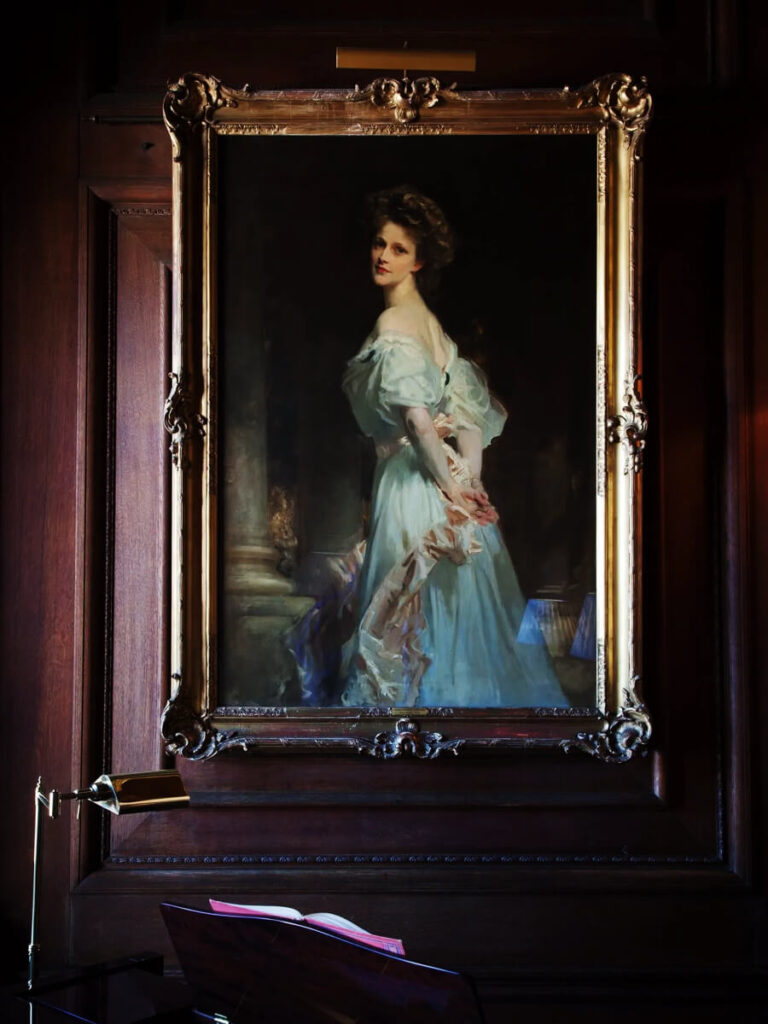
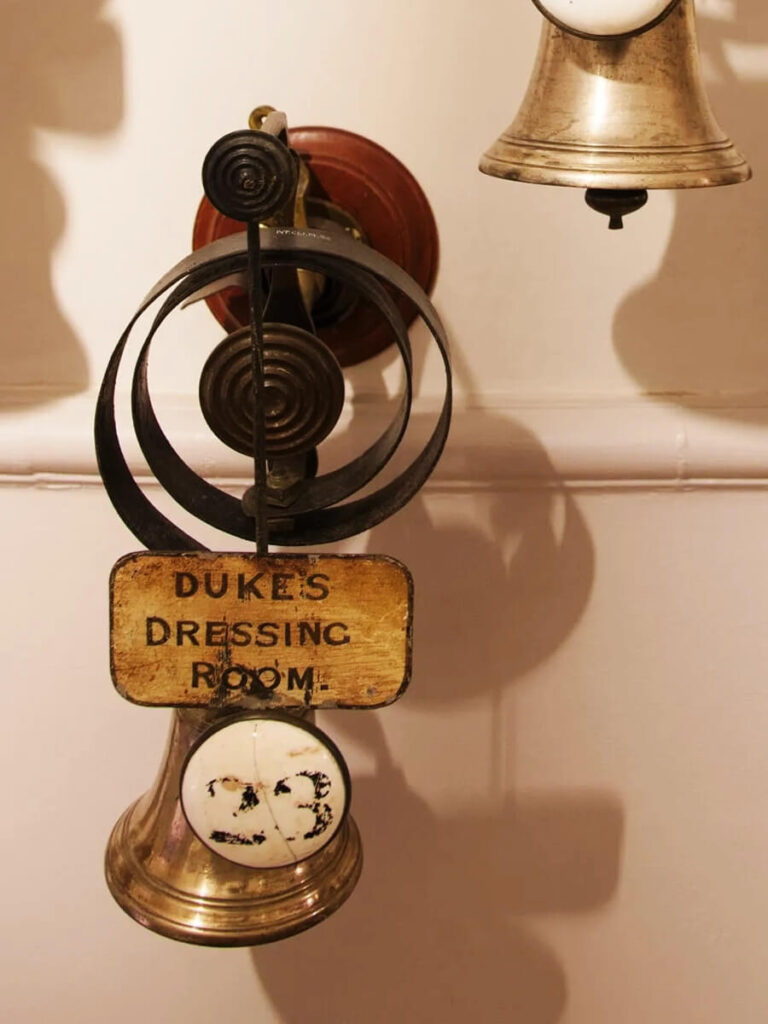
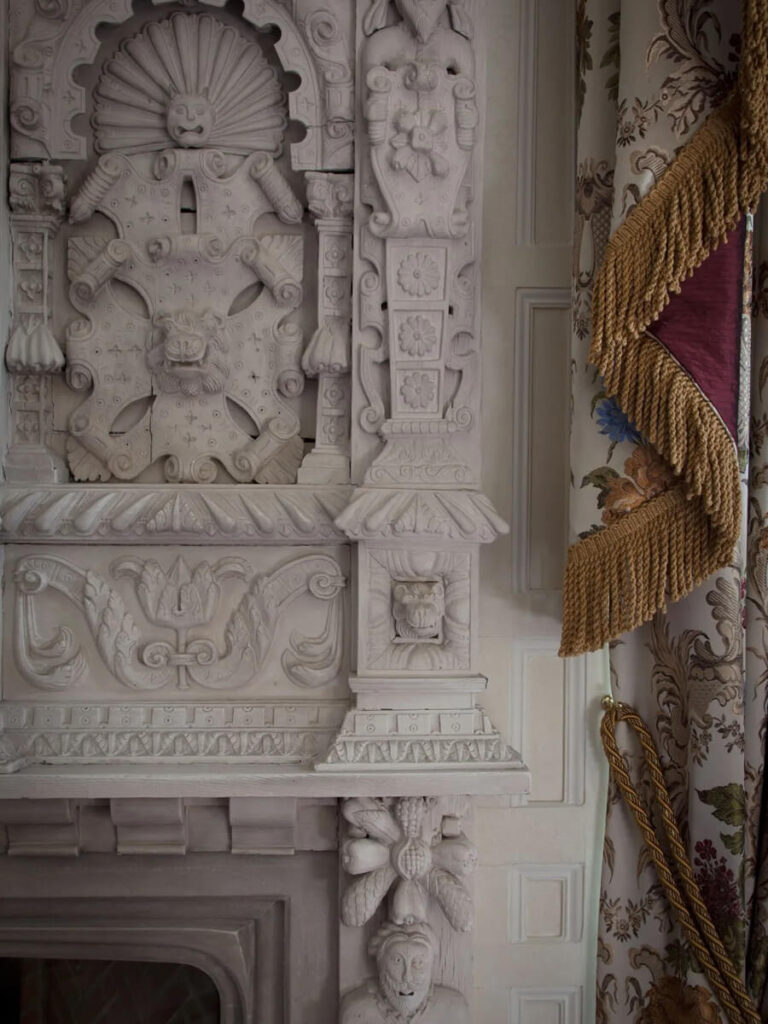
As you enter, a 19th-century French borne settee—deep red velvet, tufted, and fringed—circles a pedestal topped with fresh flowers. Persian rugs echo those same tones. Lamps with small red shades scatter pools of light across dark wood. Upholstered groupings of slipper chairs and low tables invite conversation. A 16th-century stone fireplace purchased from the 1893 Frederick Spitzer sale in Paris; anchoring the room’s symmetry and connects it to the Astors’ taste for European antiques. I have a historic fireplace obsession, and I’ve never seen anyhign like this one. The eye continues to travel to a portrait by John Singer Sargent, of Nancy Astor herself. Further, around the room, suits of armor, carved doors, and oil paintings reinforce the room’s theatrical mood. Beyond the hall, a smaller room serves as the bar. I paused for the service bells dor the Duke’s dressing room, a quiet reminder of the estate’s former rhythm.



The Stair | Art Meeting Architecture
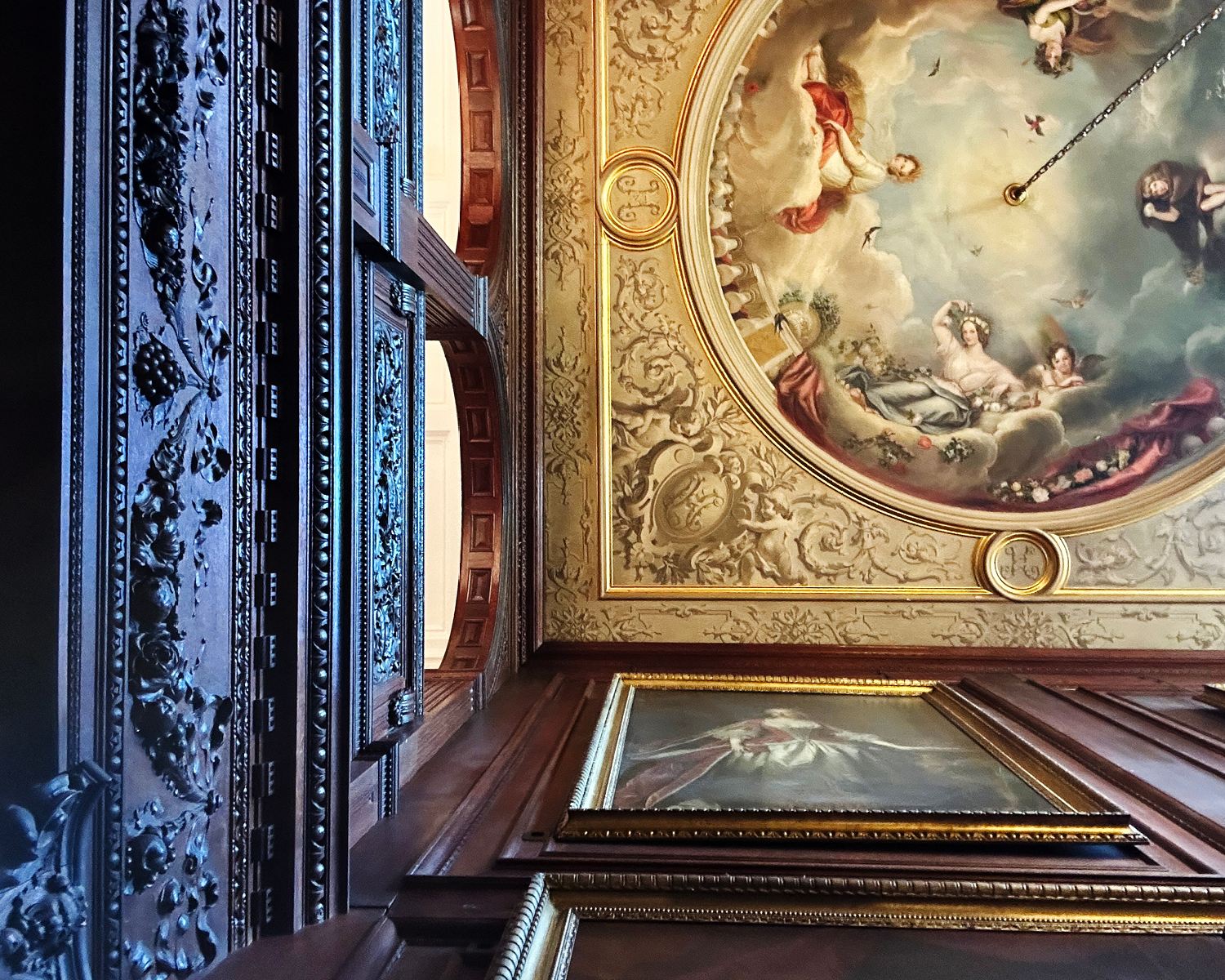
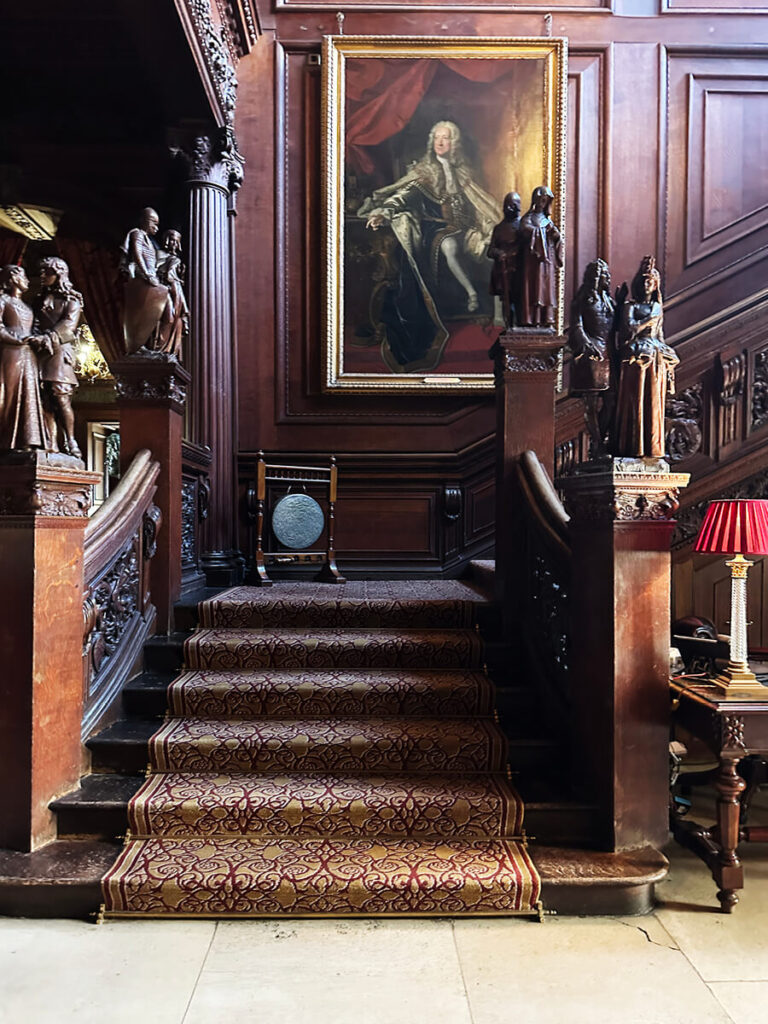
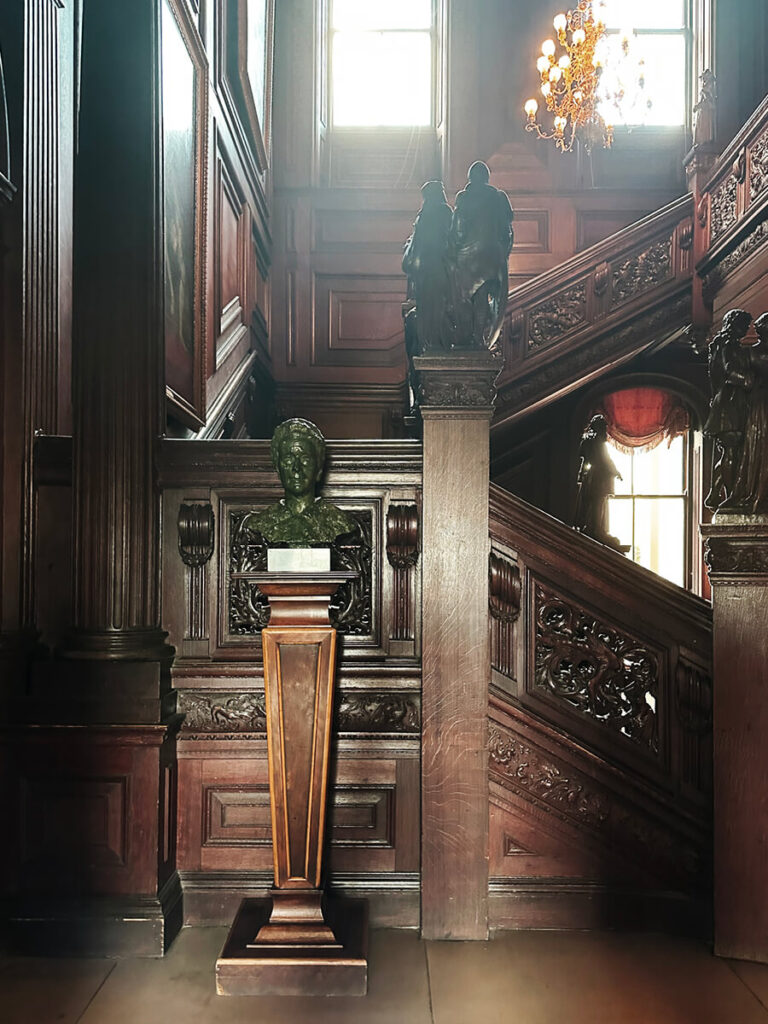
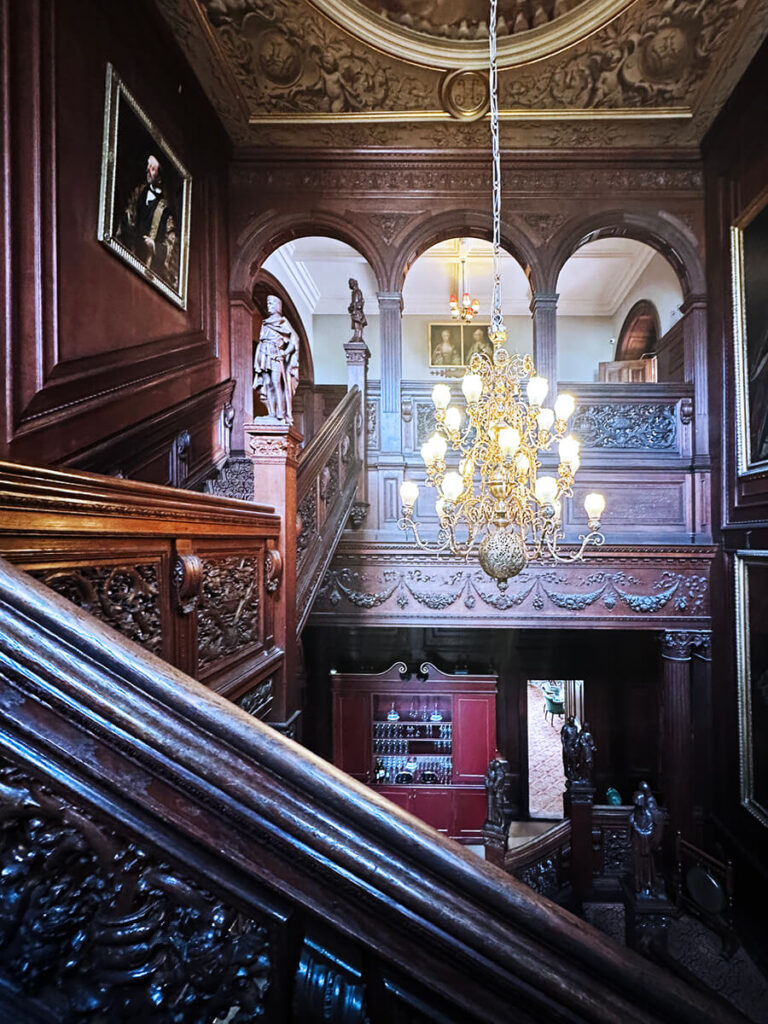
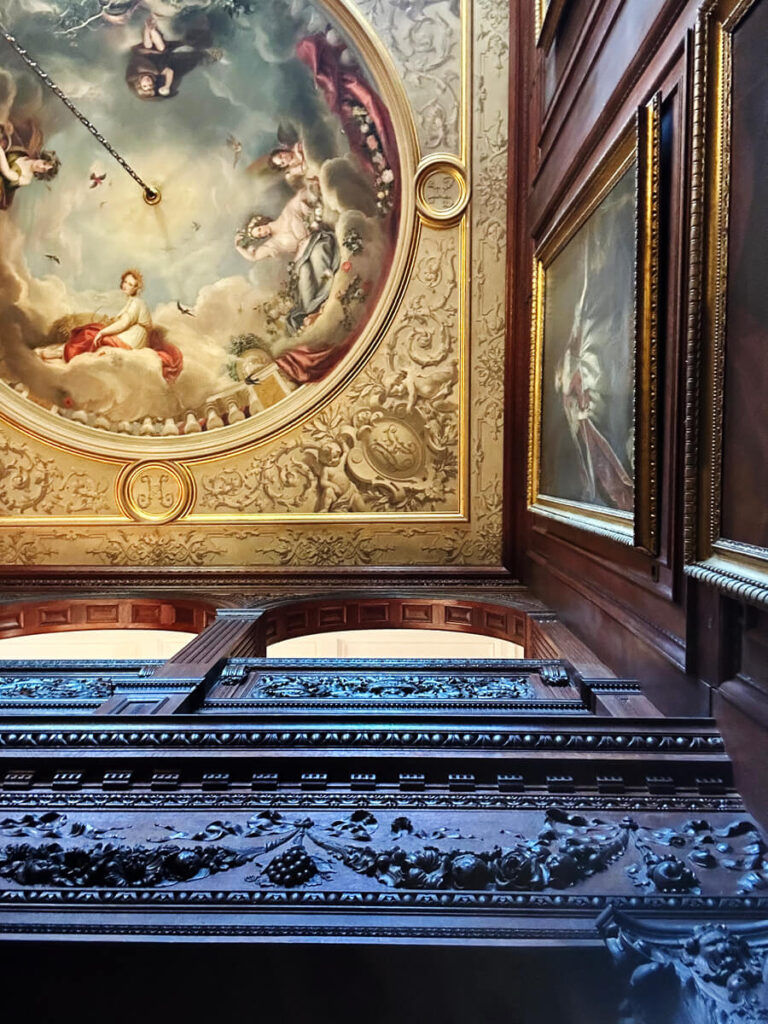
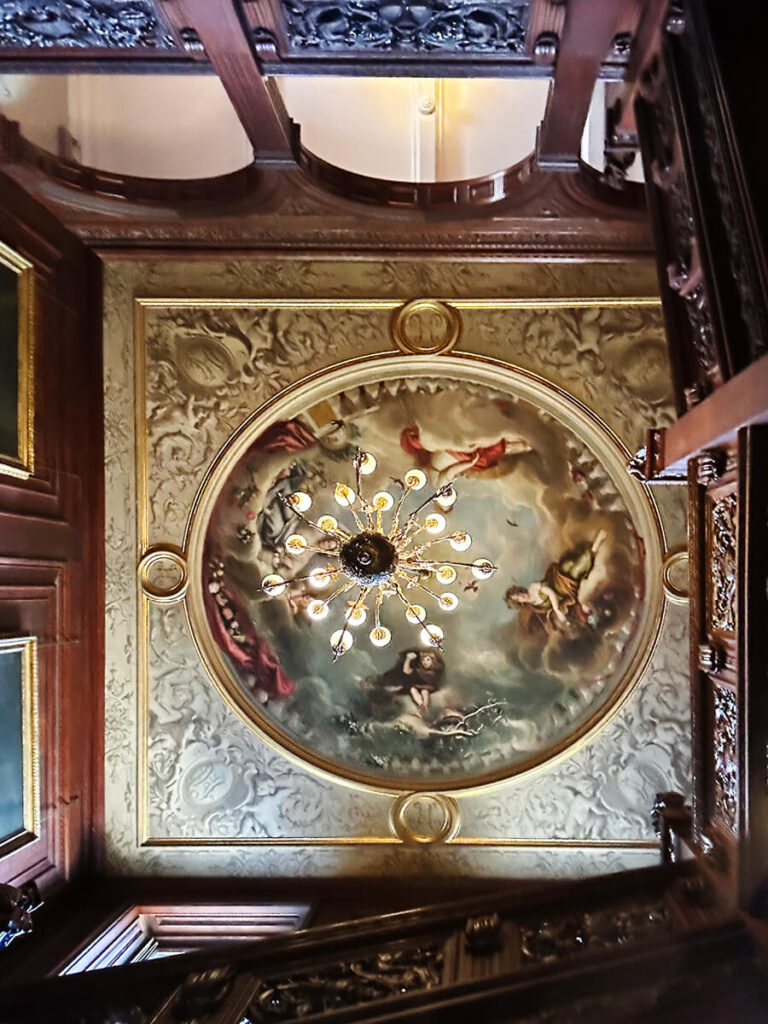
The staircase is also a sculptural centerpiece. Charles Barry designed the original stair hall in 1851, and the carved woodwork still reflects his vision of Gothic-revival detail. French artist Auguste Hervieu painted the ceiling mural above depicting the Sutherland children (former owners) as the four seasons, the only surviving artwork from Barry’s interior. Carver W. S. Frith added the intricate newel-post figures, each representing a former owner of Cliveden.
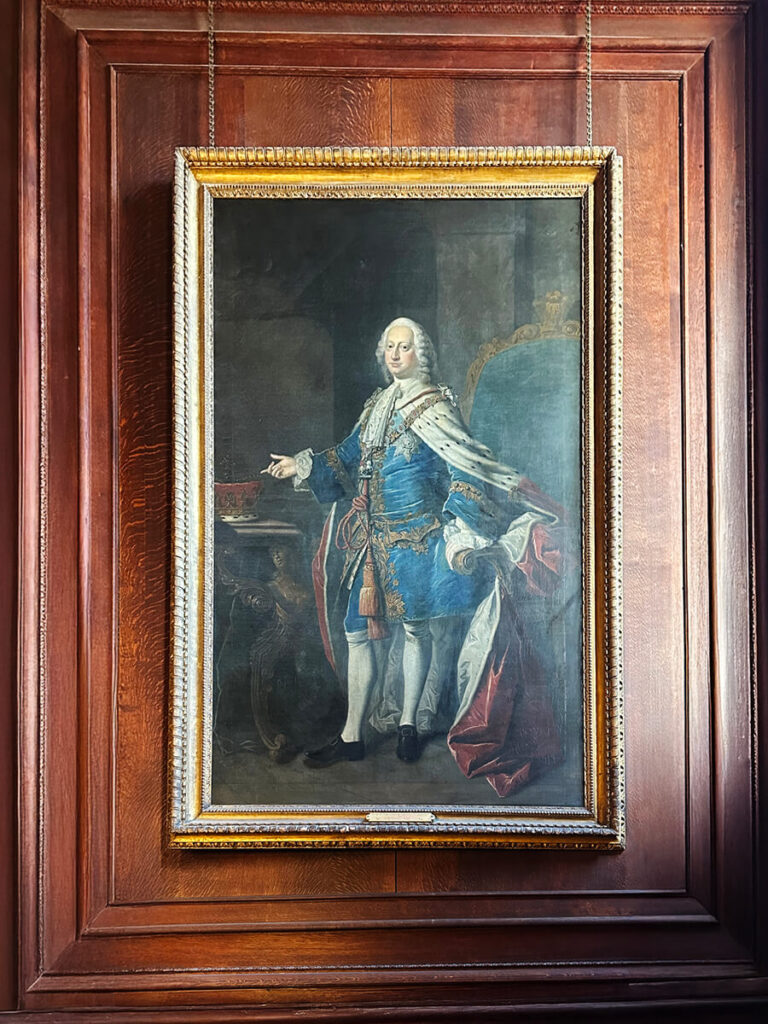
The stairs creak underfoot—solid oak, worn smooth by time. Delicate carvings scroll up the railings, framing vignettes of couples and mythic figures. Portraits line the ascent, likely more references to past owners. Each close-up reveals the interplay between carving and paint—wood grain meeting gold leaf, art meeting architecture.
The Dining Room | Grand but Simple
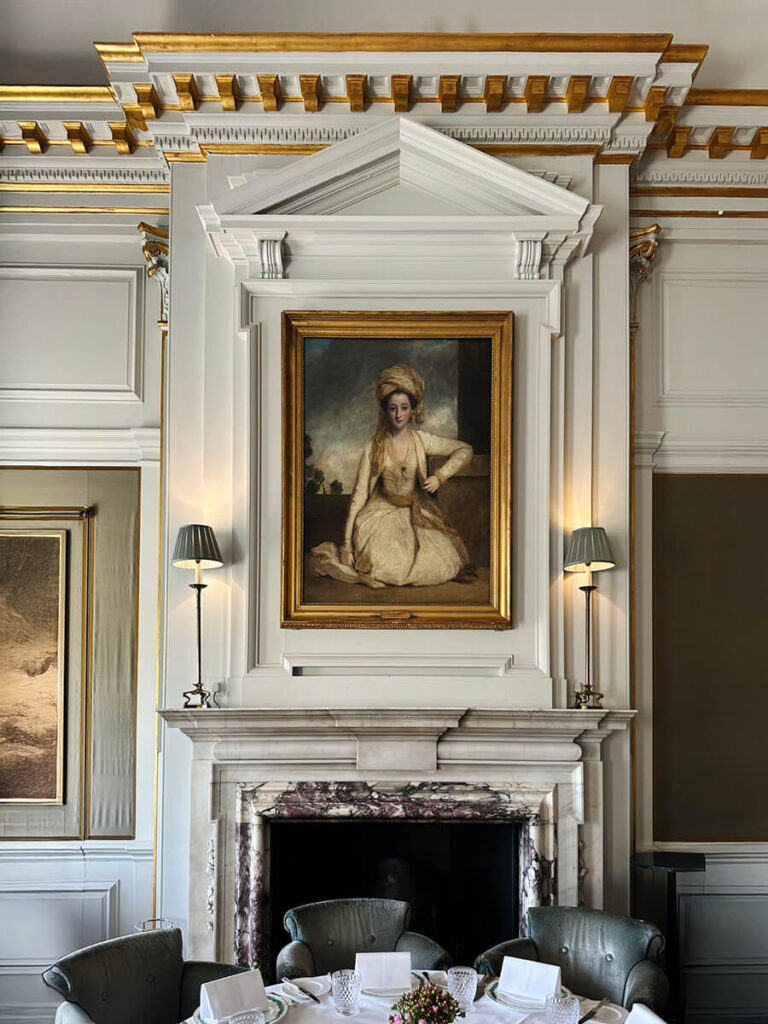
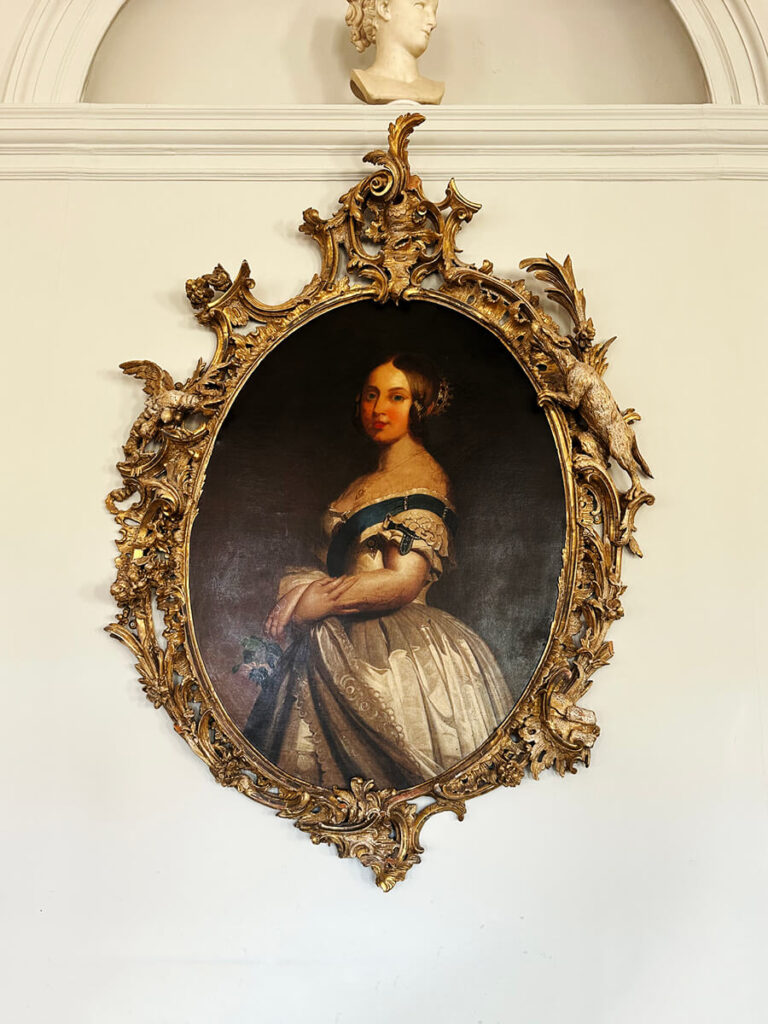
This isn’t the grand French Dining Room—that one features boiserie imported from the Château d’Asnières near Paris, installed by Lord Astor. During my visit, that space hosted a wedding rehearsal, so I turned to a secondary dining room nearby; really, the original drawing room. Smaller in scale but still pretty, and continuing the story of craftsmanship. Many of the artworks are framed in gold—some grand, some simple—but I paused at one in particular: an ornate oval frame holding a portrait of Queen Victoria.


The Library | A Feminine Counterpoint
The Library, and the pirvate dining space next to it, once served as Nancy Astor’s private sitting room. A boudoir, a smaller and more personal space compared to the other larger drawing rooms. It immediately feels different—smaller, lighter, and just cuter. The mood contrasts sharply with the darker, oak-paneled rooms nearby.
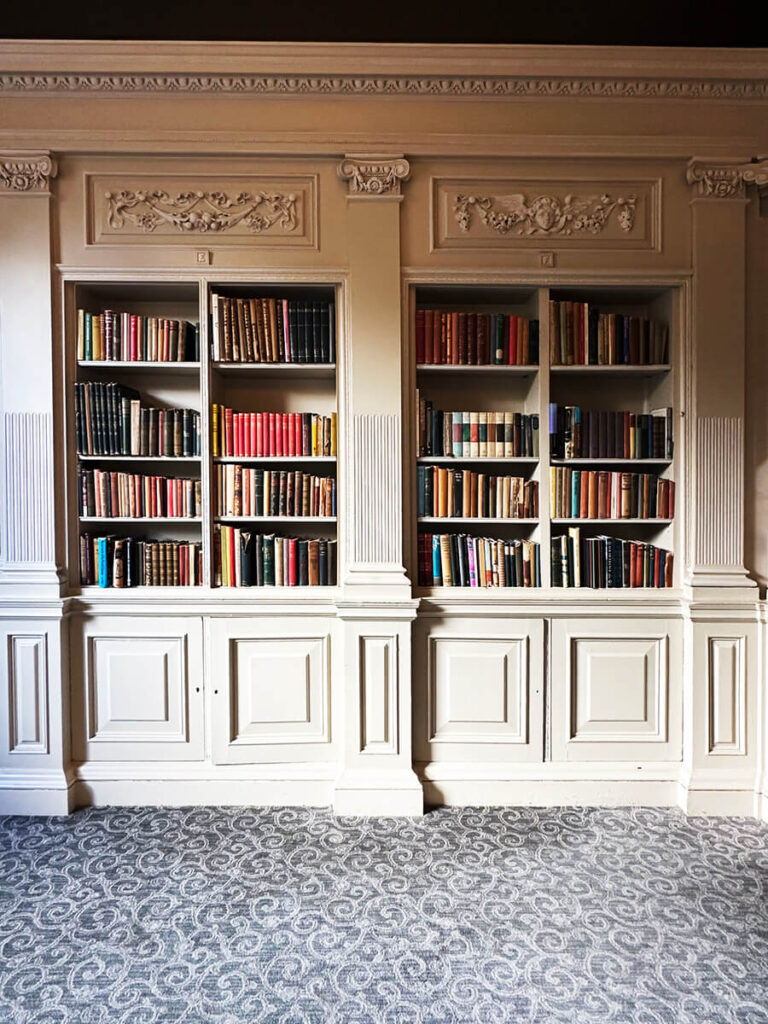
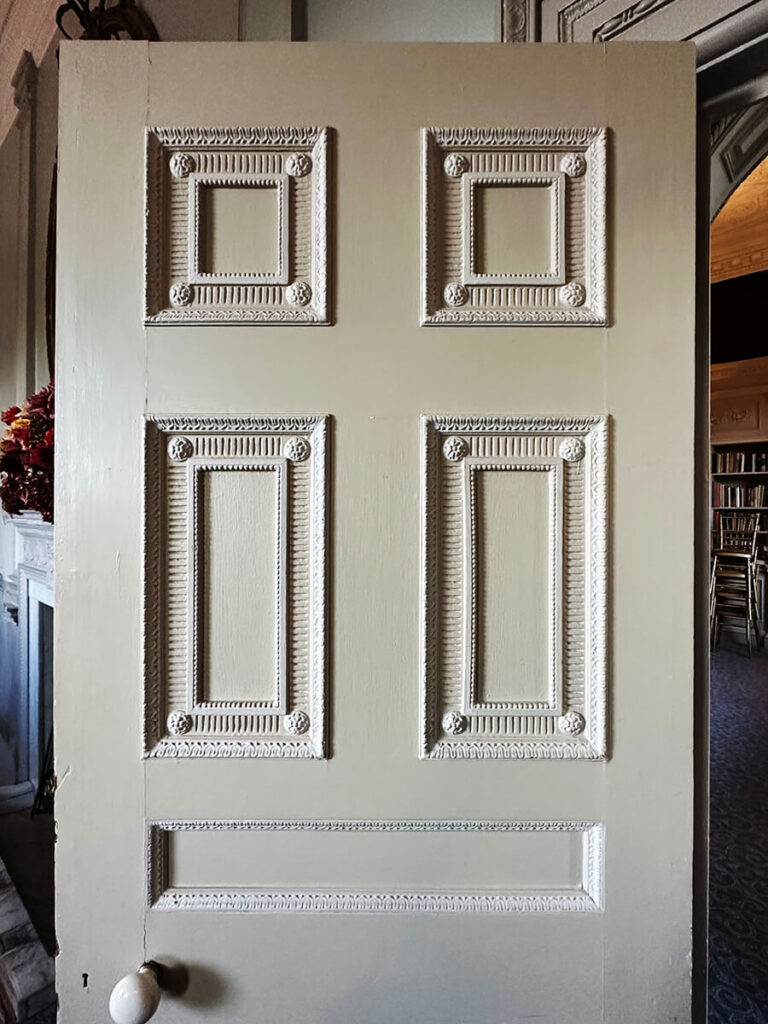
The woodwork is darling—carved floral and fruit swags trail across the upper panels, while each bookcase features a different relief above. Cabinet doors line the lower walls; shelves rise above, separated by fluted columns with Corinthian capitals and an egg-and-dart frieze at the ceiling. A feminine counterpoint to the otherwise masculine energy in the home.

The Corridor | Connecting Formal & Private Realms
A long corridor leads toward the guest suites, connecting the house’s formal and private realms. Historic English manor interiors often relied on galleries and corridors to display art and family portraits, turning circulation space into something special.
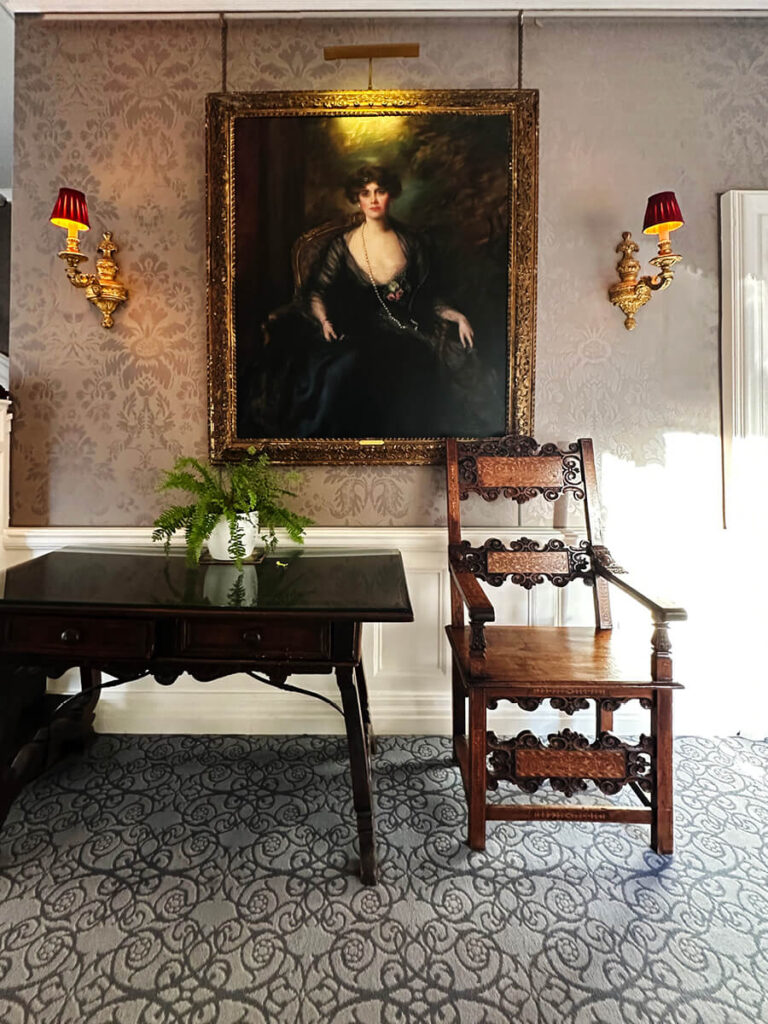
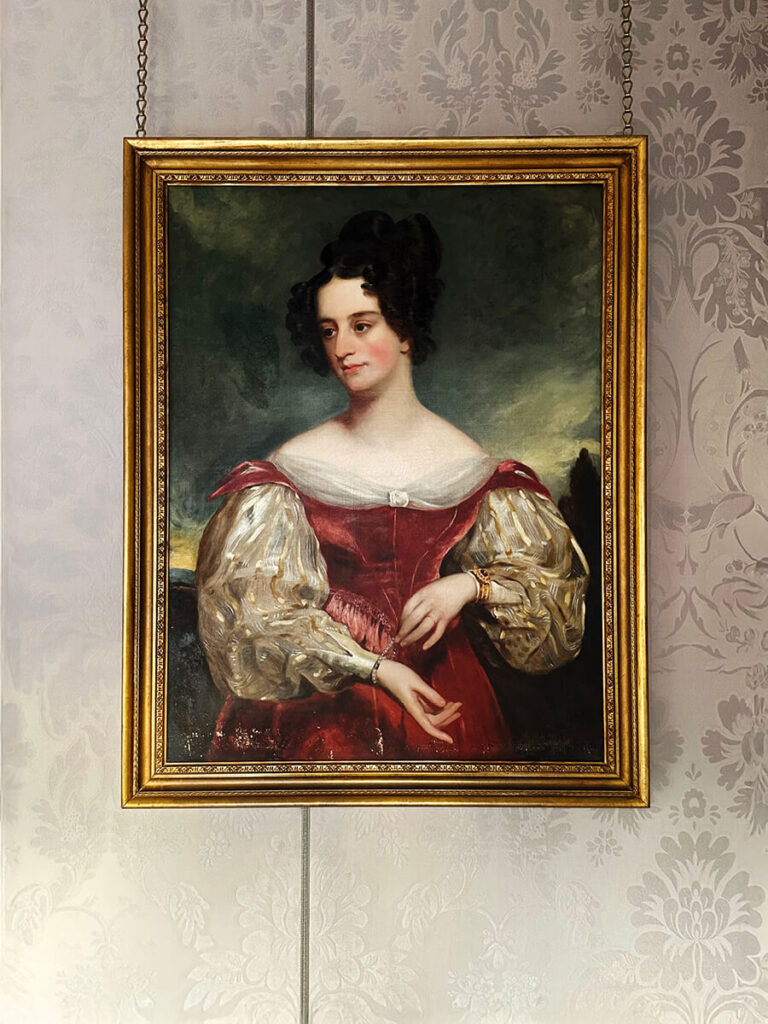
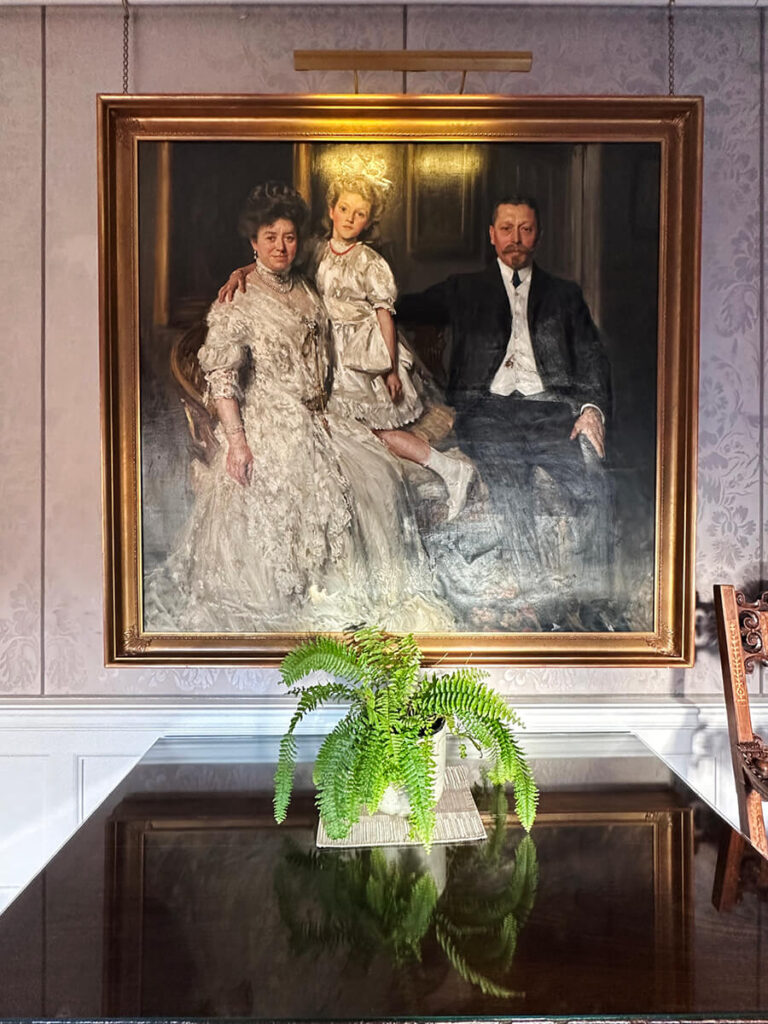
The walls are covered in a light purple damask textile—silk in appearance but likely a newer material, given its flawless surface and exposure to bright sunlight. The color and texture, however, feel entirely at home, a continuation of the house’s original rhythm. Joined by vintage furnishings—small tables with potted ferns, portraits suspended from art rails, and a scattering of antique chairs. The light fixtures repeat the house’s motif of red fabric shades.
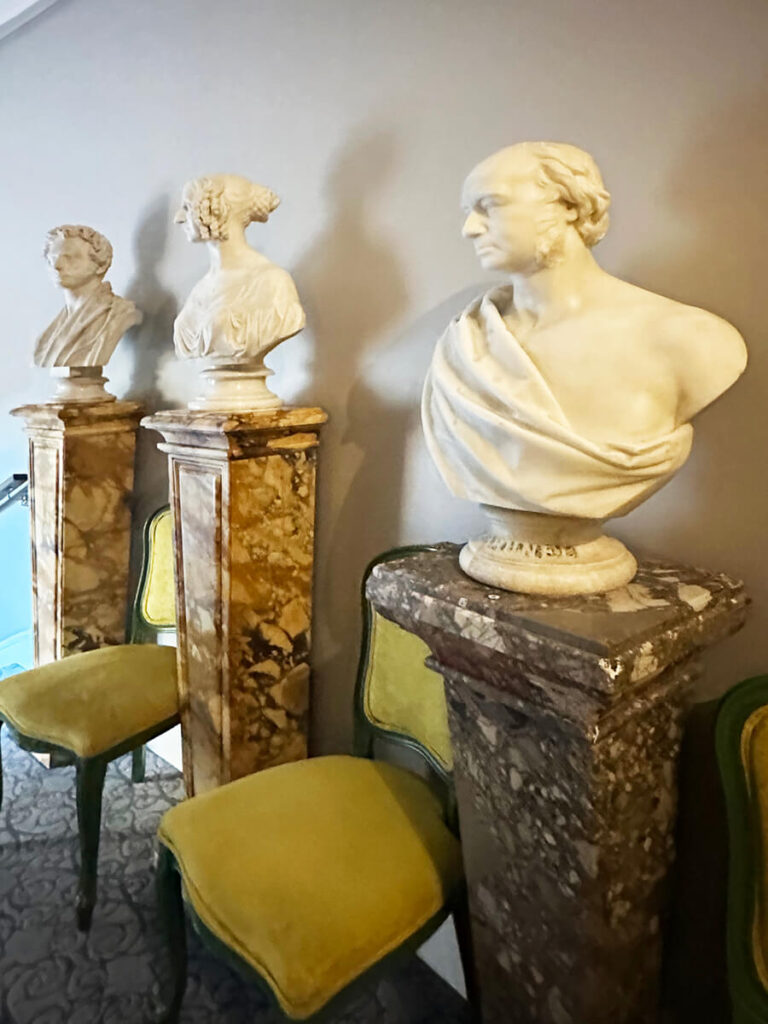
Down a side corridor, a sequence of marble pedestals supports Greco-Roman busts, and stone sculptures of dancing children. A few stored chairs, green Queen Anne–style chair upholstered in chartreuse.. It all felt like extras—spare art and stray chairs lingering in the hall, waiting for their moment to be brought out again.”


The Guest Suites | Styled to the Period
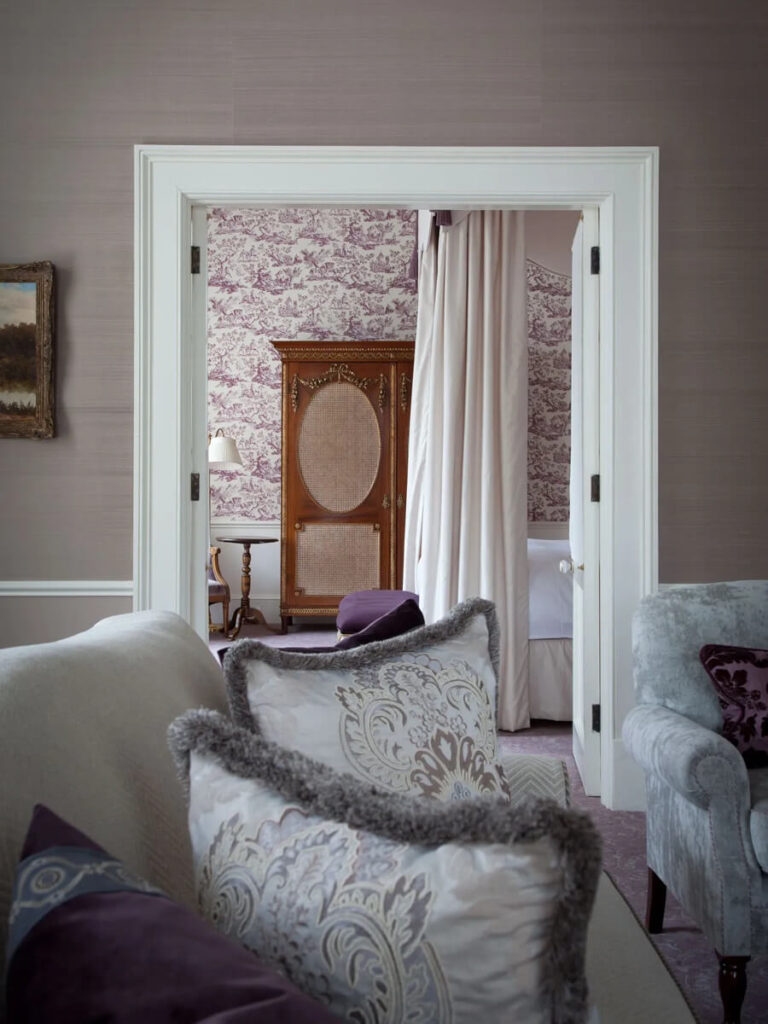
The guest rooms at Cliveden House each carry their own identity, true to the English tradition of naming suites after historical figures and past guests. The Lady Astor Suite, the Blakeney Suite, and the Shrewsbury Suite all retain their individual character. None are replicas or over-restored spaces—they feel lived in, intimate, and carefully preserved.
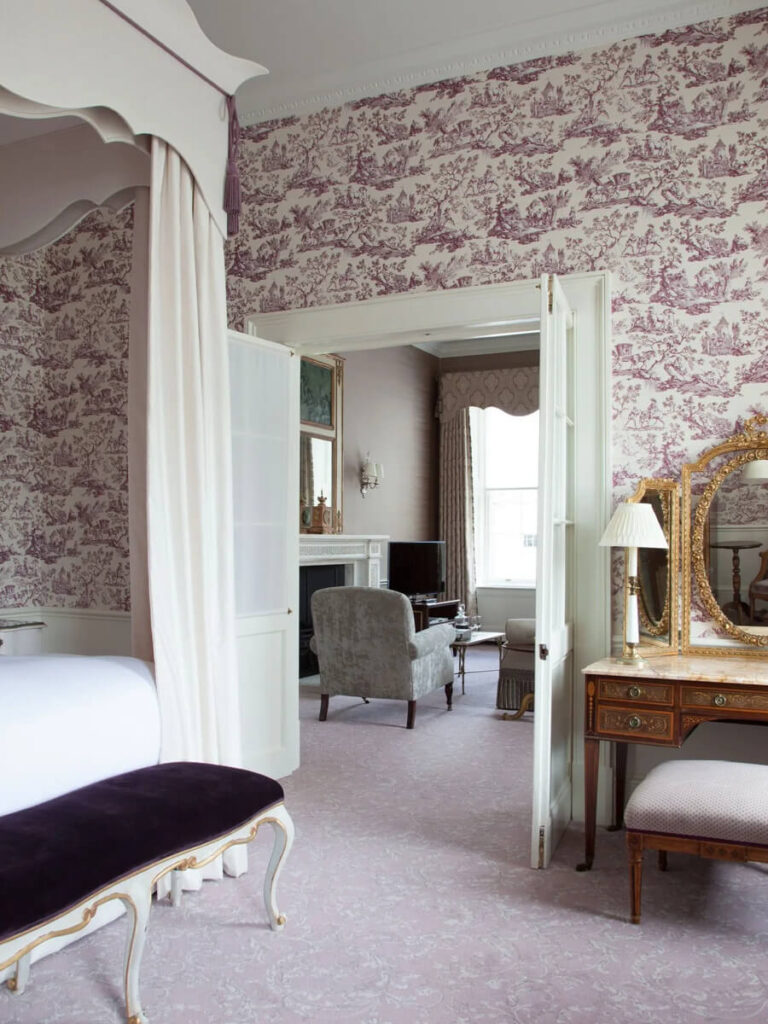
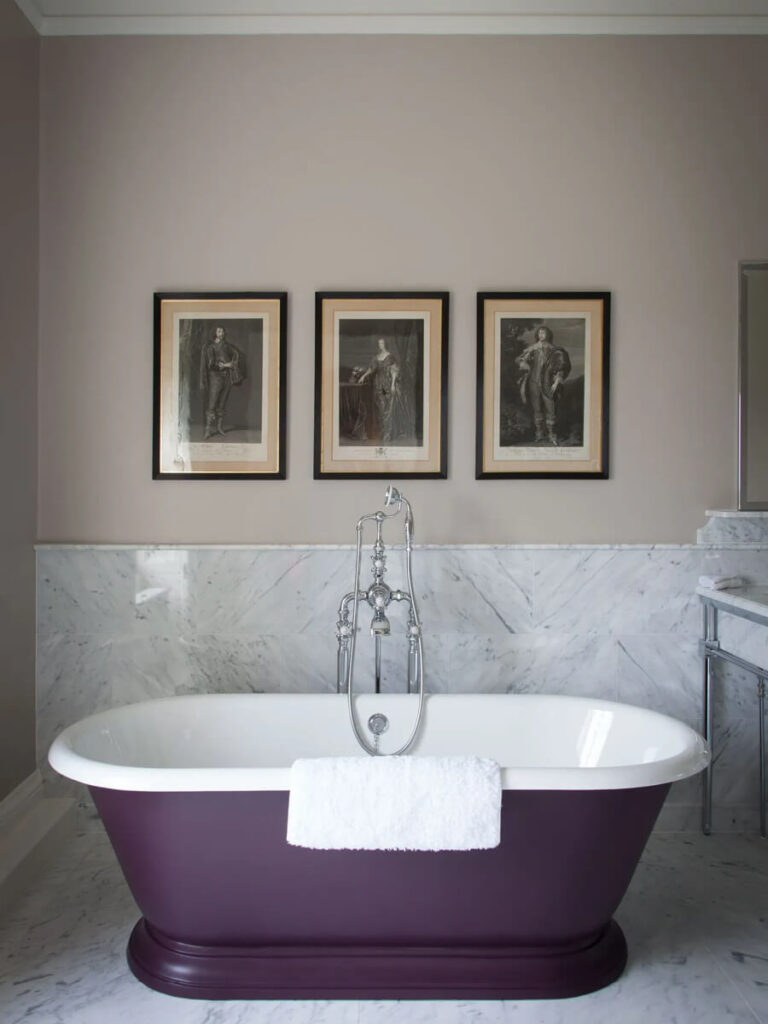
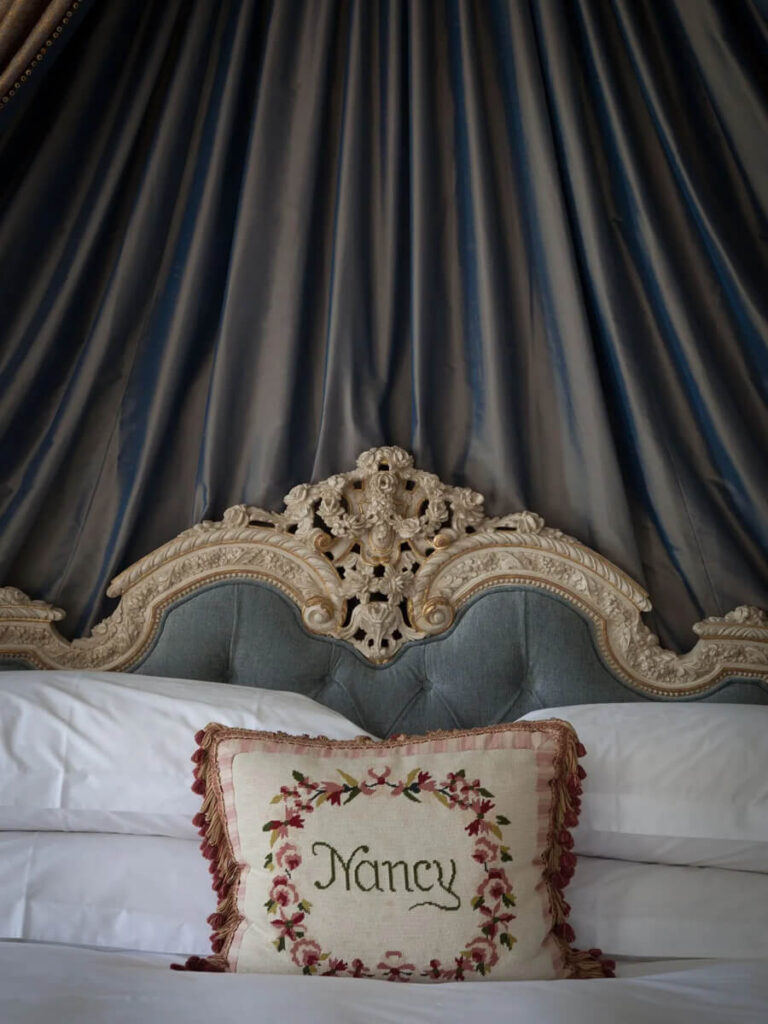
One features toile wallpaper and a canopy bed, every inch styled to the period. Another holds an embroidered “Nancy” pillow—a charming photo prop that nods to Lady Astor herself likeli not left out for public consumption). The purple bathtub in the Blakeney Suite, paired with a polished British-style tub filler, adds a note of modern indulgence while keeping the room’s classic silhouette. In the Lady Astor Suite, an ornate fireplace reminiscent of the French stone hearth in the Great Hall becomes the centerpiece.
Our Private Dinner | Anglo American Heritage
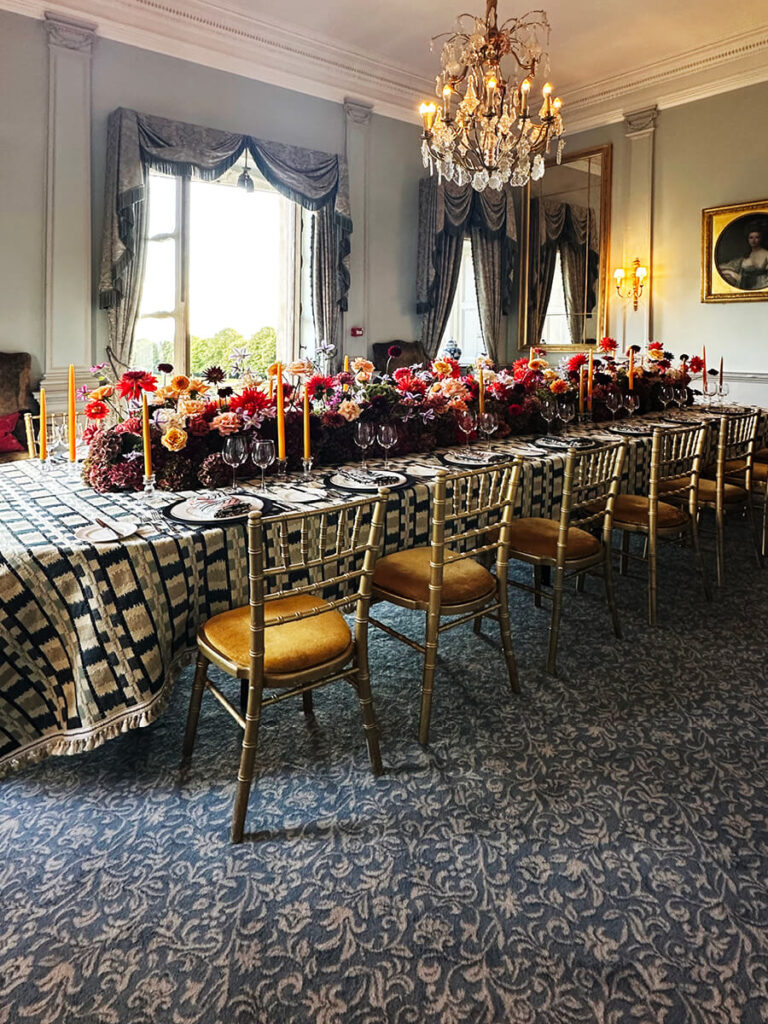
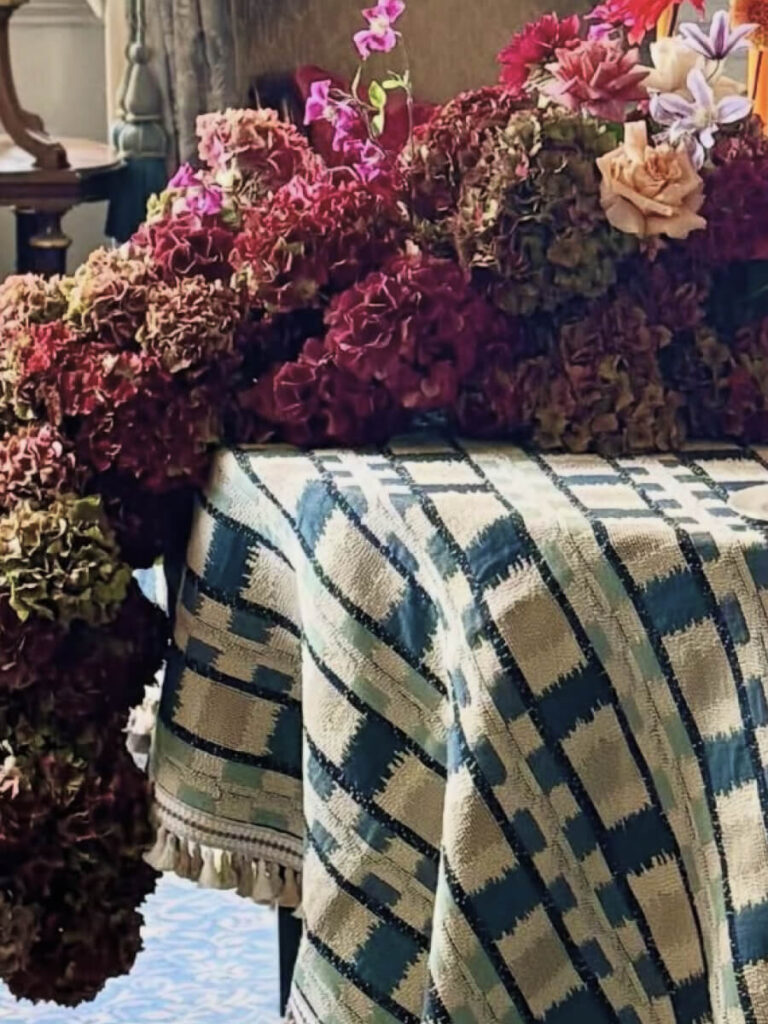
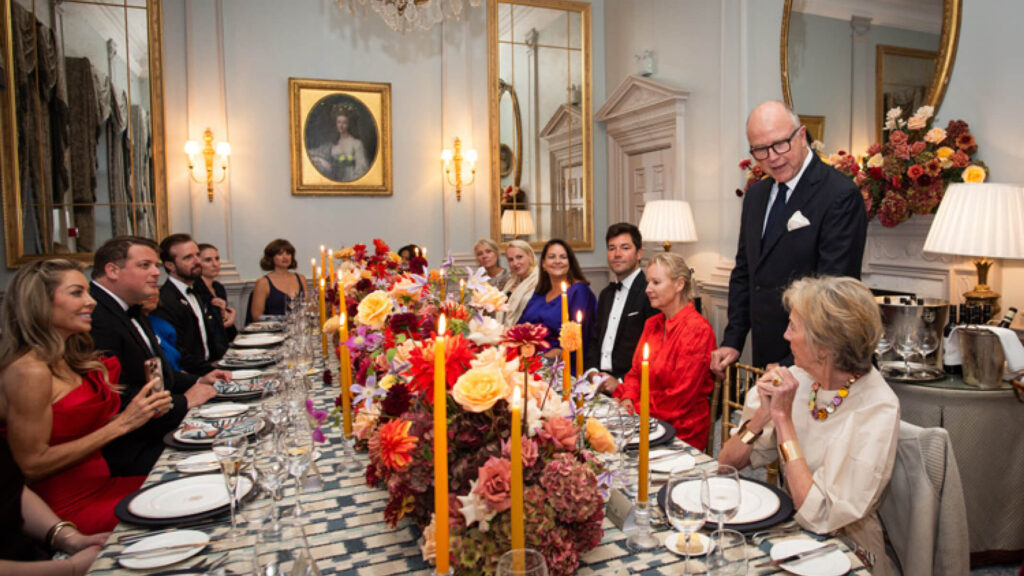
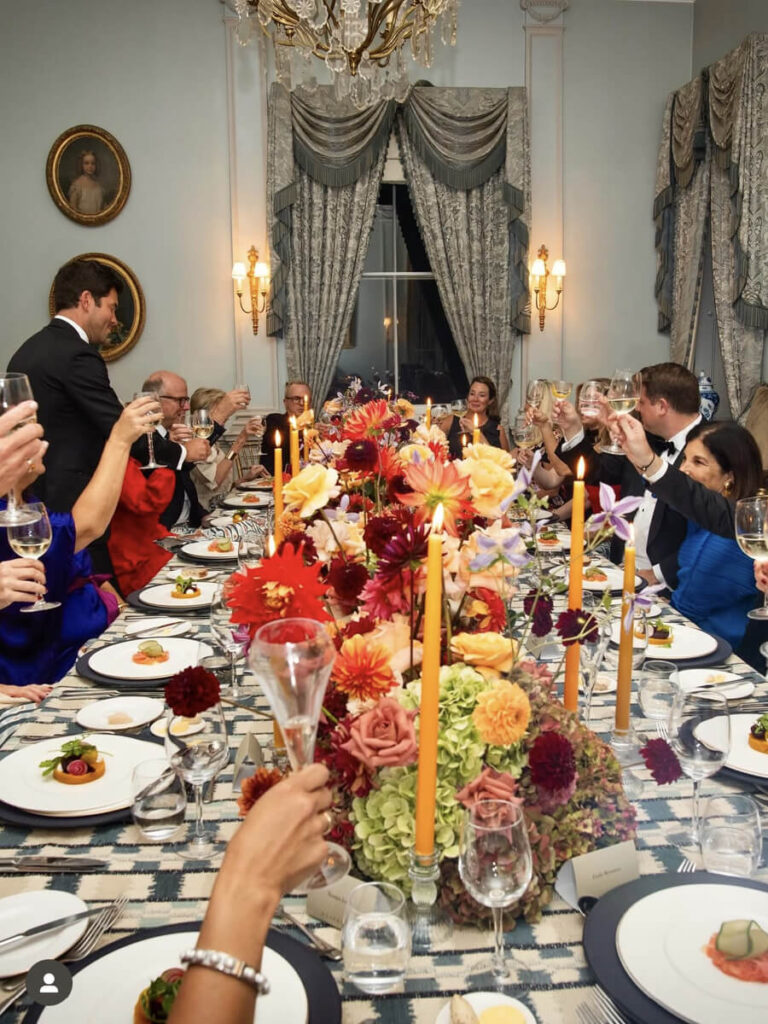
Further inside what was once Nancy Astor’s private spaces, soft blue painted walls and light grey millwork wrap the room. Framed by grand ceiling moldings and fluted columns, a gilded crystal chandelier hangs above a long table dressed in Christopher Farr Cloth. A carved fireplace anchors one end, topped with an oval gilded mirror and portraits on other walls. Each window holds classic drapery with generous swoops and tails, including delicate fringe.
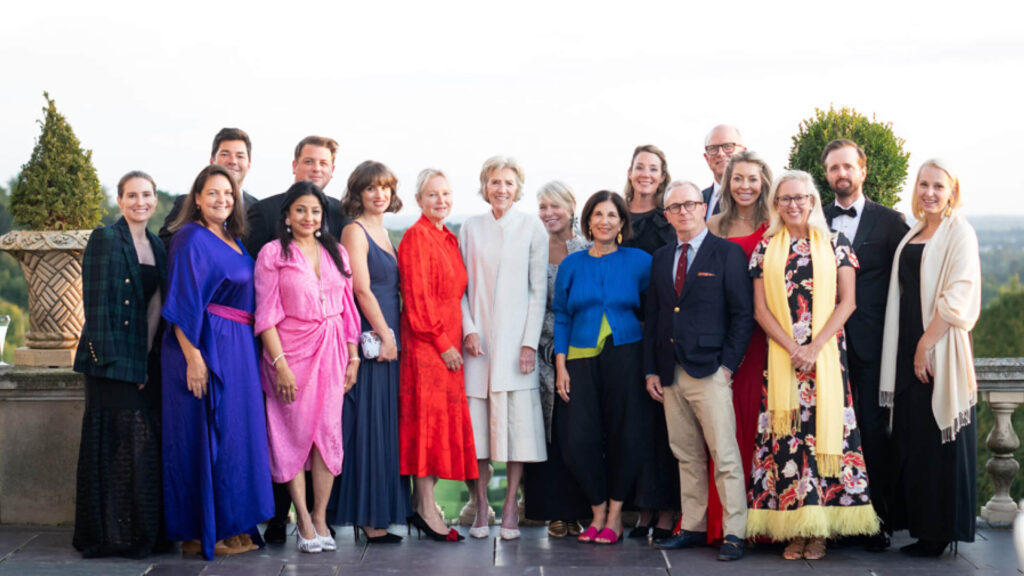
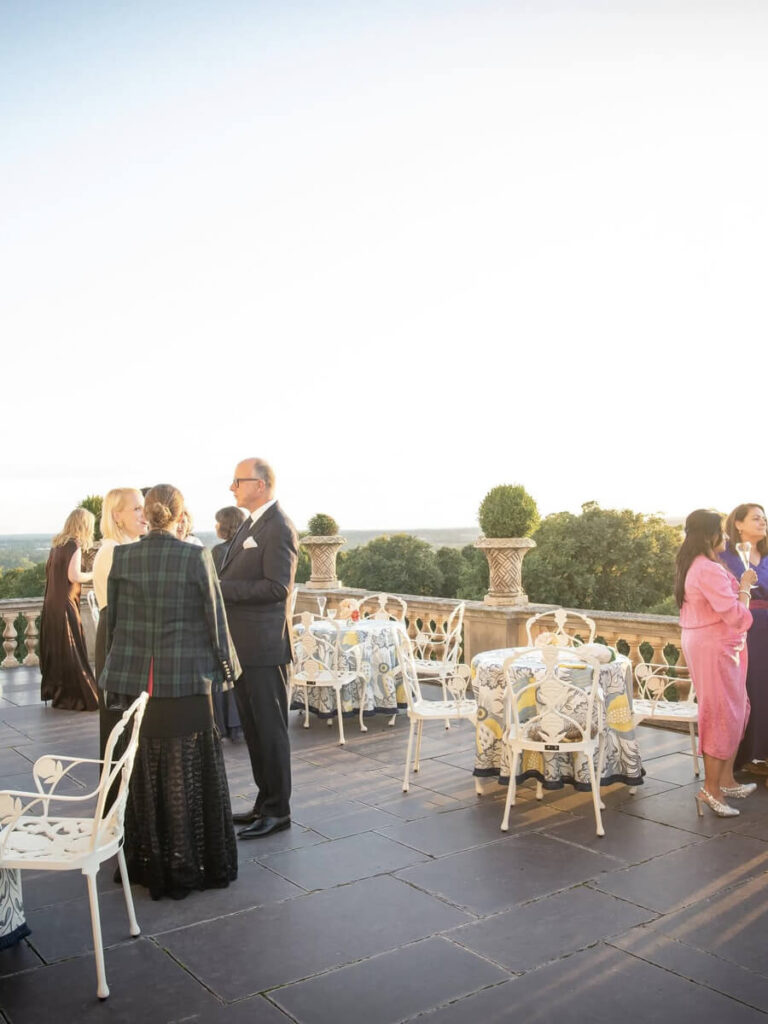
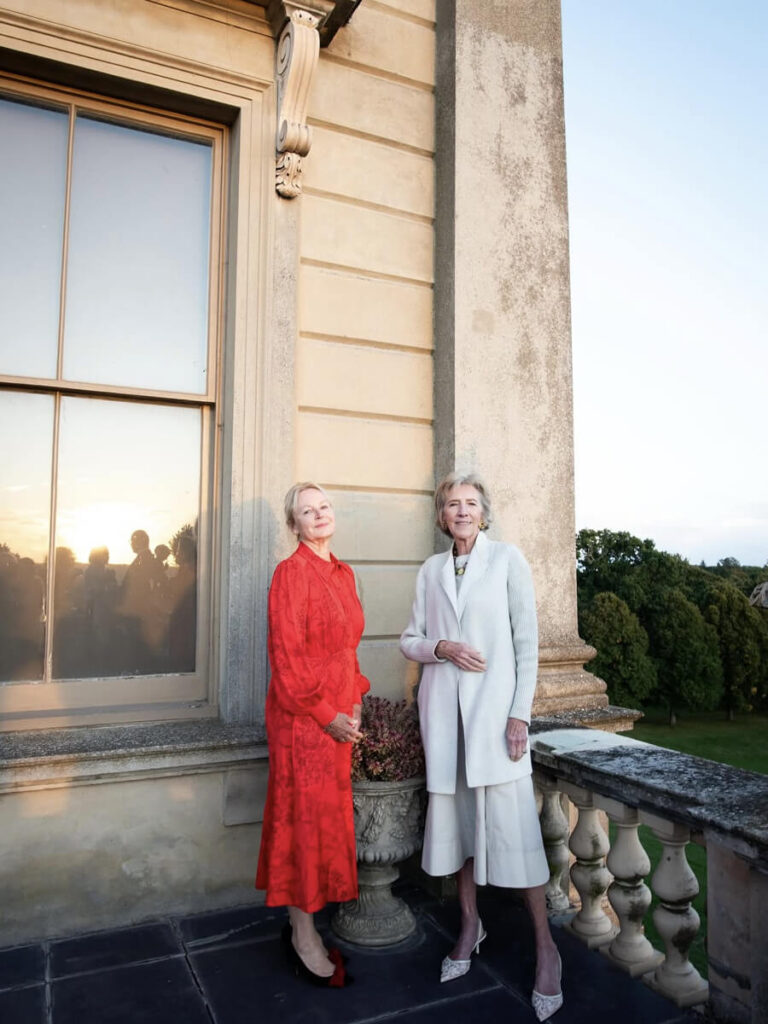
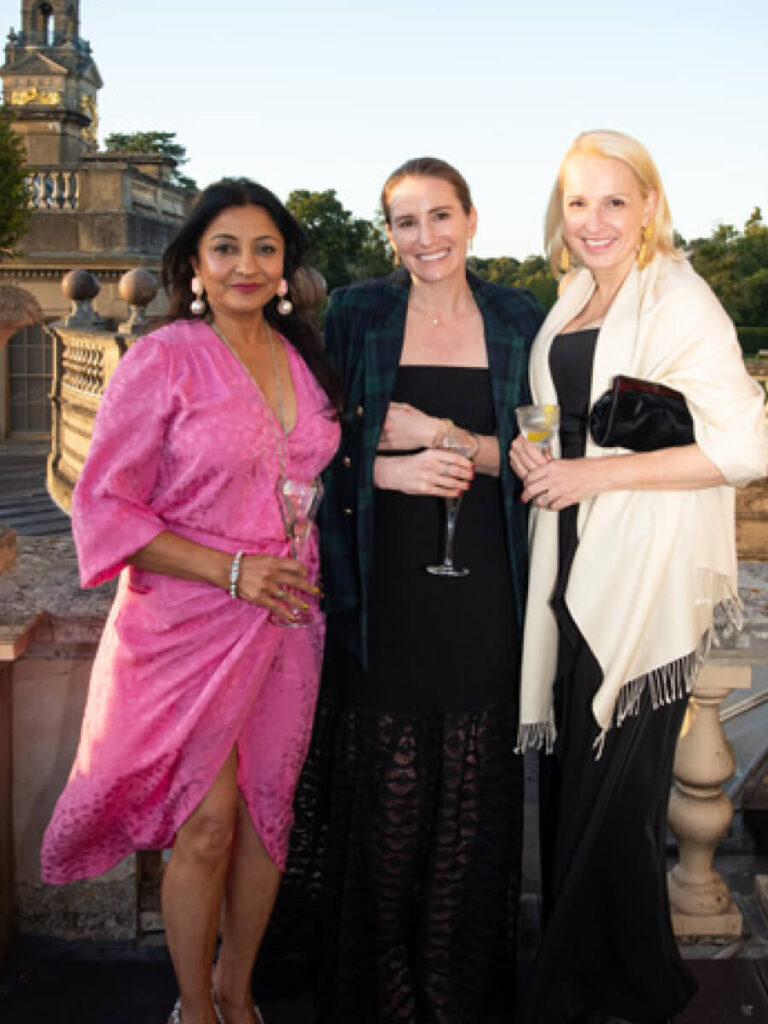
Gold velvet seat cushions on simple event chairs line the table. The dinner, hosted by Benjamin Deaton, a Kentucky–based interior designer, gathered guests including Jane Churchill, Nancy Astor’s great-niece, and Emily Astor, her granddaughter. Together they shared stories and insights from their new cookbook, a project rooted in their Anglo-American family heritage. The night began on the rooftop terrace with champagne and passed hors d’oeuvres before everyone returned to the private dining room for a candlelit dinner. Read more about our dinner here.

Cliveden House | English Manor Interior Design
It was a fabulous day—and night—to visit Cliveden House. Even The New York Social Diary agreed with their own sepcial post. The gardens and property, with their sweeping terraces and sculpted grounds, are unlike anything I’ve seen in the States. The interiors remain swoon-worthy—rich, layered, and filled with architectural details that reveal new textures at every turn.
The private dinner with members of the Astor family was also unforgettable; and sharing the evening with Jane Churchill and Emily Astor, in rooms once occupied by their relatives, added meaning to the whole thing. It also marked the perfect start to my London design trip with the Christopher Farr group—a week of meeting new colleagues, visiting showrooms, and finding inspiration across the city.