Interior-Driven Hospitality
London restaurants set a global standard for interior-driven hospitality. From historic pubs with centuries-old patina to luxury hotels with sculptural staircases and bespoke textiles, these interiors are inspiring. More than destinations; these spots lessons in hospitality design and living examples of how architecture and interiors shape human experience.
Dining is always beyond the food and drink—I always see the architecture, mood, history, and atmosphere. Part of a bigger post — Eat Sleep Shop London — where you can see only a few photos. Here, I share more. And explore the places that define the city’s character—historic pubs, classic dining rooms, and luxury hotel restaurants. Each location reveals how London uses interior design to shape experience, emotion, and memory. Details on Sleep and Shop follow in their own chapters—but first, we eat.
Wilton Arms | Belgravia
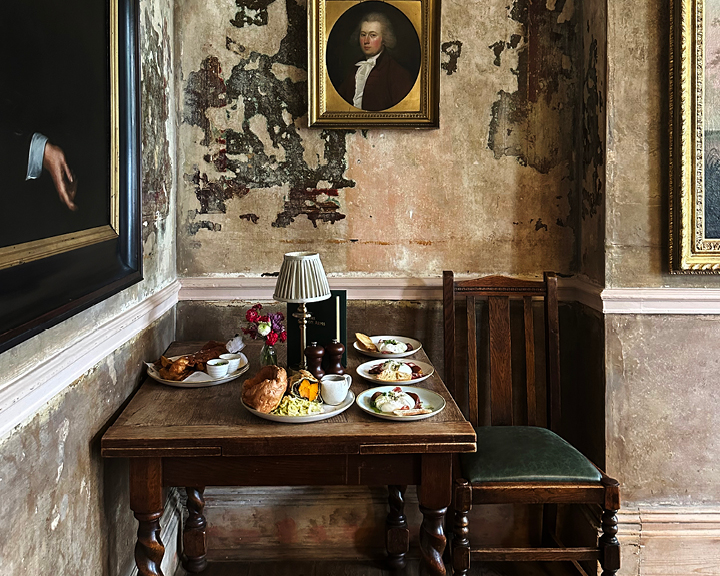
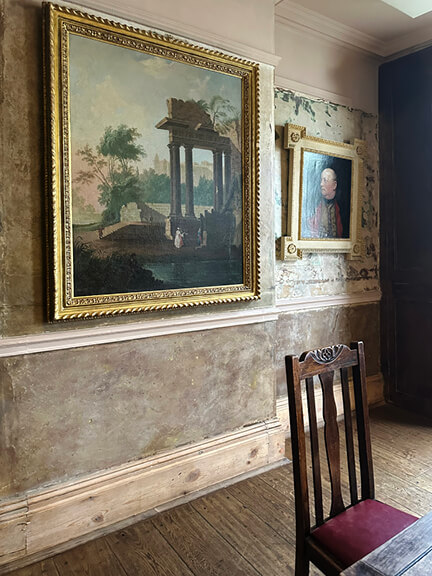
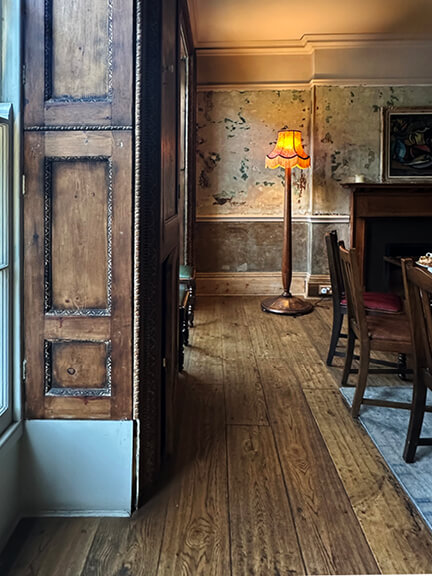
Tucked into Belgravia, The Wilton Arms is a Grade II–listed pub built in 1825 by the Grosvenor Estate to serve nearby mews houses. After a brief closure in 2019, it was revived by Cubitt House, known for restoring historic London buildings. Their renovation preserved the original room proportions, plaster surfaces, and Georgian detailing, keeping the building’s character visible. Right up my historic-home-obsession alley
I visited twice in one week—first with my design group for dinner, then again for drinks with a friend. Both let me really absorb how the space works. The ground floor preserves its heritage with wooden paneling, a carved bar façade, and large windows that let in daylight. Upstairs, the refurbishment revealed old wallpaper, original shutters, and a fireplace that hint at the building’s past. In the dining room, the crisply painted ceiling and wainscoting contrast beautifully with walls where time-worn surfaces tell their story. Vintage chairs anchor each table, while portraits in heavy gilded frames hang intentionally against the peeling surfaces. I love a goog old-with-new contrast.



The Grenadier | Belgravia
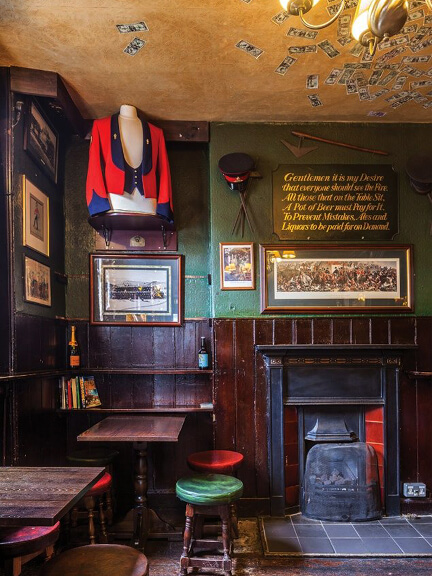
Built in 1818 in Belgravia and once used by the First Regiment of Foot Guards, The Grenadier maintains its historic identity with a white brick exterior and red trim that reflects its military origins.
Inside, the design stays true to its era. A historic fireplace, a preserved military uniform, and walls filled with memorabilia set the scene. The ceiling is covered in currency left by visitors over time. Tufted leather benches and vintage wooden chairs gather around worn wooden tables. Traditional pendant lights cast a warm glow over the bar, where classic ales are still poured the old-fashioned way. Nothing staged or recreated—just a real London pub, preserved by years of use. And…. it’s reportedly haunted.



The Wolseley | Mayfair
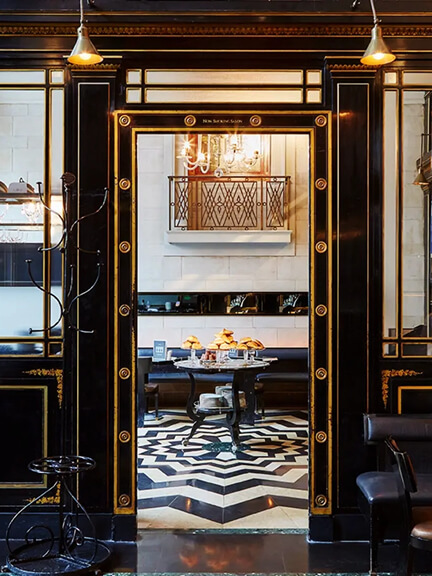
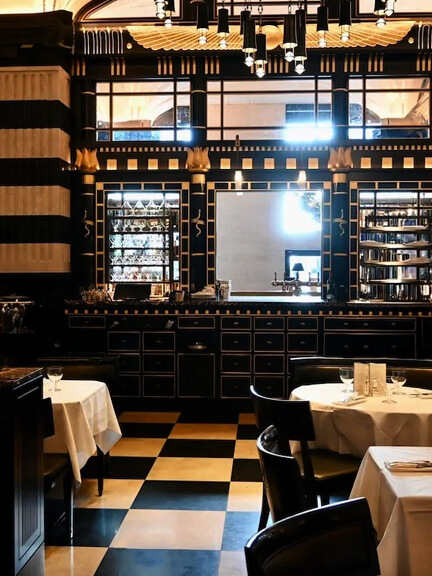
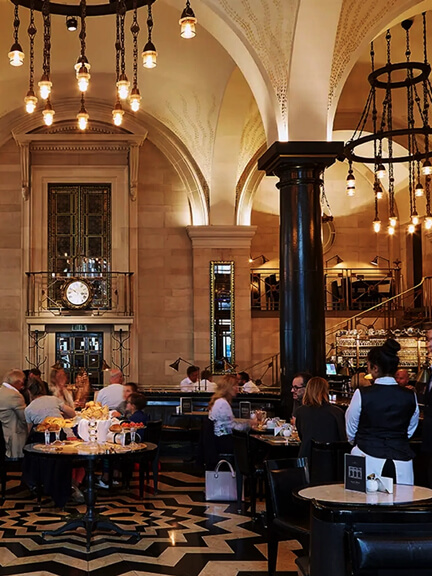
Opened in 2003 by restaurateurs Chris Corbin and Jeremy King, The Wolseley occupies a Grade II–listed building constructed in 1921 as a showroom for Wolseley Motors. The architecture follows a European grand café style with Venetian and Florentine influences. Black-and-cream marble floors, double-height ceilings, and stone arches define the space. The interior also preserves original banking hall features—bronze chandeliers, wrought-iron details, and a marble staircase from its Barclays Bank era.
The dining room follows a strict symmetry beneath a vaulted ceiling. Deep leather banquettes, antique lighting, and tightly spaced bistro tables recreate the intimacy of a grand European café. Service stations fit into the architecture rather than sitting as furniture, keeping the building’s rhythm intact instead of chasing trends. The result is an interior defined by space, shape, and material—not decoration.


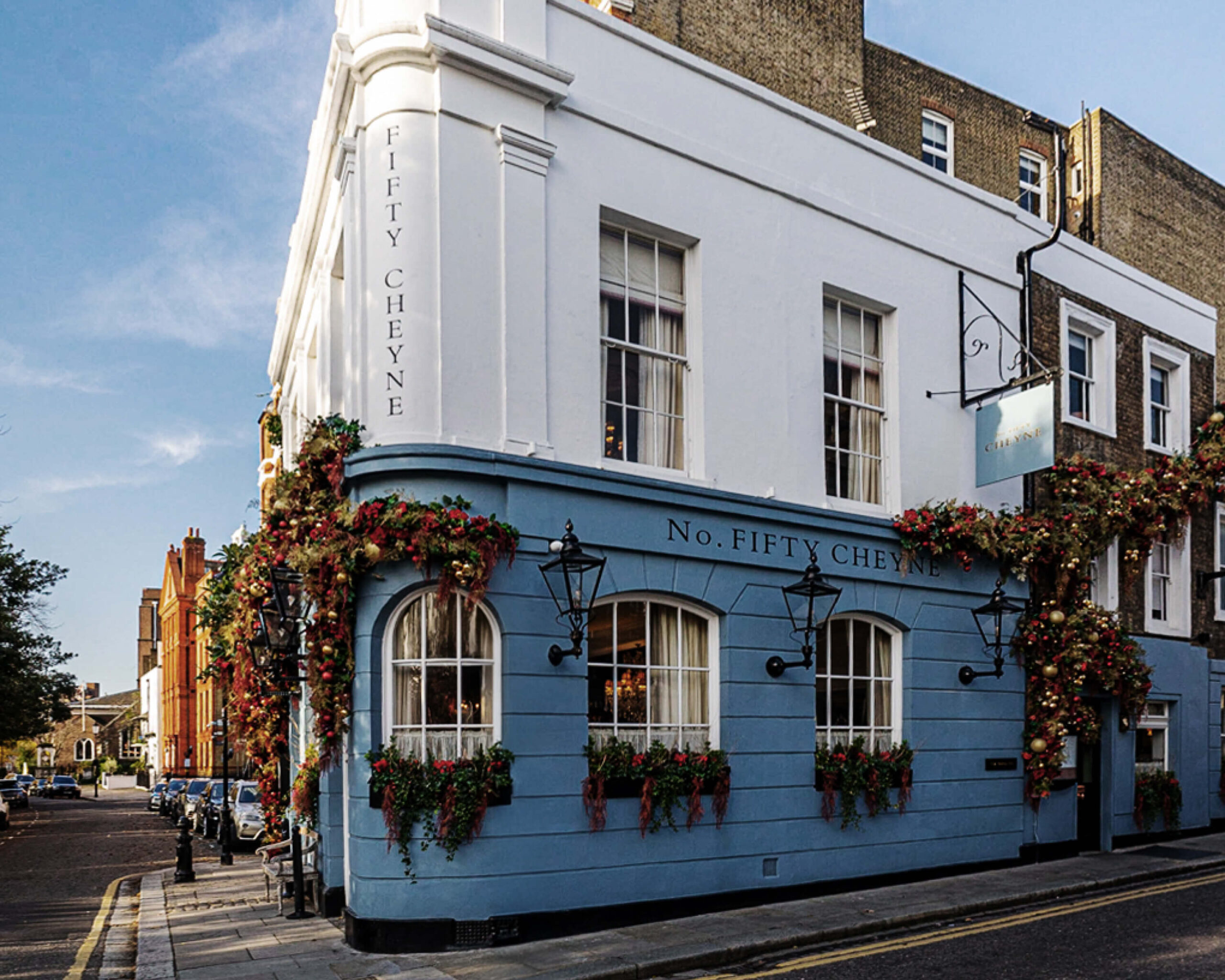
No. Fifty Cheyne | Chelsea
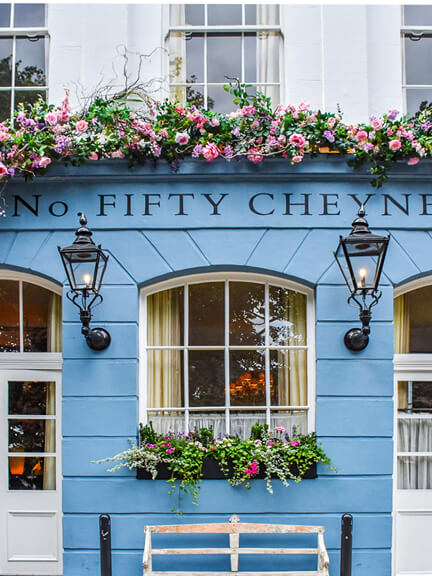
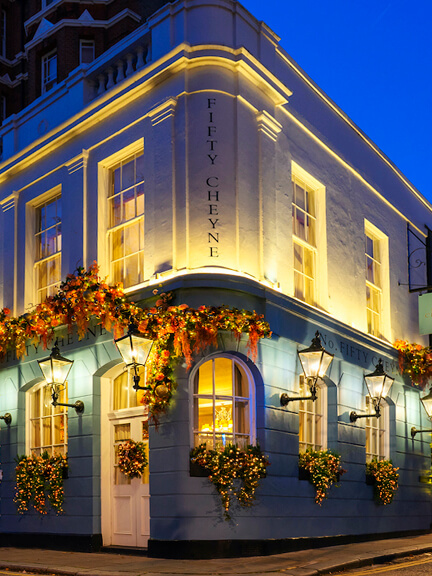
Located in Old Chelsea overlooking the Thames, No. Fifty Cheyne occupies a 19th-century townhouse with a painted brick façade and traditional sash windows. By day, the exterior appears as a classic Chelsea townhouse. At night, soft architectural lighting highlights its proportions and Georgian-era details. Designed by British firm Lambart & Brown.
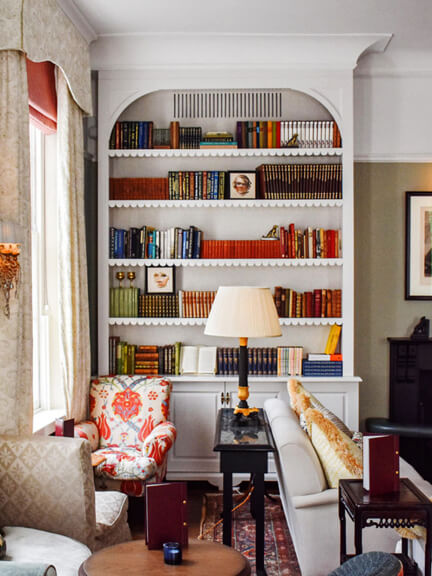
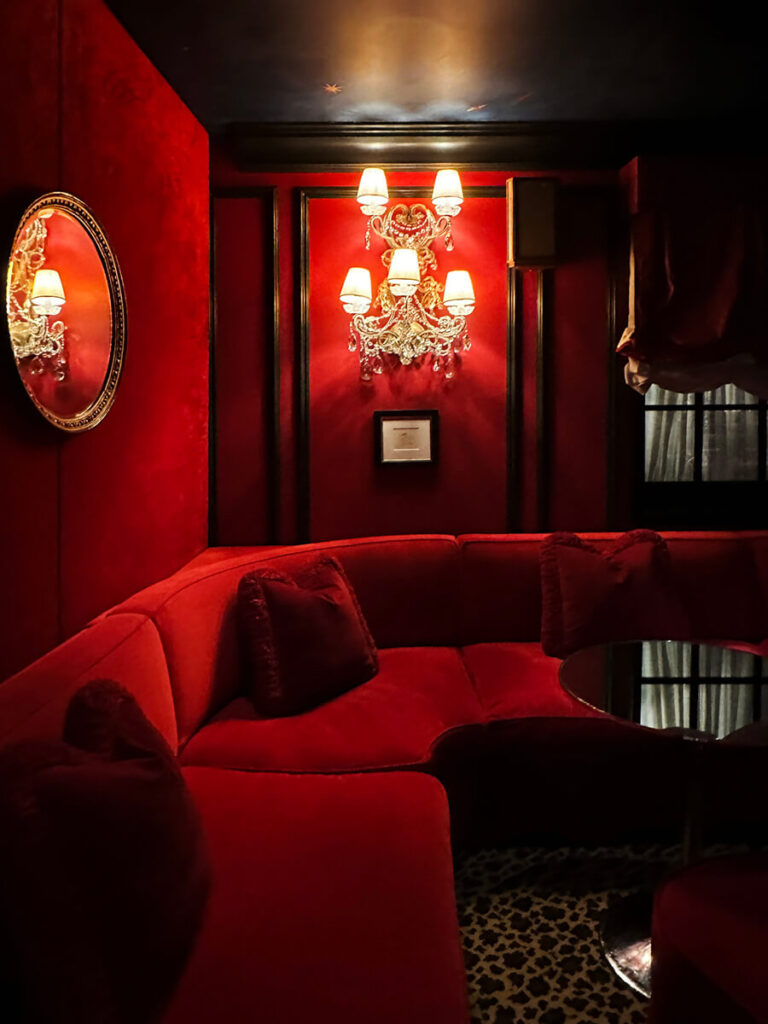
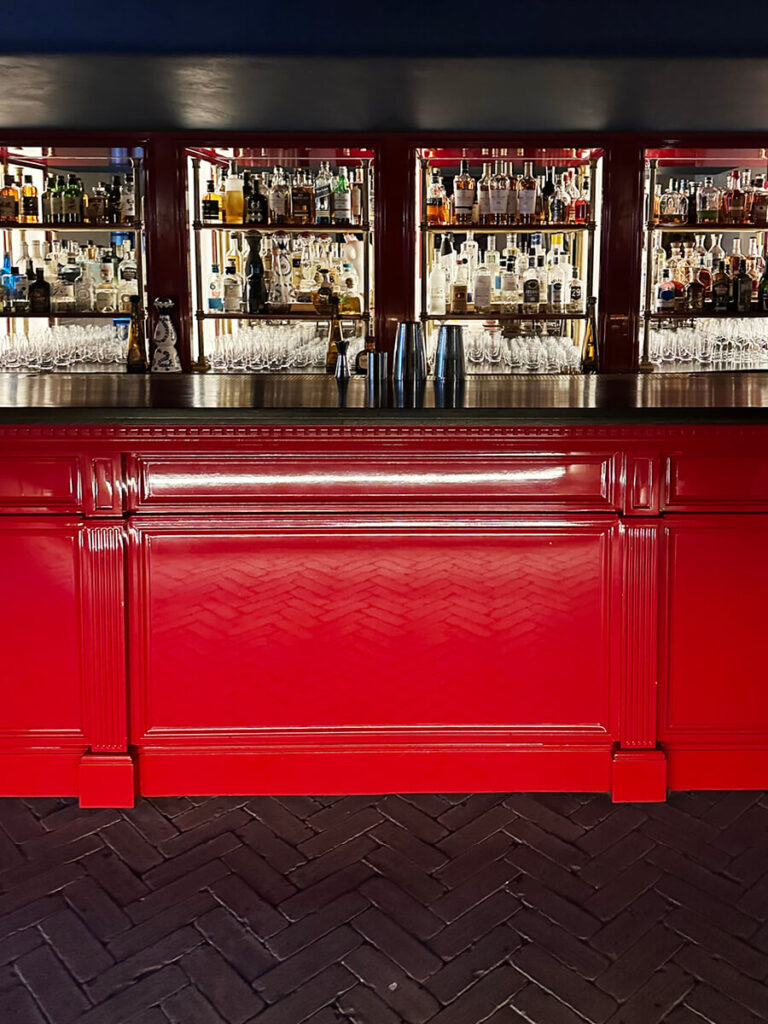
Inside, the ground-floor dining area has pale wood floors, upholstered armchairs, and a fireplace that feels residential. The tea room uses a soft palette with textured fabrics, patinated mirrors, and layered upholstery that reflect the building’s domestic origins. In contrast, the upstairs bar feels completely transformed. Red lacquered walls, tufted banquettes, and low lighting create a dramatic, club-like atmosphere. The bar is compact and structured, with polished wood and red textiles that shift the mood to a late-night London destination.



Browns’s Hotel | Mayfair
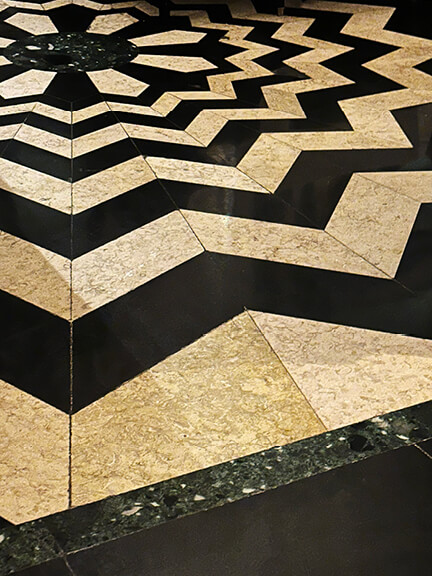
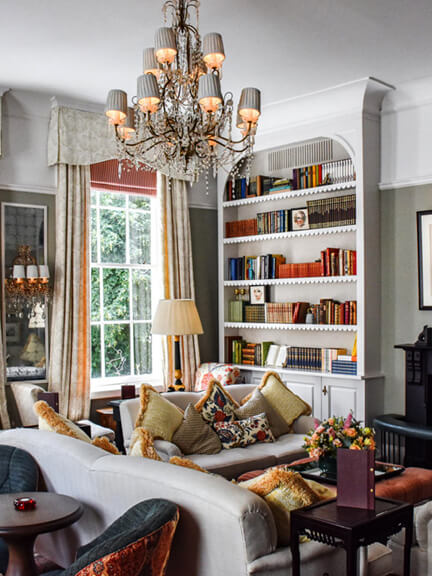
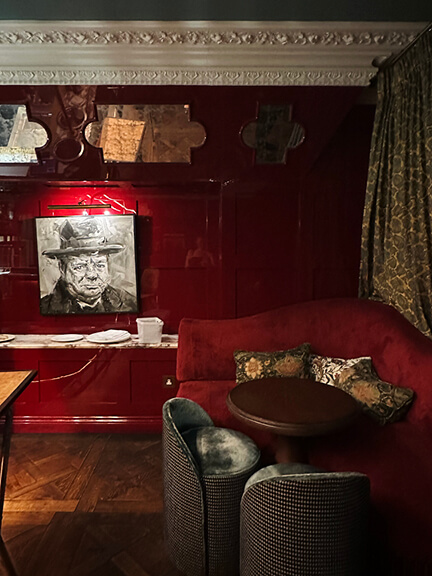
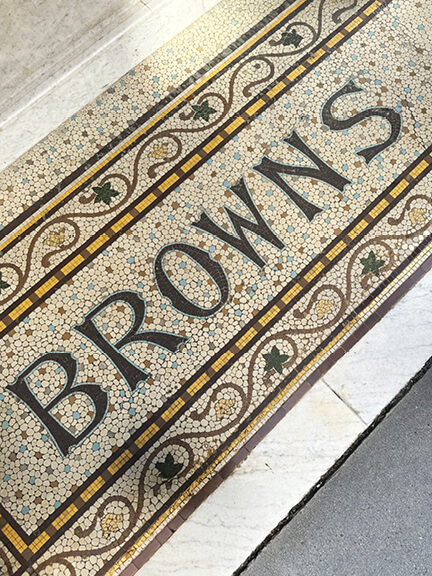
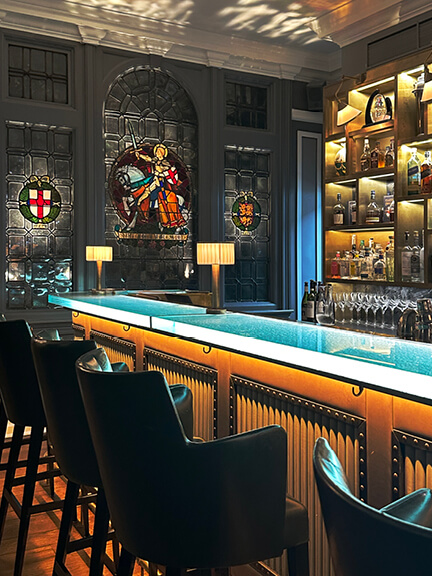
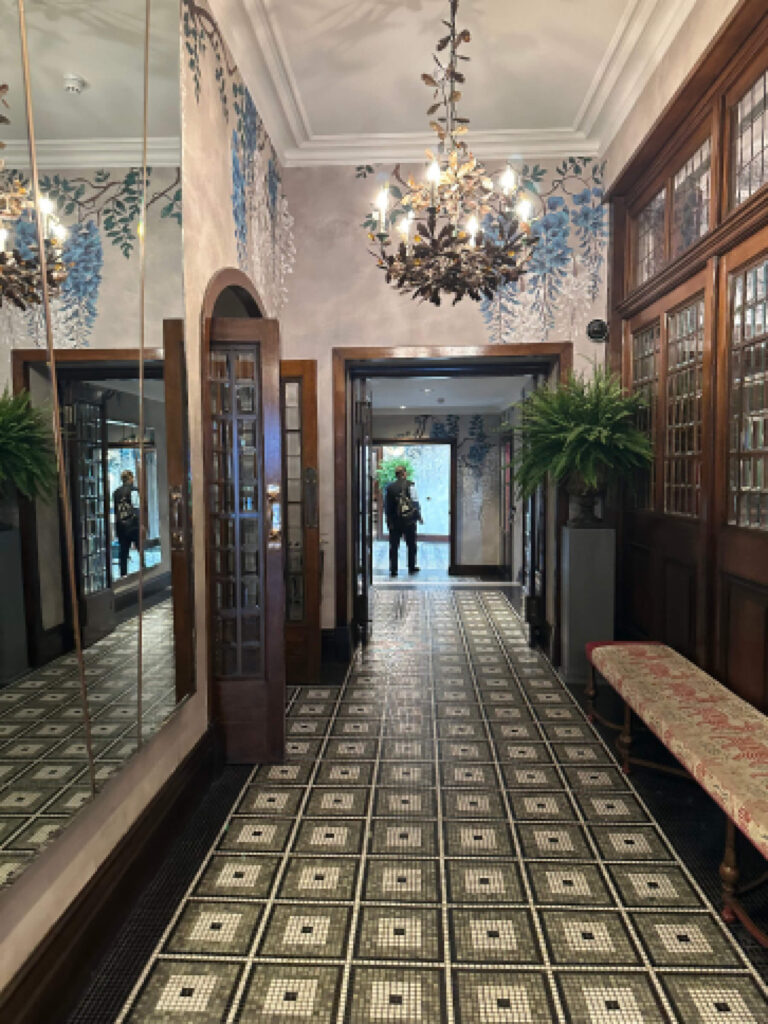
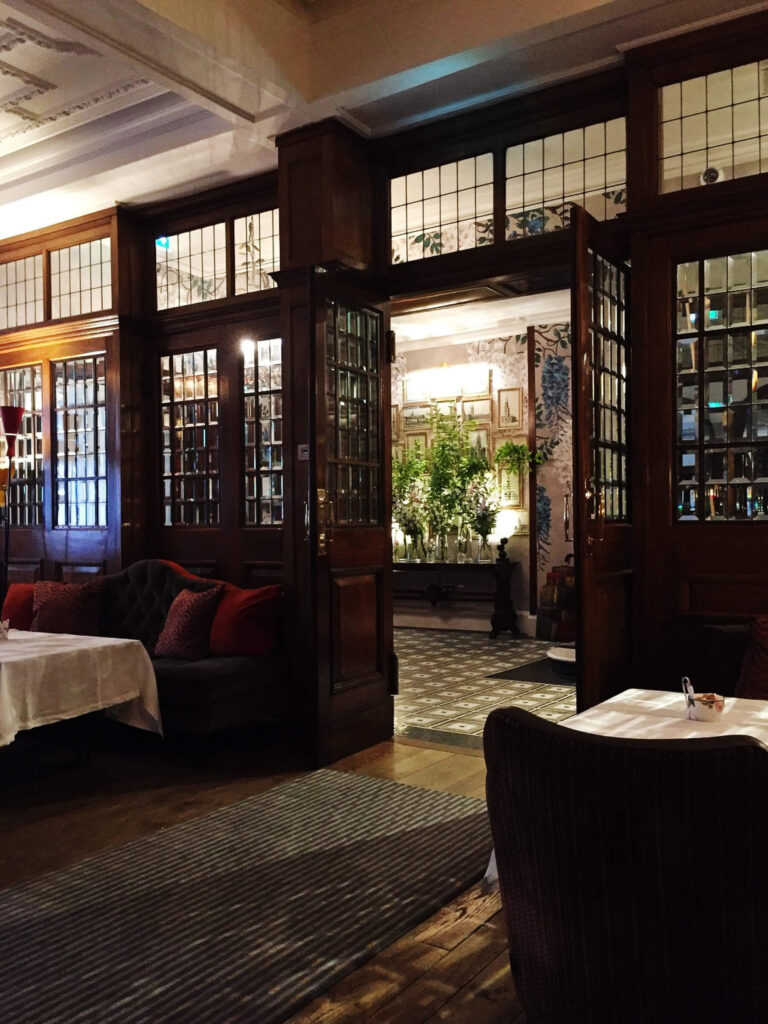
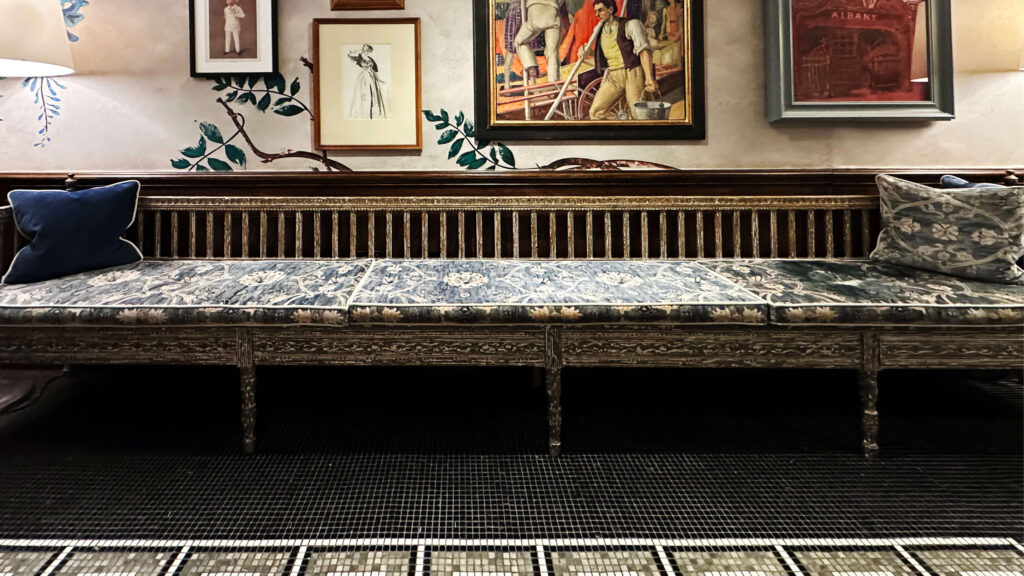
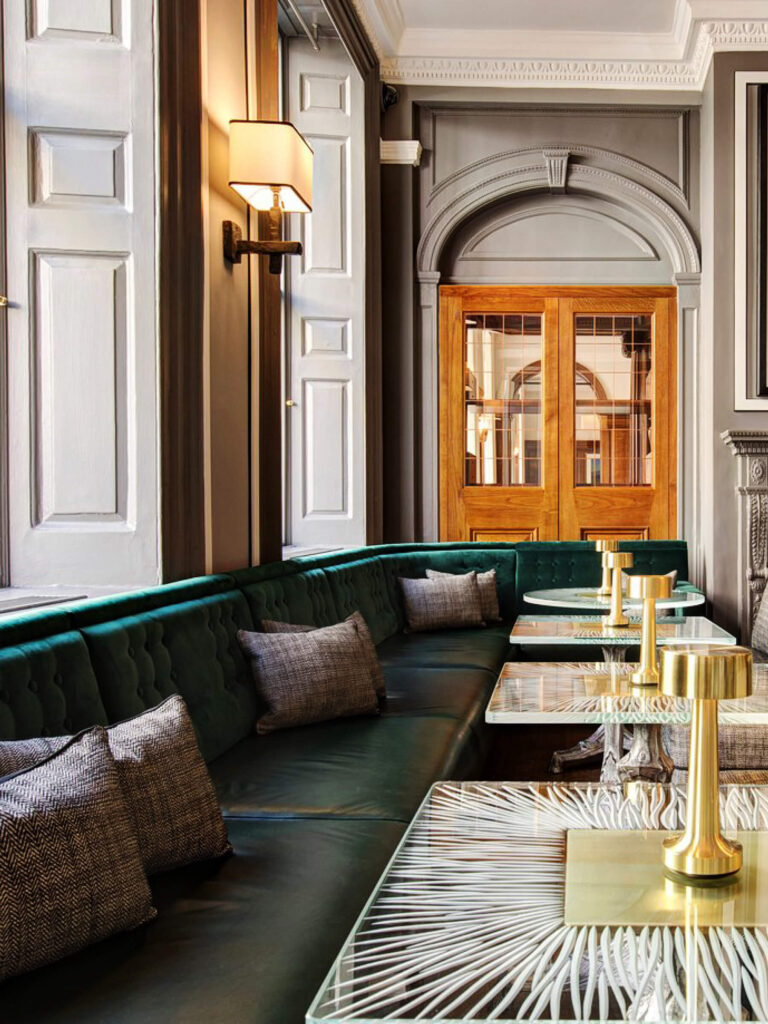
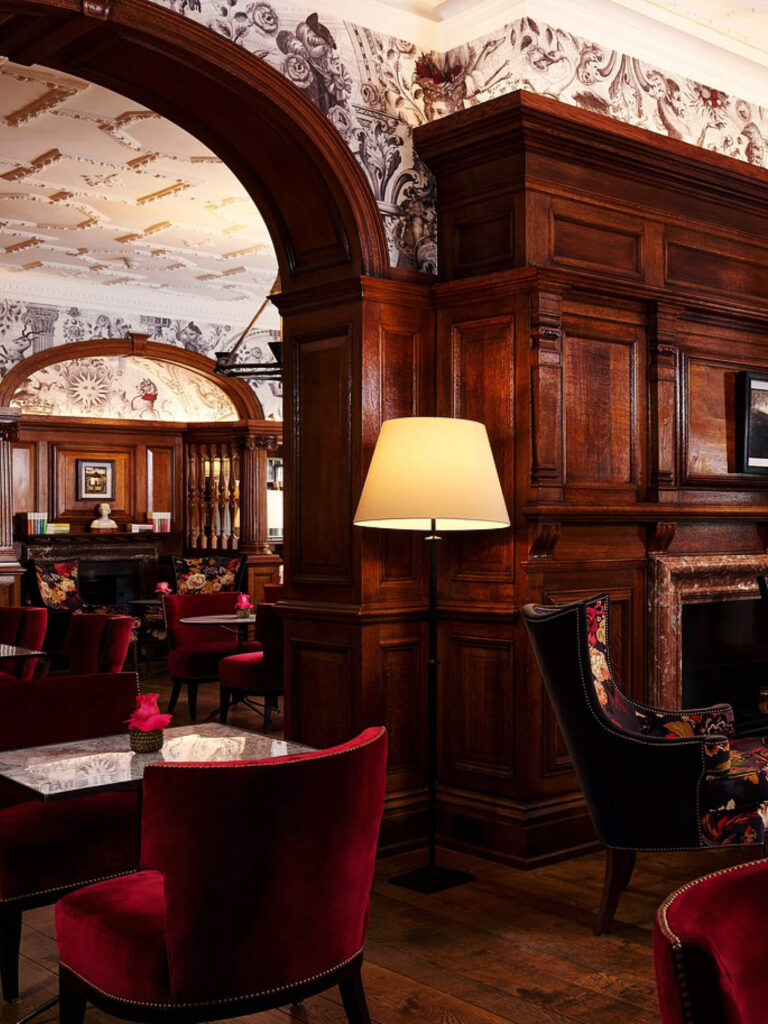
Brown’s Hotel in Mayfair is one of London’s oldest hotels, founded in 1837, and has long attracted writers, artists, and cultural figures. The interiors reflect layered British heritage through architectural detailing and material choices rather than themed design. The public spaces feature geometric tiled floors in the entrance and bar areas, creating a strong architectural base.
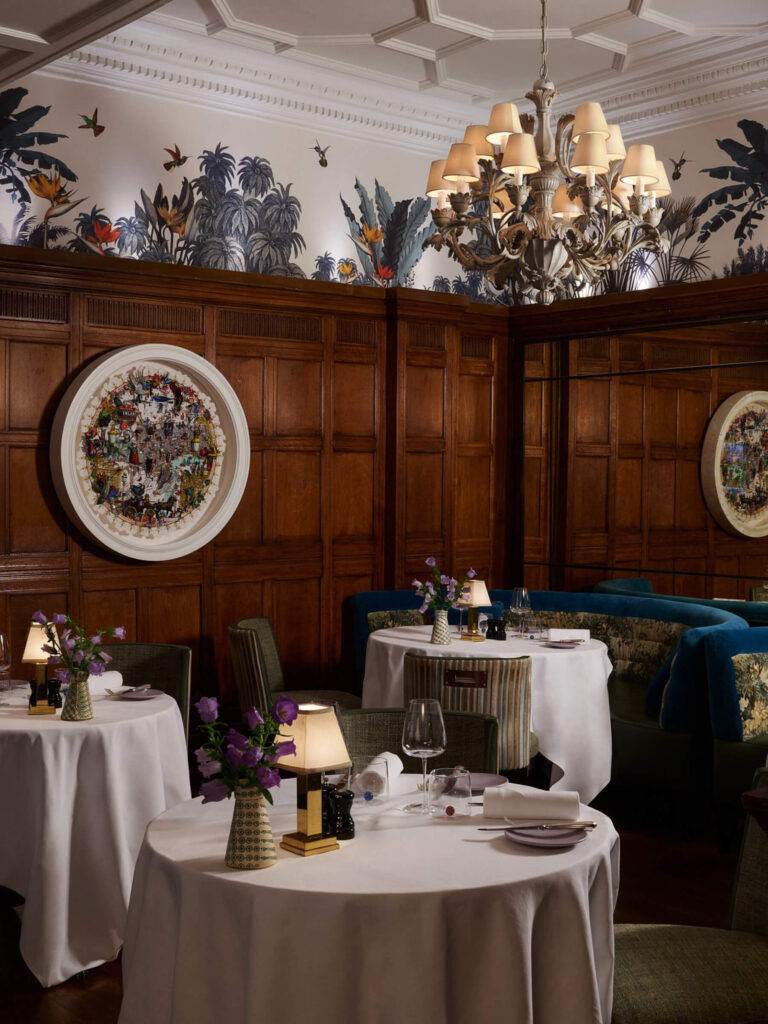
The restaurant includes red velvet chairs, dark wood paneling, and floral wallpaper above the dado line for balance and warmth. The bar extends this language with patterned stone floors, antique mirrors, and club-style seating, giving the space an old-school Mayfair character.


Oswald’s | Mayfair
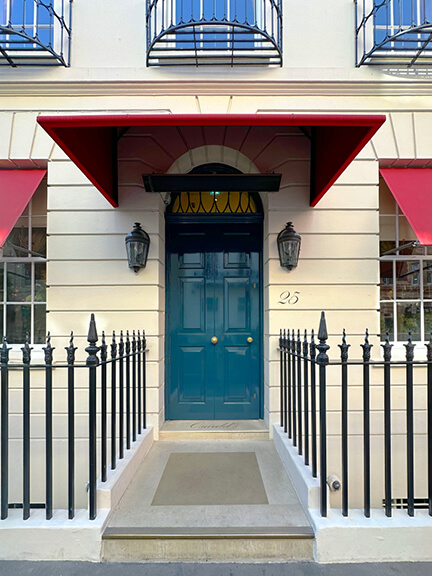
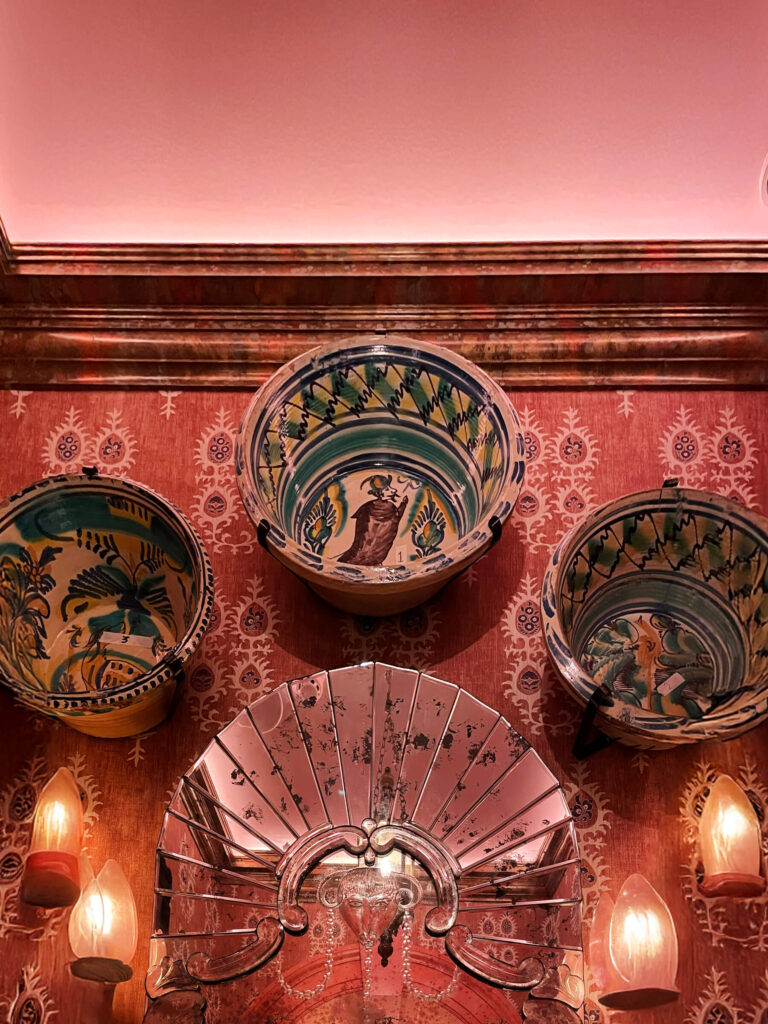
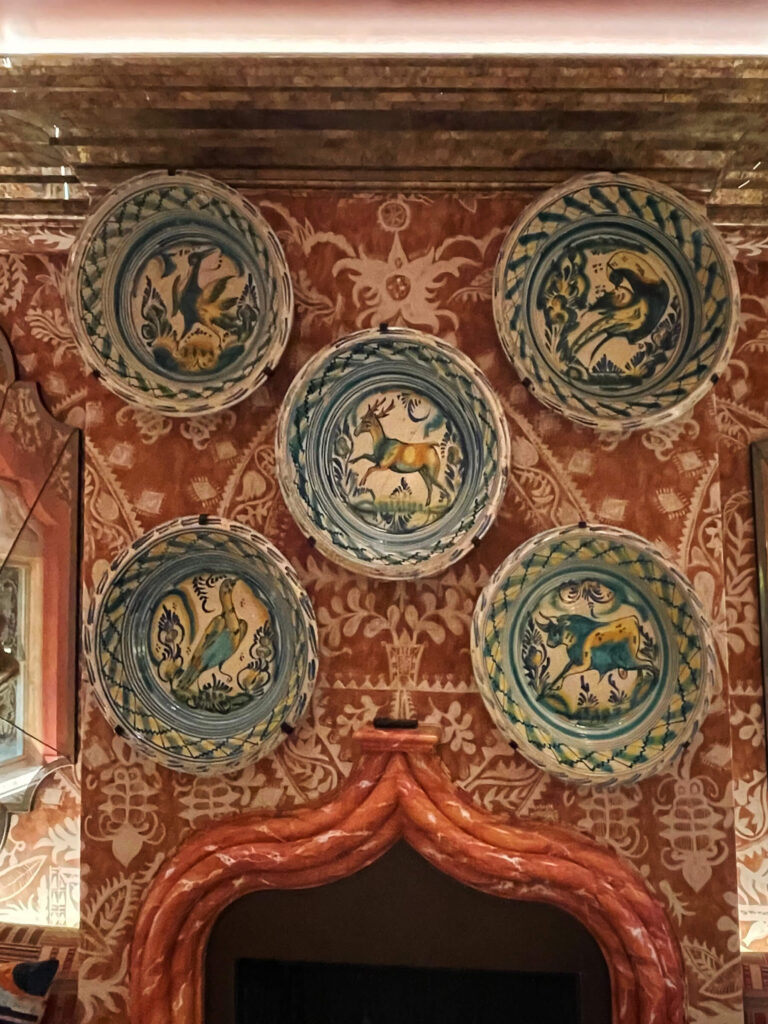
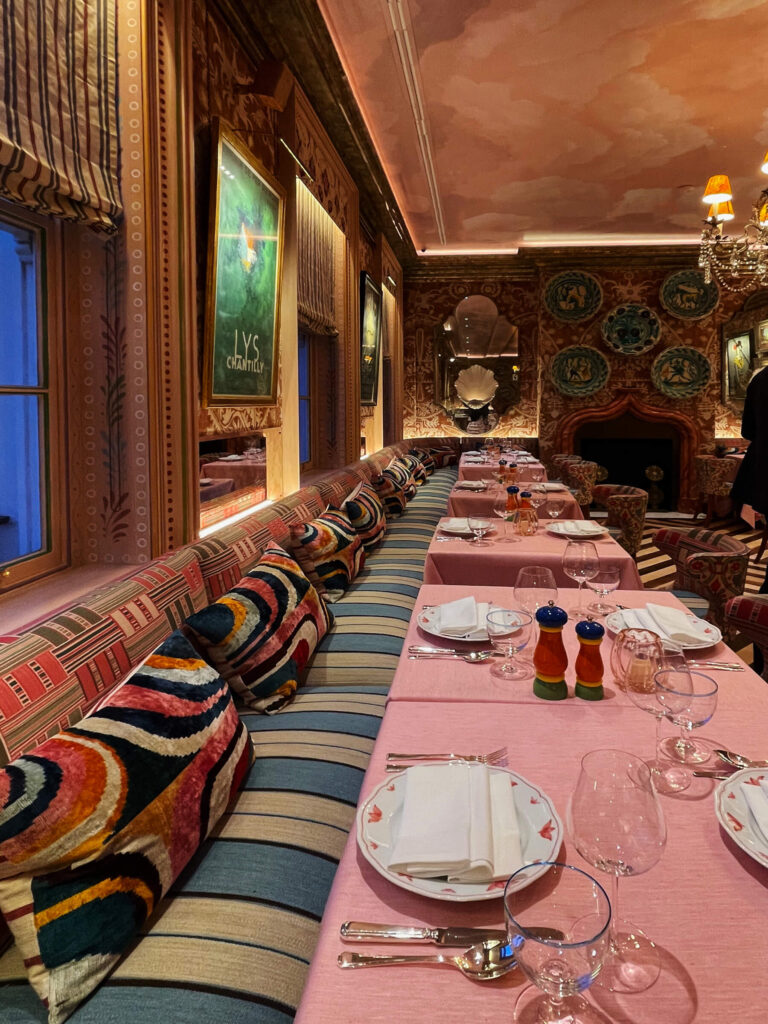
Oswald’s is a private members’ club in Mayfair, founded by Robin Birley in 2018 for a discreet, wine-focused clientele. The exterior is a Georgian townhouse with painted stucco walls and original window proportions—understated and without signage, typical of London’s private clubs.
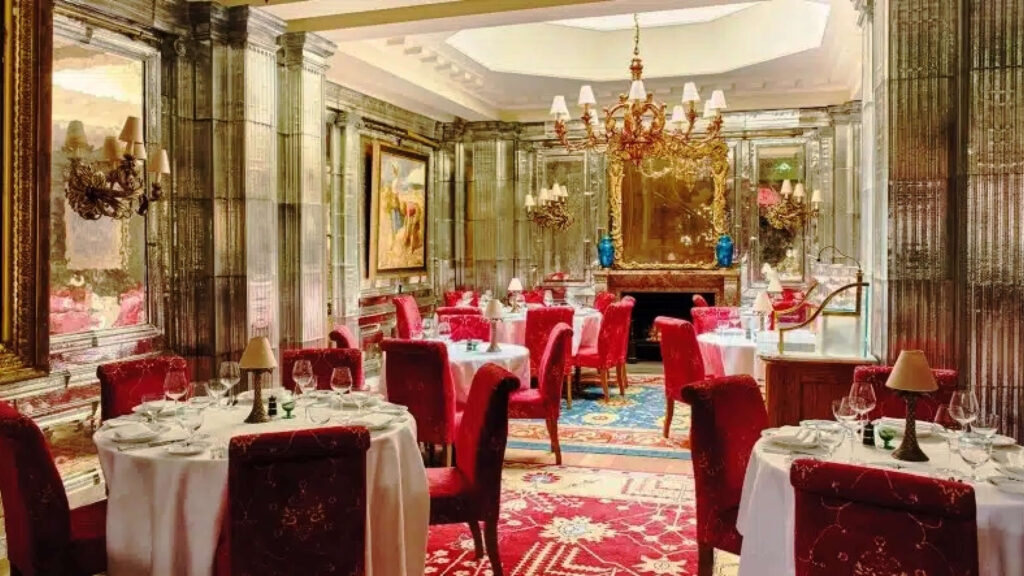
As featured in The World of Interiors, Oswald’s design draws from the tradition of the English country house, not modern hospitality. The interiors by Tom Bell and Bruce Cavell layer Murano chandeliers, patterned carpets, lacquered walls, and working fireplaces to create permanence and privacy. Upholstered wall panels replace painted finishes, and each room feels intentionally enclosed rather than open. Oswald’s embodies a sense of lineage—spaces meant to be lived in over time, not merely observed.


Tramp | Mayfair
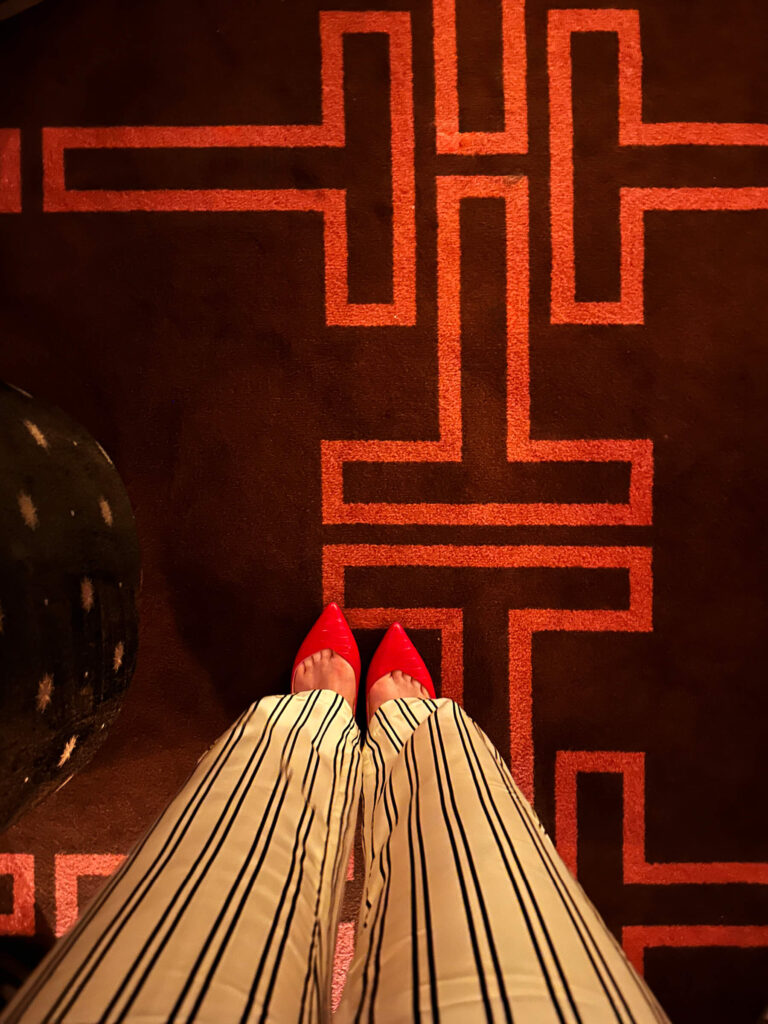
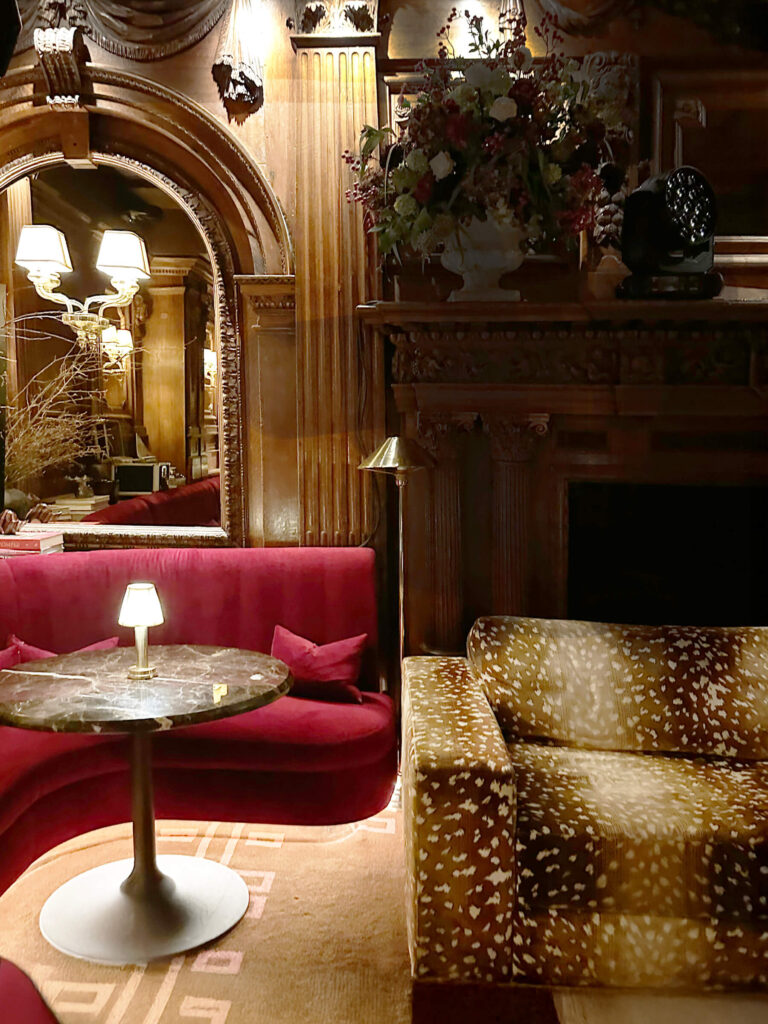
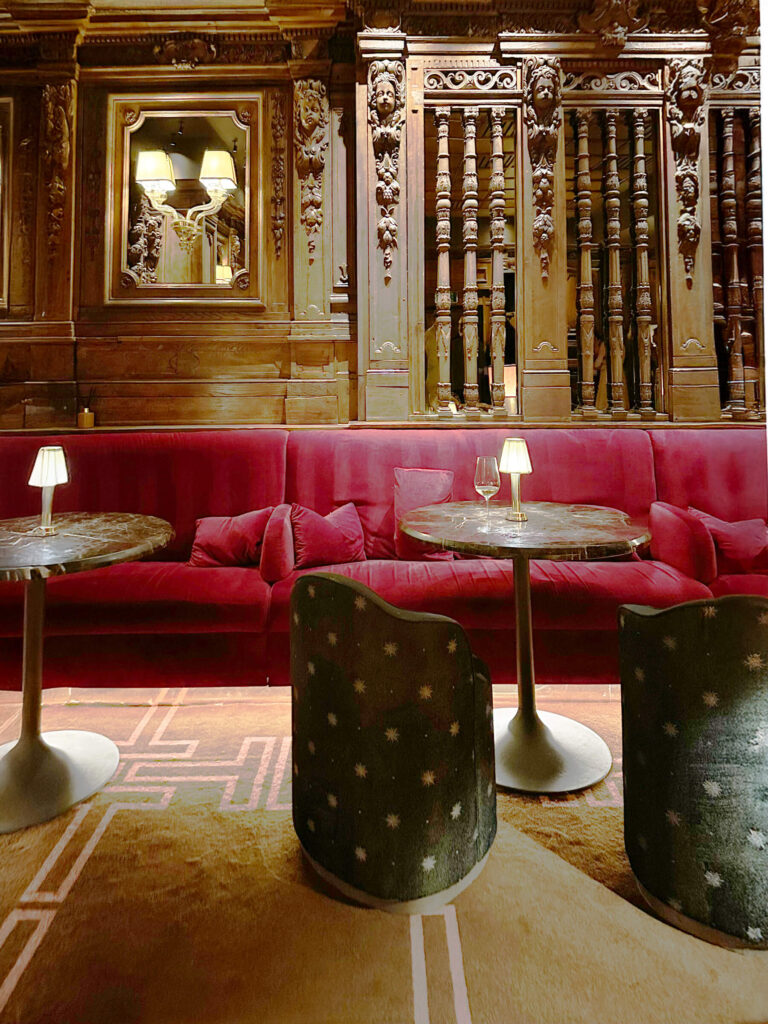
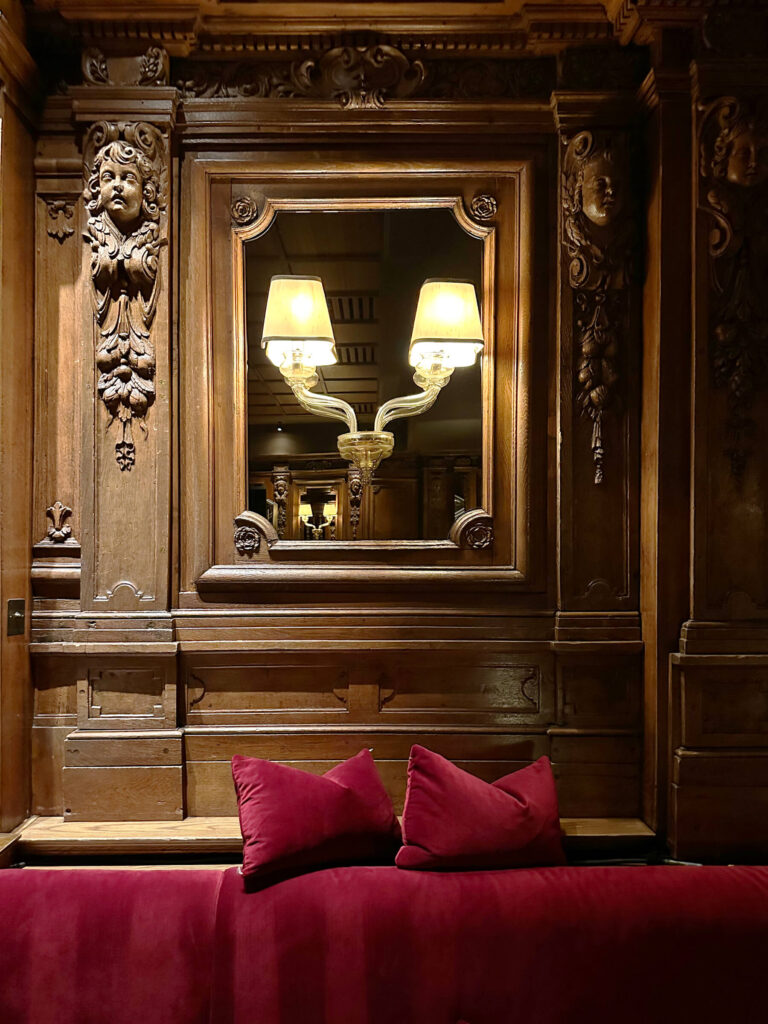
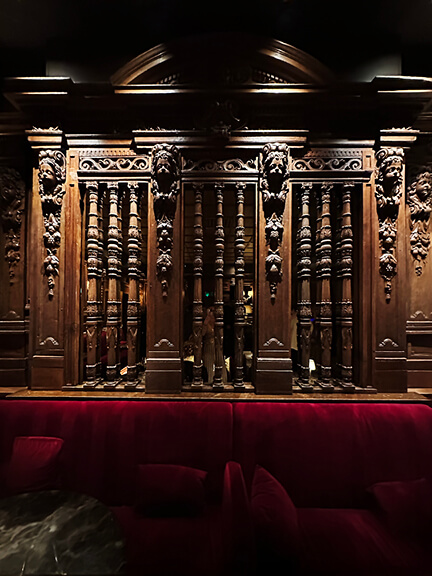
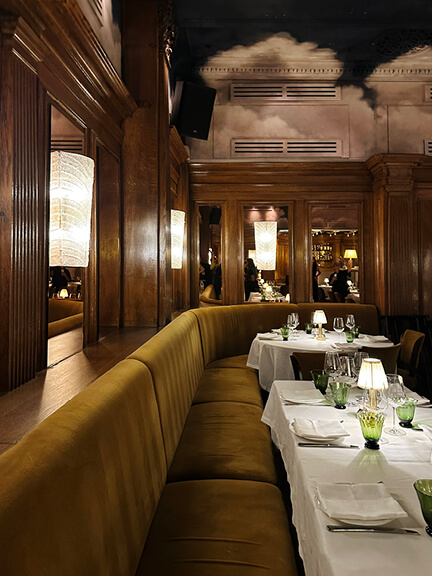
Tramp, the private members’ club in Mayfair that opened in 1969, pairs classic country-house motifs with 1970s glamour. The main lounge features a carved fireplace and an animal-print sofa, defining the club’s eclectic yet established aesthetic. Ornate woodwork wraps the walls and built-in banquettes, reinforcing the room’s architectural envelope rather than separating seating from structure. In the dining room, a painted ceiling resembling an open sky nods to classic European trompe-l’œil traditions.




The Connaught | Mayfair
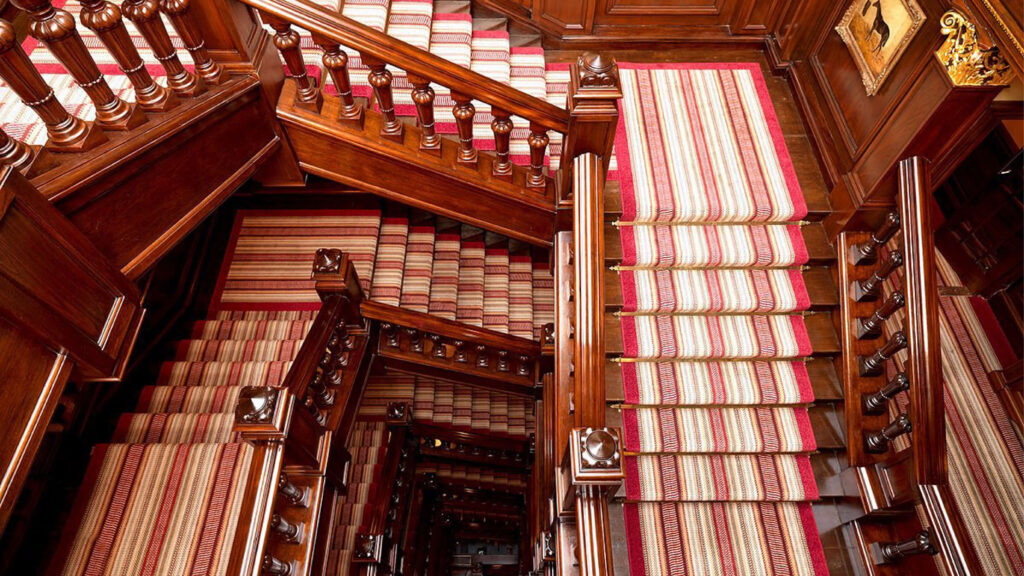
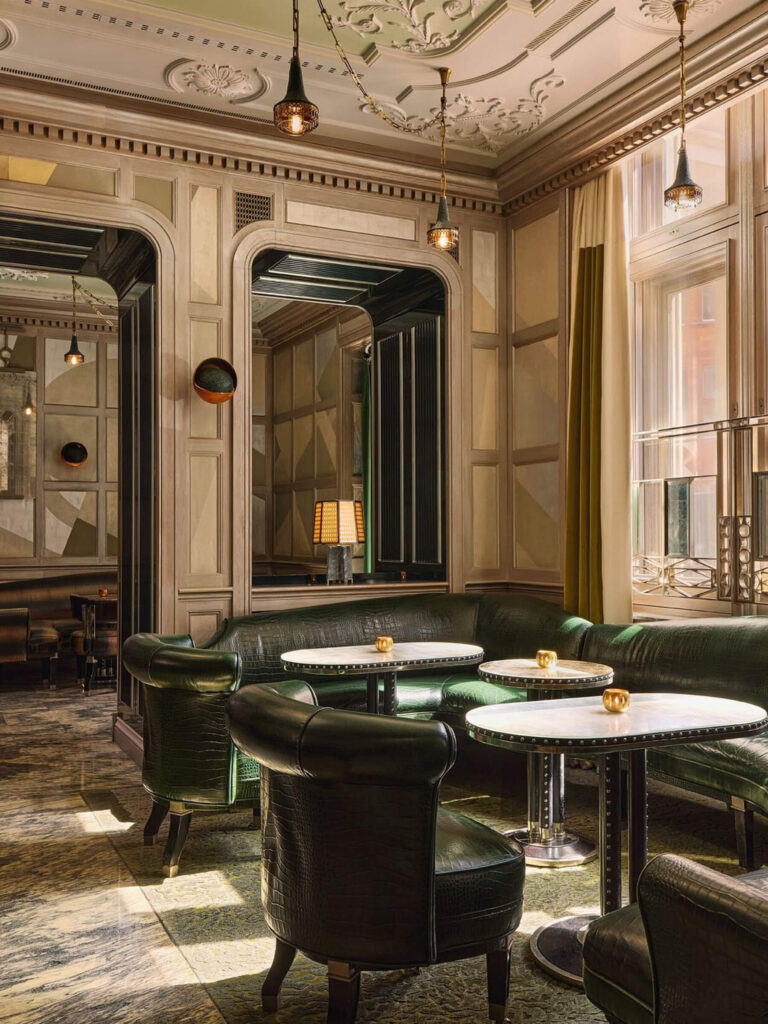
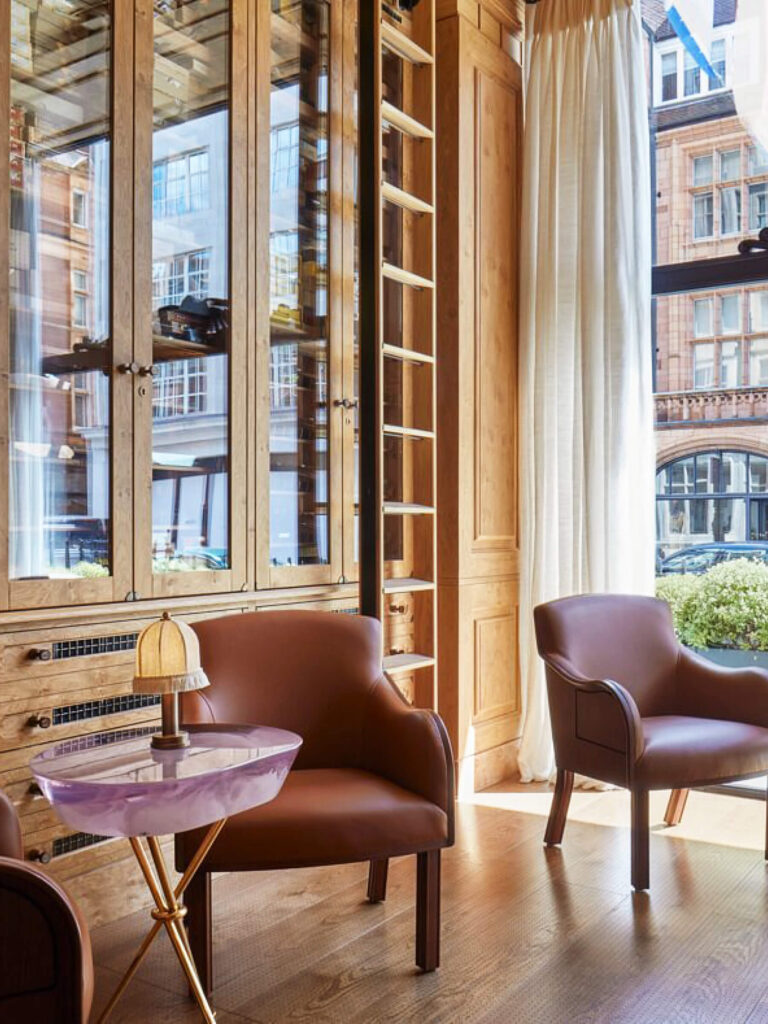
The Connaught in Mayfair, a 19th-century hotel built in 1815, blends historic British architecture with contemporary craftsmanship. The exterior features a red-brick Edwardian façade with stone detailing, typical of Mayfair’s aristocratic townhouse architecture. Inside, the hotel preserves original wood-paneled walls, marble floors, and period plasterwork. The Connaught Bar by David Collins Studio is among London’s most influential interiors, finished in textured silver leaf and cubist-inspired paneling. The Red Room adds deep red velvet seating, marble fireplaces, and artwork by female artists, styled as a residential salon. Across every space, materials like marble, wood, mirror, and lacquer reinforce the Connaught’s identity as both historic and modern.


Claridge’s | Mayfair
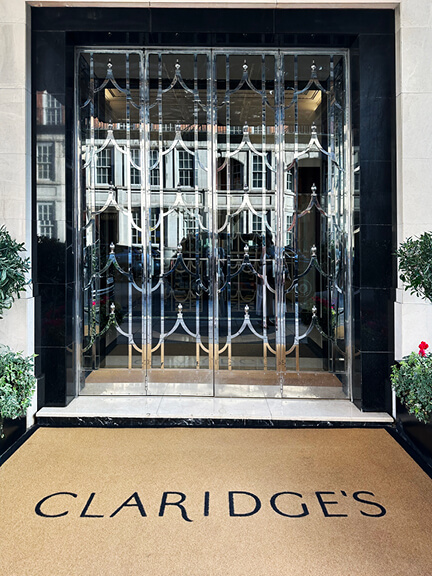
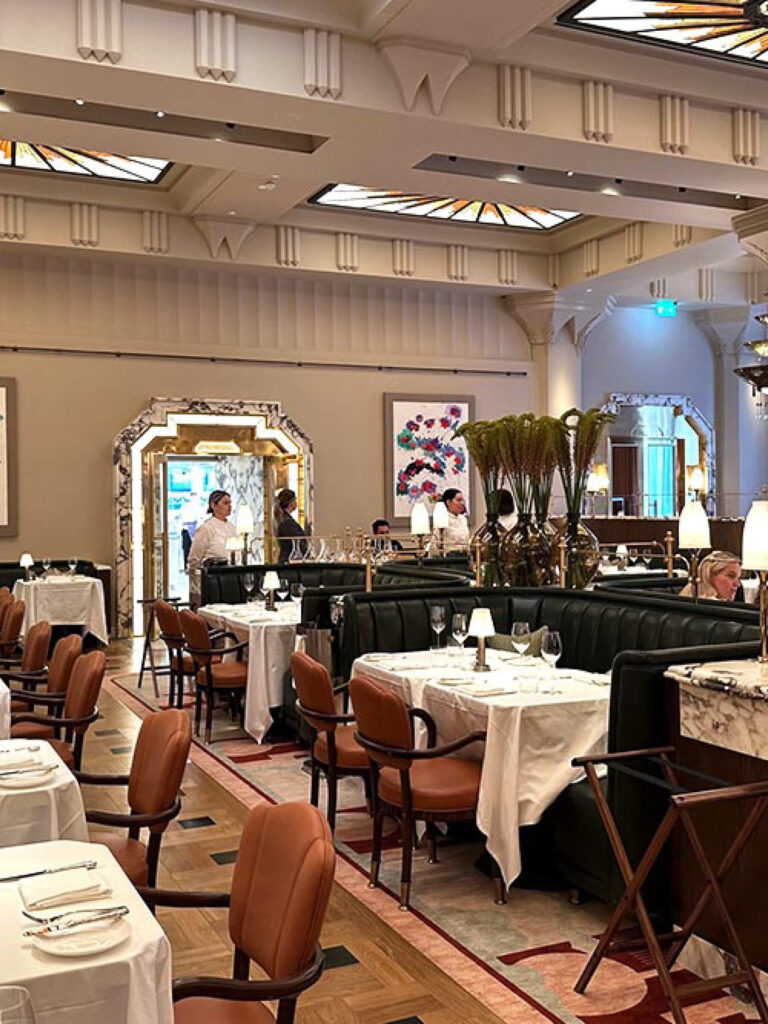
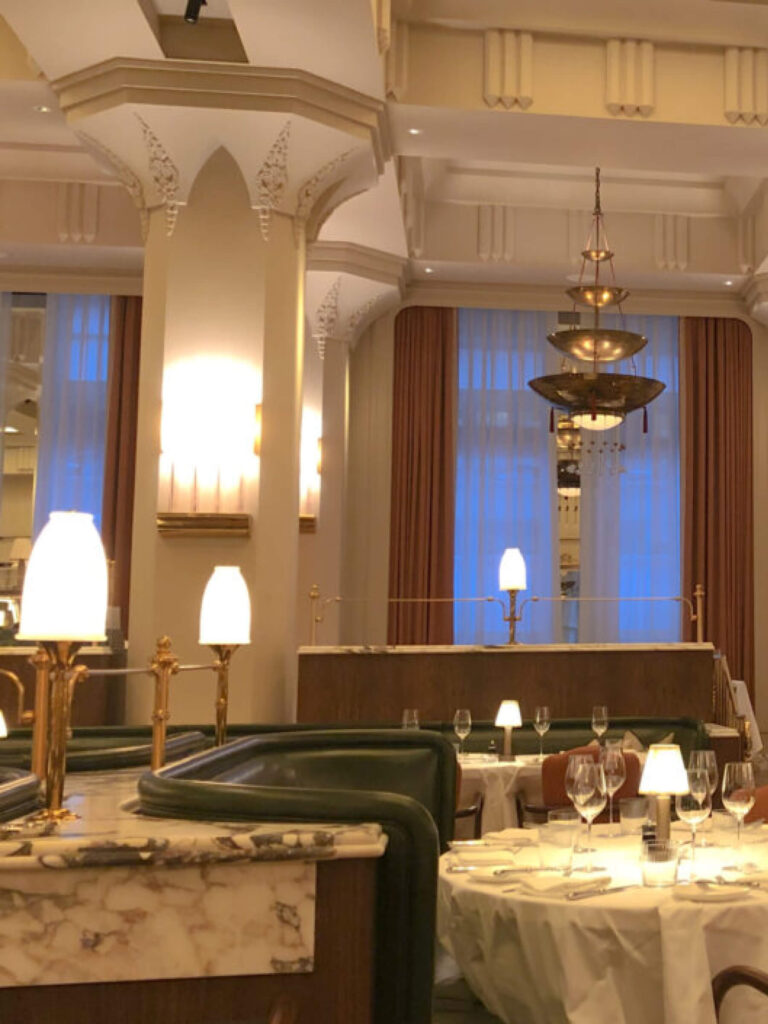
Claridge’s in Mayfair, originally established in 1812 and rebuilt in the 1890s in an Art Deco style, is one of London’s most influential examples of historic hotel design. The exterior combines red brick and Portland stone with wrought iron balconies and Victorian proportions. Art Deco detailing joined the interiors in the 1920s and 30s. Inside, black-and-white marble floors, mirrored columns, lacquered panels, and geometric plaster ceilings define early 20th-century luxury. The Foyer & Reading Room showcases Lalique glasswork, custom chandeliers, and velvet seating in soft tones. Claridge’s Bar by David Collins Studio pairs polished steel, dark wood, and etched glass to reflect the hotel’s Deco geometry. Every detail focuses on craftsmanship—carved wood, metal inlay, and marquetry—linking Claridge’s to London’s enduring design culture.



The Chancery Rosewood | Mayfair
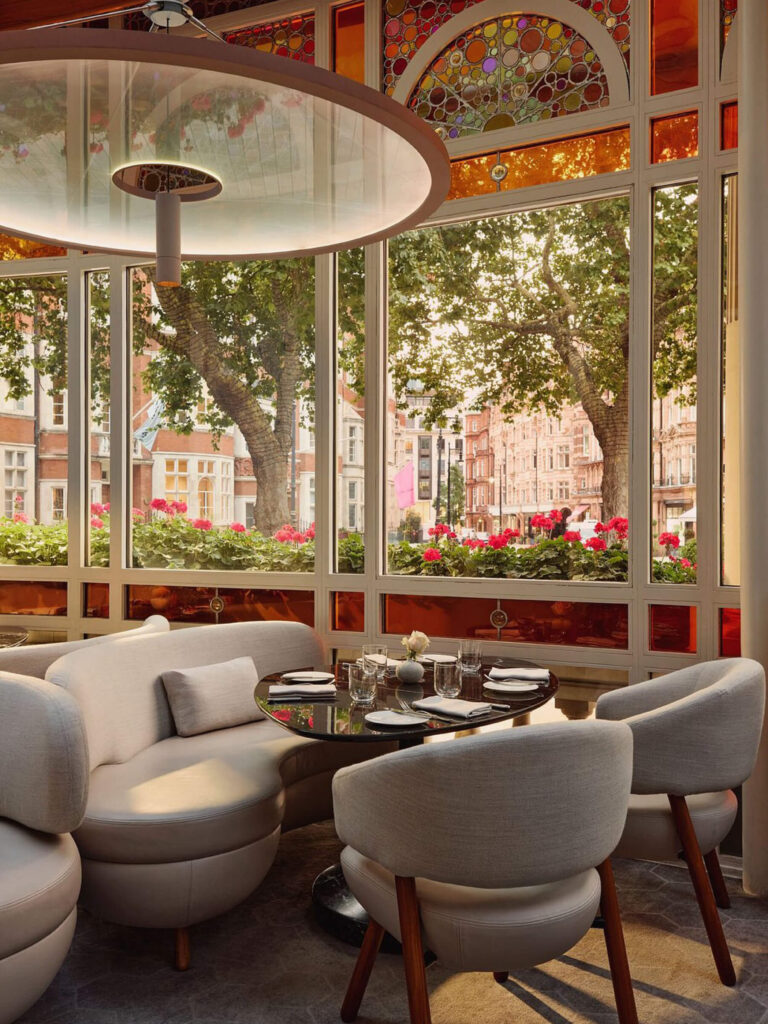
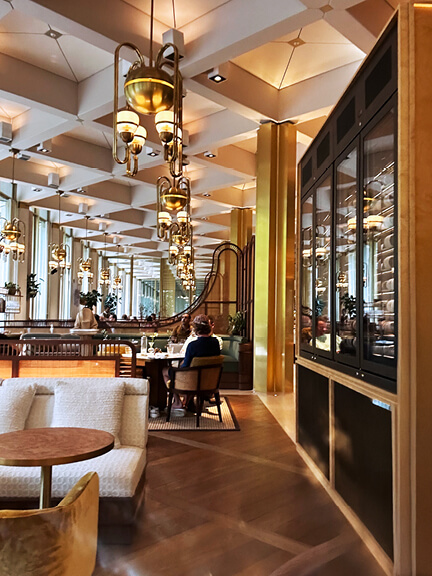
The Chancery Rosewood in Mayfair repurposes the mid-century landmark at 30 Grosvenor Square—once the United States Embassy designed by Eero Saarinen—into a bold exploration of London restaurant design. Tucked within the Grade II-listed structure, the hotel’s eight restaurants and bars inhabit vast spaces whose years as diplomatic interiors lend them scale, gravitas, and a quietly layered material story. Under planes of Portland stone, gilded detailing (including the restored bronze eagle above the façade), and Saarinen’s signature diagrid ceilings, the dining rooms blend modern lines with bespoke fabrics, ambient lighting, and tailored furniture—creating settings that feel both refined and distinctly rooted in London’s architectural history.


The Twenty Two | Mayfair
The Twenty Two in Mayfair reimagines London restaurant design within a Grade II-listed Edwardian manor on Grosvenor Square. Designer Natalia Miyar wraps the all-day restaurant in duck-egg blue panelling, gilt mirrors and crystal-fringed chandeliers, pairing vintage opulence with bold colour and playful details. Velvet banquettes, white-linen-topped tables, and marble-topped bars sit beneath ceilings detailed with subtle night-sky motifs, creating a room that feels richly layered yet inviting. With its Mediterranean-inflected modern British menu, crisp presentation and confident, crafted interiors, the space embodies how London restaurant design can be both luxurious and lively.


Atmosphere Shapes Experience
London offers so many great places to experience—from brunch and lunch to tea, dinner, and drinks—and I always gravitate toward dinner and drinks. When you’re in a fabulous place, a fabulous outfit is non-negotiable. London feels far more formal than Boston, and I loved dressing up and leaning into the city’s etiquette. The food and drinks impressed me, but the real standout was how London restaurant design shapes the experience, from casual pubs to polished dining rooms with history layered into every corner. Try a mix of everything, even if it’s just tea or a cocktail. London is filled with traditional interiors, historic rooms, and iconic landmarks—read more in the full Eat Sleep Shop London post, where we explore hotels and shopping too, and how this kind of design tourism continues to influence our New England projects.