London Through a Designer’s Eye
This guide uses a designer’s lens to eat, sleep, and shop London, focusing on places where the interiors drive the experience. Design shows up in everyday settings—restaurants, hotels, and members’ clubs reveal how space shapes how people gather and move. These recommendations highlight where to eat, sleep, and shop, chosen for their architecture, atmosphere, and character.
Eat & Drink | Historic Pubs
London’s historic pubs preserve original design details that no modern space can replicate. Aged plaster, worn oak, and hand-painted signage show how time shapes interiors. These pubs offer insight into domestic architecture and the social life of London.
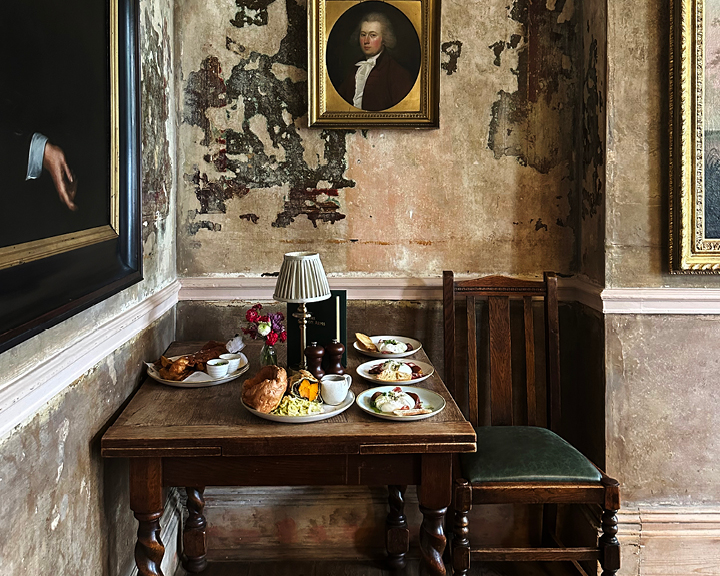
To begin, I headed to The Wilton Arms near Hyde Park. I went twice in one week—first with my design group for dinner, then again to meet a friend for drinks. The upstairs dining room immediately grabbed my attention. The ceiling and wainscoting are perfectly painted, while the walls are intentionally unfinished, revealing layers of paint and age. The contrast creates tension in the best way—refined elements against raw surfaces. Vintage furniture adds to the character, and the artwork elevates the room even further. Gilded frames and oil portraits, the kind you would expect in an English estate, hang against the worn walls.
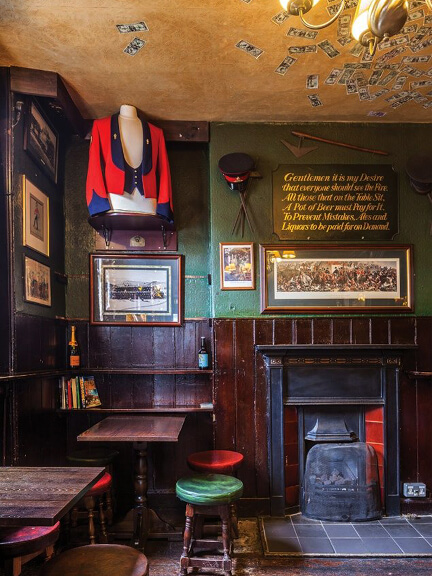
Next, I went to The Grenadier in Belgravia. The white brick exterior with royal blue trim and a bold red door signals its identity immediately. Inside, the ceiling becomes the focal point—covered with international currency that adds personality and charm. A military uniform stands near the fireplace, reinforcing the story of the building and its rumored haunted past.



Eat & Drink | Classic Dining Institutions
Every surface tells a story at these classic dining institutions—mosaic floors, polished brass, and tailored upholstery. Discipline and tradition rather than trend, and the experience begins with the interior before a menu even appears.
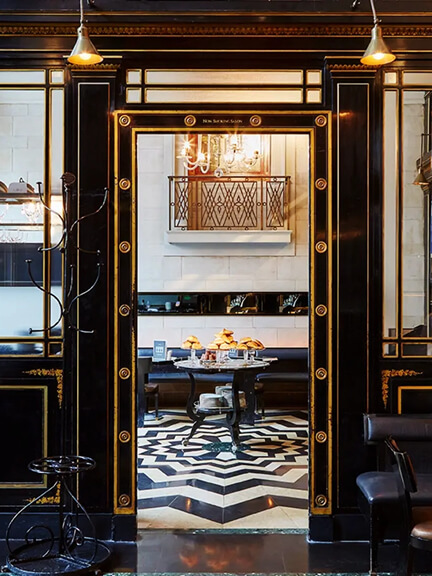
The Wolseley captures the essence of grand London dining, located in Mayfair. The entry sets the tone with wrought iron doors and architectural drama. Inside, the space unfolds with black and gilded portals, metalwork, and strong black-and-white contrast across the floors and columns. This palette defines the entire experience, and the off-white stone walls balance the bold patterning.
Next, No. 50 Cheyne (in Old Chelsea) delivers a distinctly different energy. The blue-and-white exterior, covered in cascading flowers, announces the restaurant before you even step inside. I visited twice—once for tea and once for dinner with my group—and both experiences revealed layers of interior personality. The tea room feels like a private home, with upholstered seating, soft lighting, and traditional paneling. In contrast, the red bar makes a dramatic statement: glossy red walls, a blue ceiling, velvet seating, and gilded fixtures.
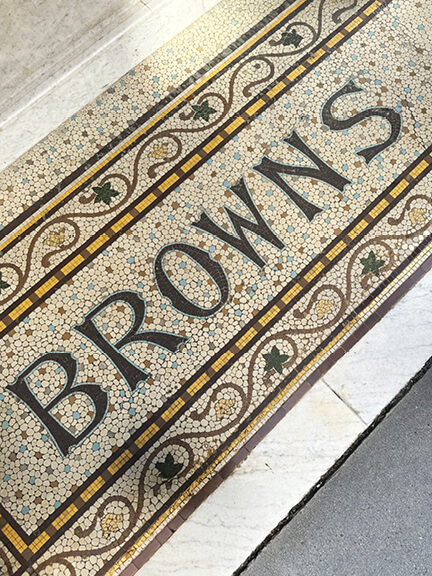
Finally, Brown’s offers a more understated classic experience, also in Mayfair. A client recommended it, and the design details did not disappoint. The mosaic tile floor at the entrance is original and features the Browns name, inside, a geometric mosaic continues the design story.




Eat & Drink | Luxury Hotel Dining & Private Clubs
Where hospitality turns into theater. Each space at these luxuryhotels (and private clubs) tells a story through materials, lighting, and precision detailing.
At The Connaught, I found myself focusing less on the full rooms and more on specific design gestures—a sculptural marble fountain filled with orchids, a small private dining room with a cool glass ceiling treatment. Next, Claridge’s offers pure Art Deco glamour. The portal leading to the gentlemen’s cloakroom feels seductive, setting the tone for the rest of the hotel. The floors extend the design story—intricate mosaic patterns with fan motifs and a gilded “C” embedded in the stone.
At the Rosewood, I settled in for coffee—and a cocktail—in a space that balances American grandeur with British restraint. The building, once the American Embassy and now a Grade II–listed landmark by Eero Saarinen, delivers a mood that is both stately and warm. A massive eagle guards the entrance from high above, signaling the transformation of power into hospitality. Likewise, The Twenty Two embraces maximalist luxury, also in Mayfair. Fringe-trimmed slipper chairs, custom-painted wall panels, and layered fabrics create a glamorous, residential feel. It feels like the private salon of someone with impeccable taste—and endless resources.
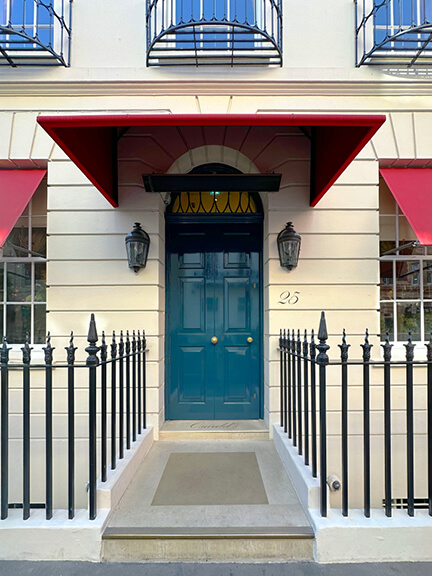
Finally, Oswald’s represents the height of London exclusivity. The interiors remain unsharable due to a strict no-photo policy, which only adds to its mystique. The high-gloss blue door and red awning offer just a hint of what lies beyond. Read more on a seperate restaurant design post here.



Sleep in Style: London’s Best Designed Hotels
After exploring London’s dining scene, the experience continues in the hotel scene. Even if you spend most of your time out exploring the city, the design of your hotel still shapes the mood of the trip. From the breakfast rooms to the guest suites, the city’s hotels offer richly layered interiors that make the stay as memorable as the itinerary. Below are a few of my favorite properties, with links to separate posts where I take a deeper dive into each one.
Sleep | Kit Kemp Hotels, Knightsbridge & Ham Yard
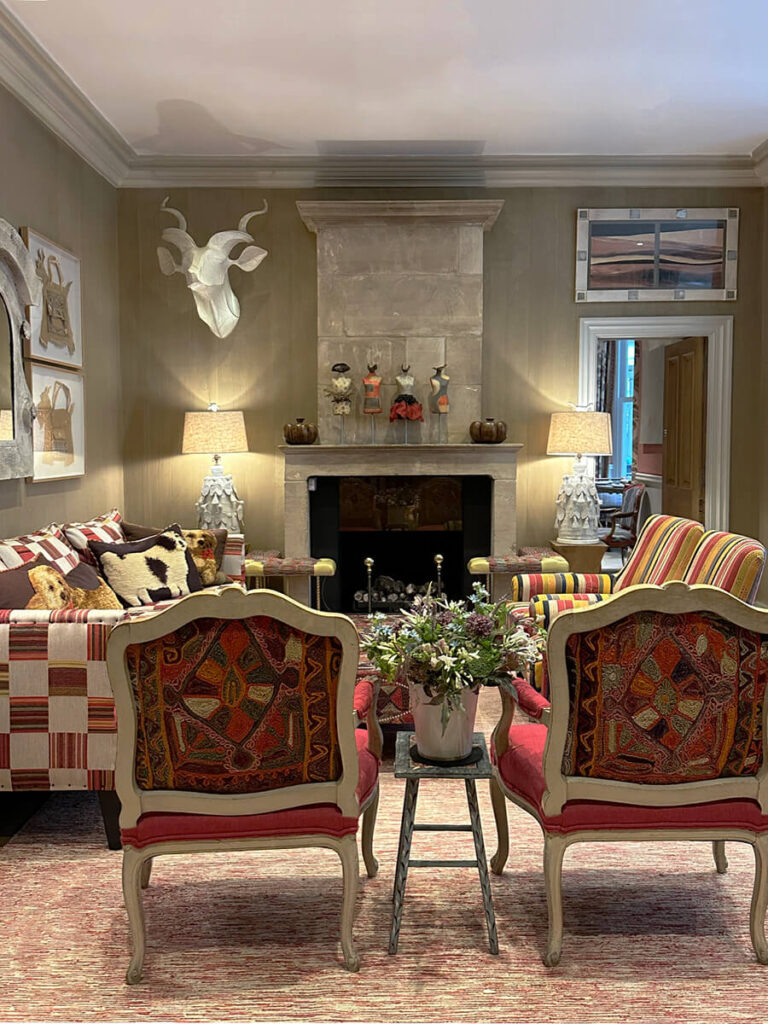
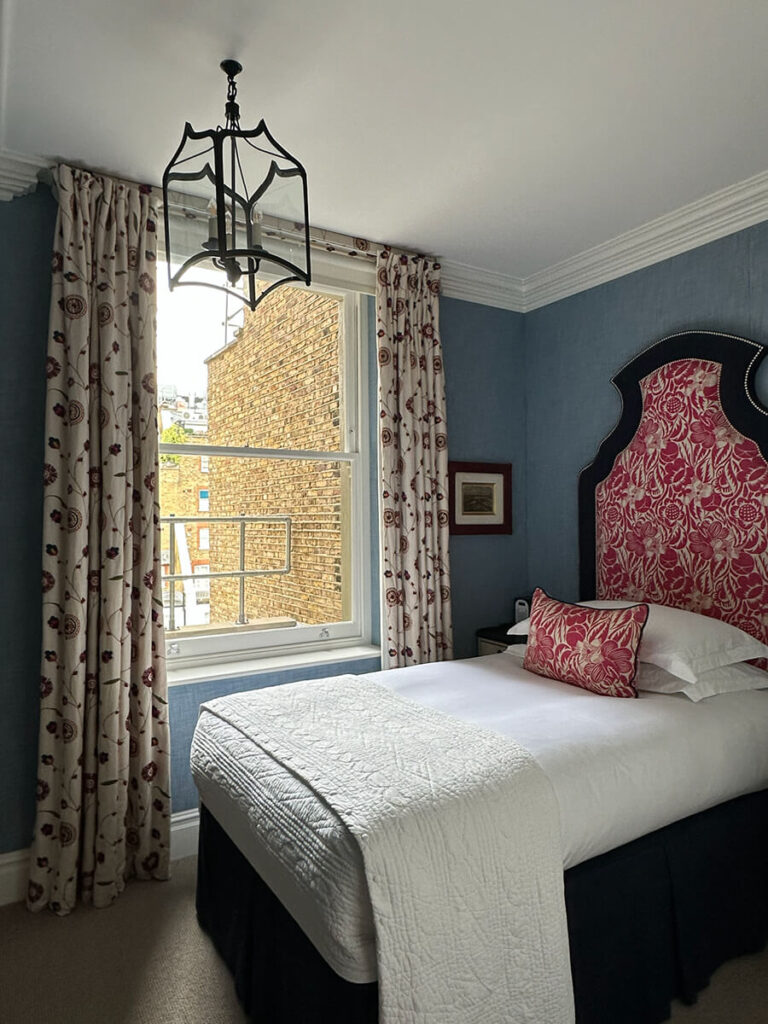
I was fortunate to experience two of Kit Kemp’s famed Firmdale hotels in London. I spent the week at the Knightsbridge Hotel, located on a quiet residential street just steps from Harrods. The hotel occupies two classic townhouses with a stately stone façade and perfectly pruned topiaries at the entry—a discreet arrival that blends into the neighborhood. Inside, the living room feels like a private home, complete with a historic fireplace and a mix of playful textiles layered across bergère chairs and sofas. In my room, the walls were not papered but wrapped in textured blue fabric, providing both color and acoustic softness. A red floral headboard, full-length drapery, and a classic lantern completed the look—traditional at its core, joyful in its execution.
During the same trip, my Christopher Farr design group was treated to a private tour of Ham Yard Hotel. The main sitting room features another historic fireplace, tall bookcases, and patterned wallpaper that gives the space a lively, collected mood. Other rooms highlight Kit Kemp’s signature mix of antiques, crystal ship chandeliers, bold headboards, and custom Christopher Farr Cloth upholstery. See my full Kit Kemp feature here for even more images and custom headboard inspiration.



Sleep | The Twenty Two, A Restored Historic Mansion
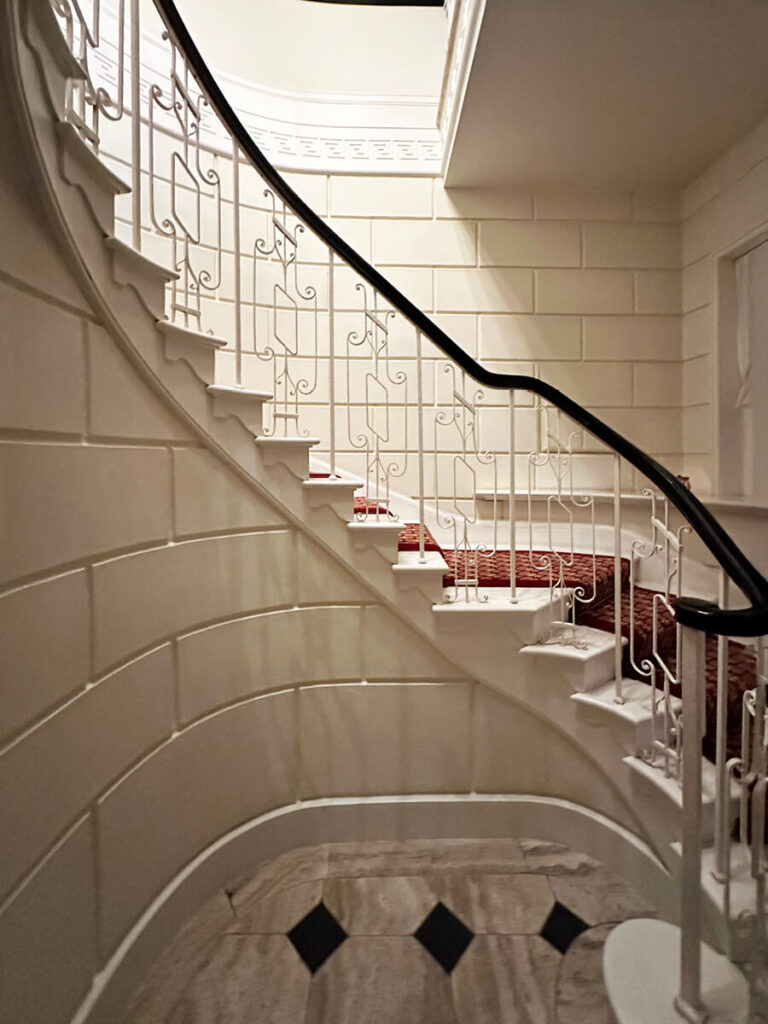
After a week in Knightsbridge, I moved to Mayfair for the weekend and checked into The Twenty Two, a restored historic mansion that delivers atmosphere in every direction. The casual breakfast room sets the tone with hand-painted wall panels, vintage light fixtures, and layered window treatments. Austrian shades—a detail often found in grand historic homes—add softness and formality to the space. Custom upholstery includes slipper chairs trimmed in fringe, velvet sofas, and bespoke millwork that gives each room a collected, residential feel.
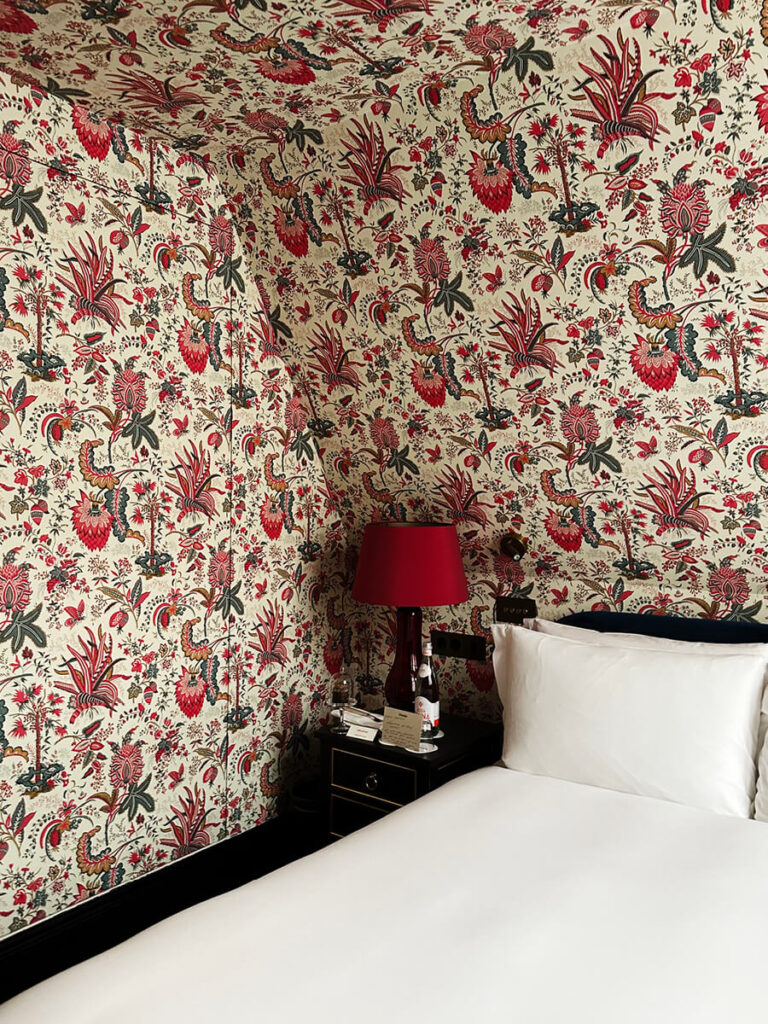
A stone staircase leads down to the private club, where the palette shifts to high-contrast black and white. The bar glows in high-gloss red lacquer, surrounded by floor-to-ceiling white subway tile and black doors that open to outdoor terraces. The outdoor lounges are very cute—one side is dressed in red-striped awnings with matching upholstery, classic bistro tables, and traditional lighting. Back in my guest room, a deep red floral wallpaper wrapped both the walls and the ceiling, and made a strong case for pattern saturation. Look closely and you’ll see a concealed door hidden within the wallpaper—a clever detail that blends function into design. Take a look at my design tour of the hotel to see more images.




Where to Shop in London
One must shop in London. Retail stores here showcase some of the best design in the world—the most prestigious brands working with top designers, chic materials, inventive interiors, and impeccable merchandising. We’re all influenced by retail design, whether inspired to shop and buy the goods or simply to buy into the lifestyle…. what every great brand aspires to do.
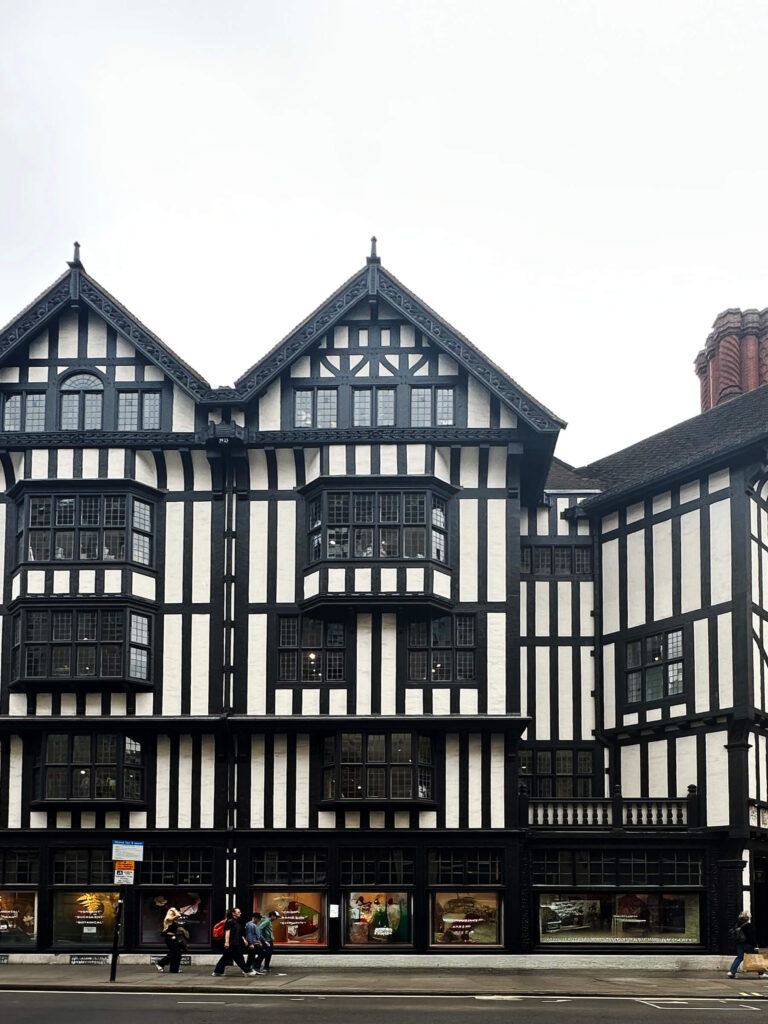
Some of London’s best spots—for both design and shopping—are worth visiting even if you don’t plan to spend a pound. Harrods offers the quintessential London retail experience, famous worldwide. Fortnum & Mason, among the city’s oldest department store, stands apart for its history without a focus on fashion (founded in 1707). Liberty London draws visitors with its Tudor Revival architecture (built 1922-24, so, mock-Tudor) and creative displays that make every floor feel like discovery. And finally, Notting Hill—not one store but a neighborhood—delivers endless design inspiration through its boutiques, cafés, and charming façades. All inspiring, all potentially dangerous for the wallet.
The Ultimate Symbol of Luxury Retail: Harrods
Harrod’s remains London’s benchmark for luxury retail—where architecture and design define the experience as much as the merchandise. Every floor reveals a different mood, from grand marble corridors to intimate spaces defined by light and material.
The exterior draws you in—its terracotta façade, designed by architect Charles William Stephens in 1905, remains one of London’s most recognizable landmarks. Inside, countless individual boutiques unfold across the floors. I paused for the Loewe and Loro Piana shops—each distinct and true to its brand—conveniently positioned across from one another. See more photos here.


Shop London | Fortnum & Mason
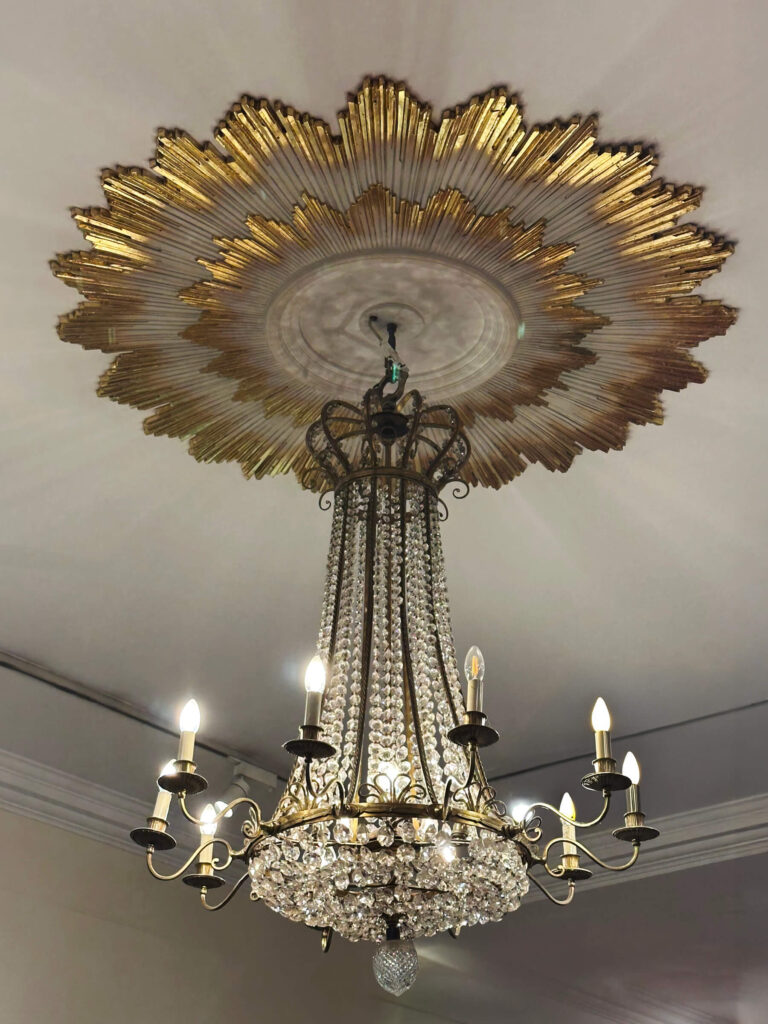
Fortnum & Mason defines London tradition through palette and polish. Its interiors blend heritage architecture with a distinct sense of refinement—teal walls, brass accents, and soft lighting that make every corner feel like a surprise. More than a department store, it’s a study in how color and craftsmanship express British identity. Note the lighting—a gilded ceiling medallion anchors a historic light fixture.
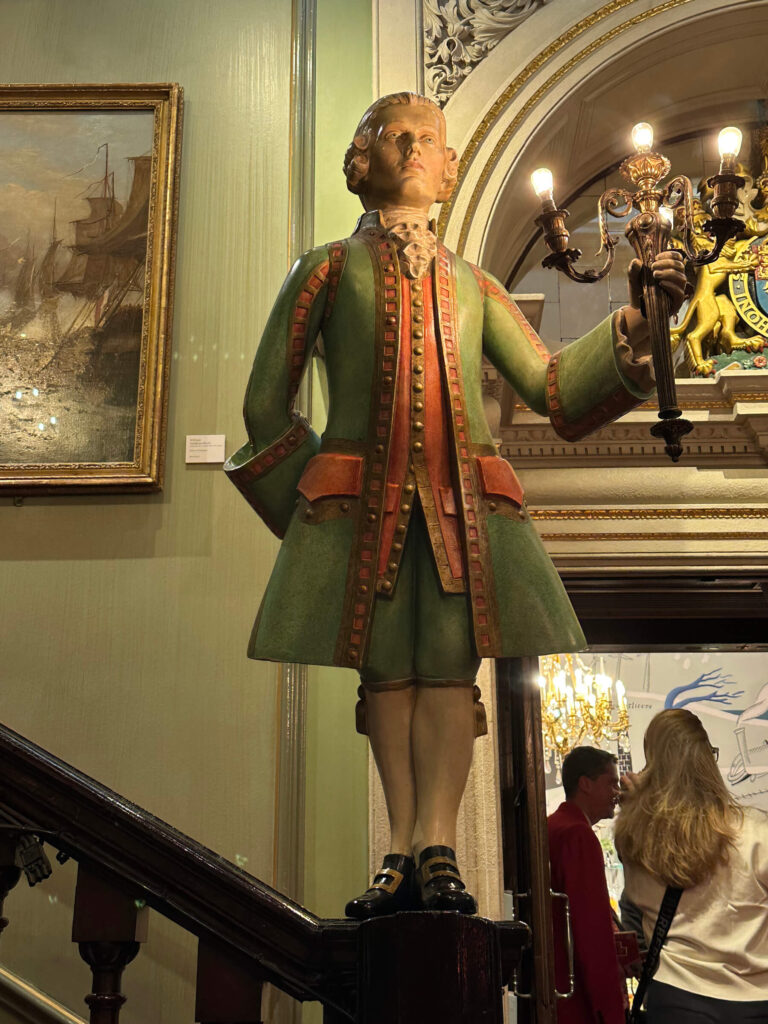
At the stair, a clever and sculpted figurine holds a candelabra. And then there’s the cupola, a classic touch. We explored each floor before reaching the top for a private dinner—surrounded by everything the store embodies: fine design, craftsmanship, and a sense of occasion that carried from cocktails to dessert. See more photos here.

Liberty London
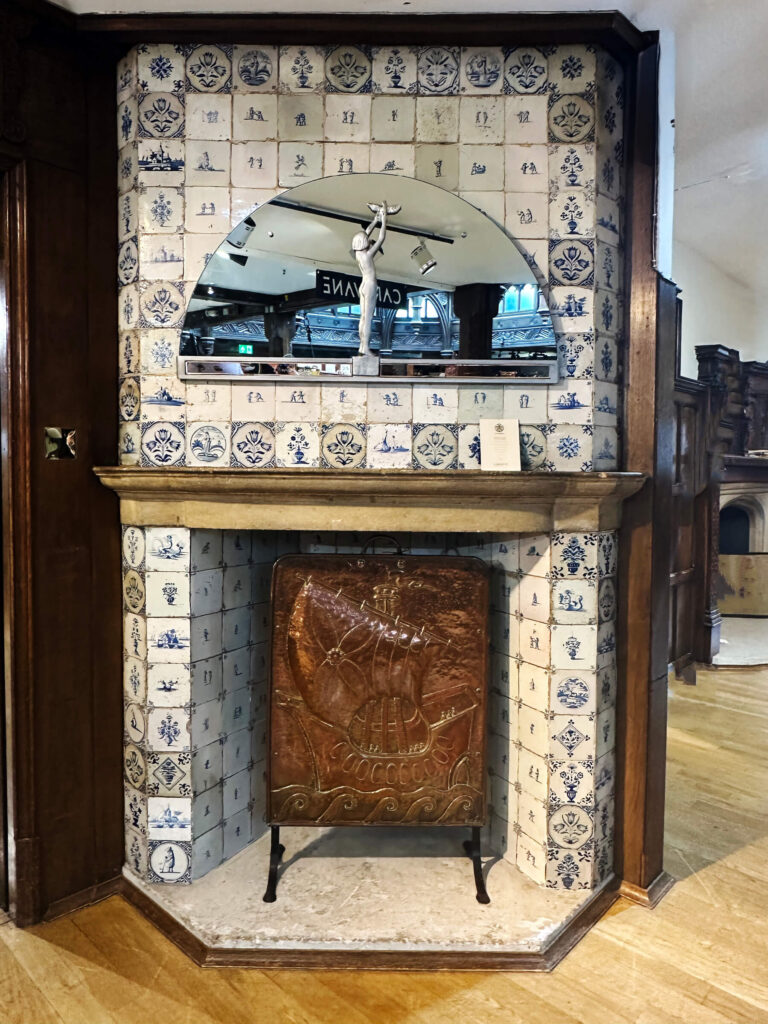
Liberty London is a design pilgrimage—equal parts architecture and atmosphere. The timber-framed Tudor Revival building invites you into a world layered with pattern, craft, and history. Every surface screams history, from carved wood beams to textiles that define British creativity for over a century. Inside, you can see how the building is quite literally held up—its timber frames were salvaged from old Royal Navy vessels when Liberty was rebuilt in the 1920s. Step outside again and the façade reveals even more exposed woodwork, a Tudor Revival design by architect Edwin T. Hall that turns structure into ornament. One of my favorite details is a Delft-tiled fireplace, a remnant of the store’s earliest offerings—when Liberty sold everything from fireplaces to tile. Today, it’s mostly fashion, shoes, handbags, and ceramics—and, of course, a dedicated Christmas room that appears year-round. See more photos here.

Notting Hill Boutiques
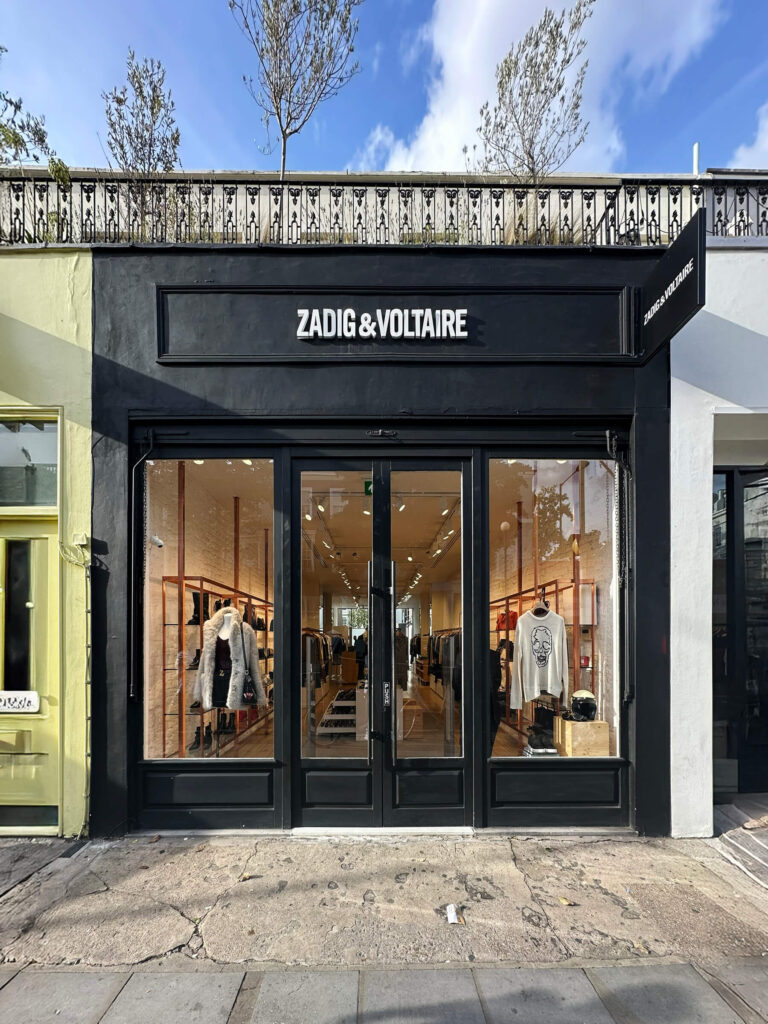
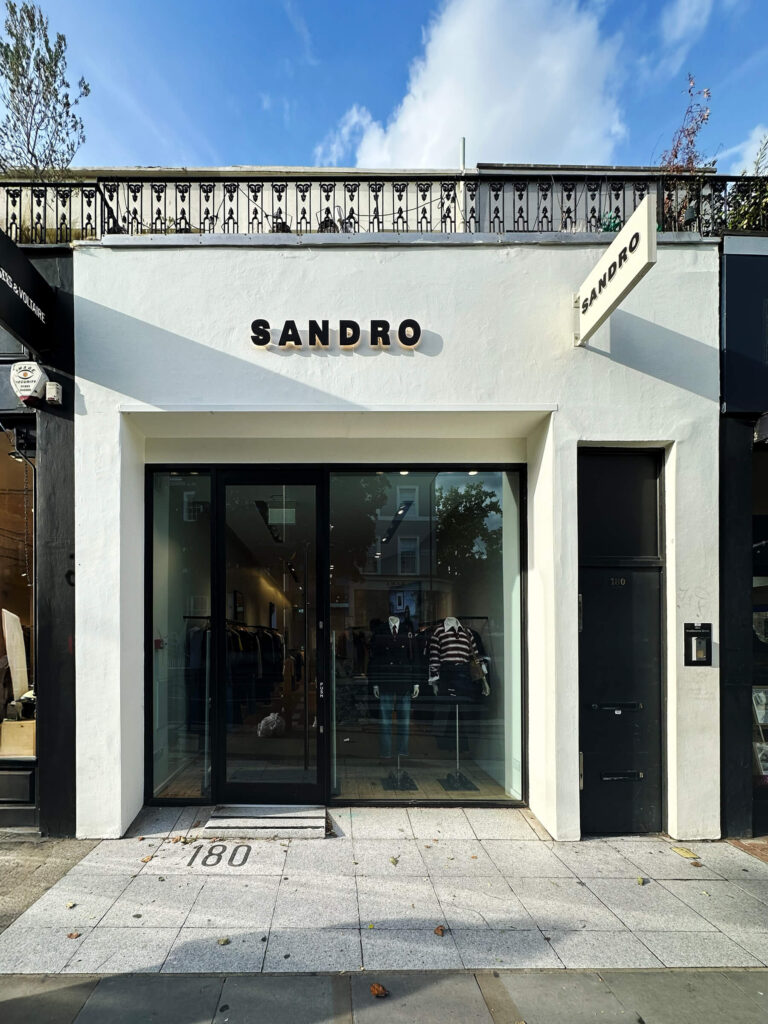
Notting Hill trades grandeur for intimacy. It’s a neighborhood where design lives on the street—boutiques, cafés, and storefronts layered with color and character. Walking its blocks feels like studying modern London through architecture, retail, and everyday style. In Notting Hill, it’s a collection of boutiques rather than one grand department store. Some of my favorites: Zadig & Voltaire, WNU, and a coffee stop at Granger. Also Weekend Max Mara, ME+EM, and Sandro—among many others lining Westbourne Grove. A series of mostly black-and-white, chic storefronts defines the streetscape—each shop small but perfectly scaled. The neighborhood is punctuated by moments of color—in the surrounding architecture and in cafés with awnings, like the soft yellow one at Granger.


Eat Sleep Shop London | Through A Designer’s Eye
Stay somewhere thoughtful, eat and drink well, and stop in to shop—even if only for inspiration or a quick browse through the windows. If you manage all three, you’ve had a pretty good trip; really, you just need great company.
London rewards anyone who moves through it with curiosity, noticing how architecture, lighting, and material tell a story. Much of what I see while traveling informs my work—especially my approach to historic home design, shaped by centuries of craftsmanship and proportion. Travel itself offers endless design inspiration, from the colors of a café to the rhythm of a hotel lobby. And as I expand my focus on design tourism, I’m exploring how destinations reveal themselves through the eyes of a designer.