A Building’s Charm
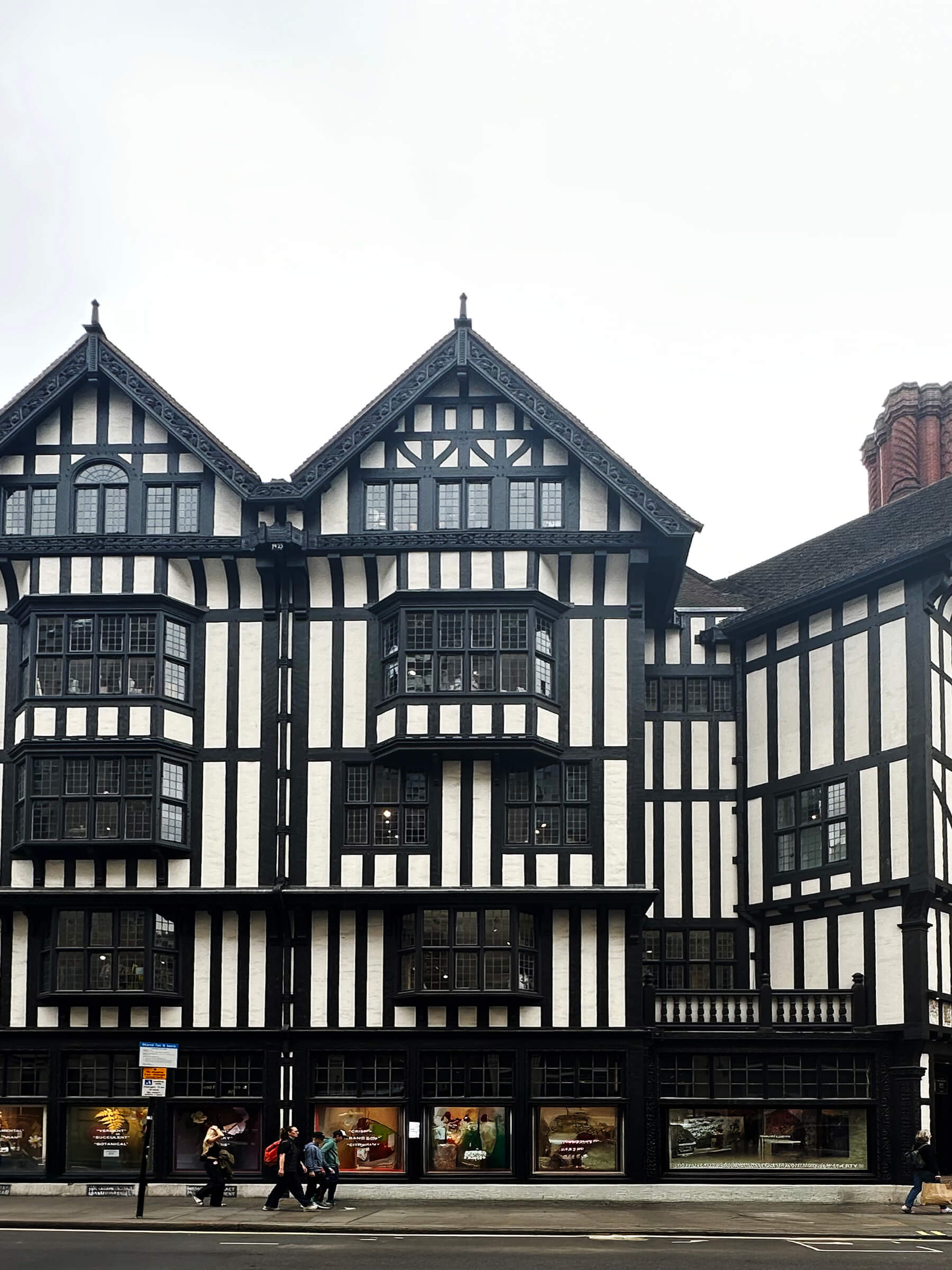
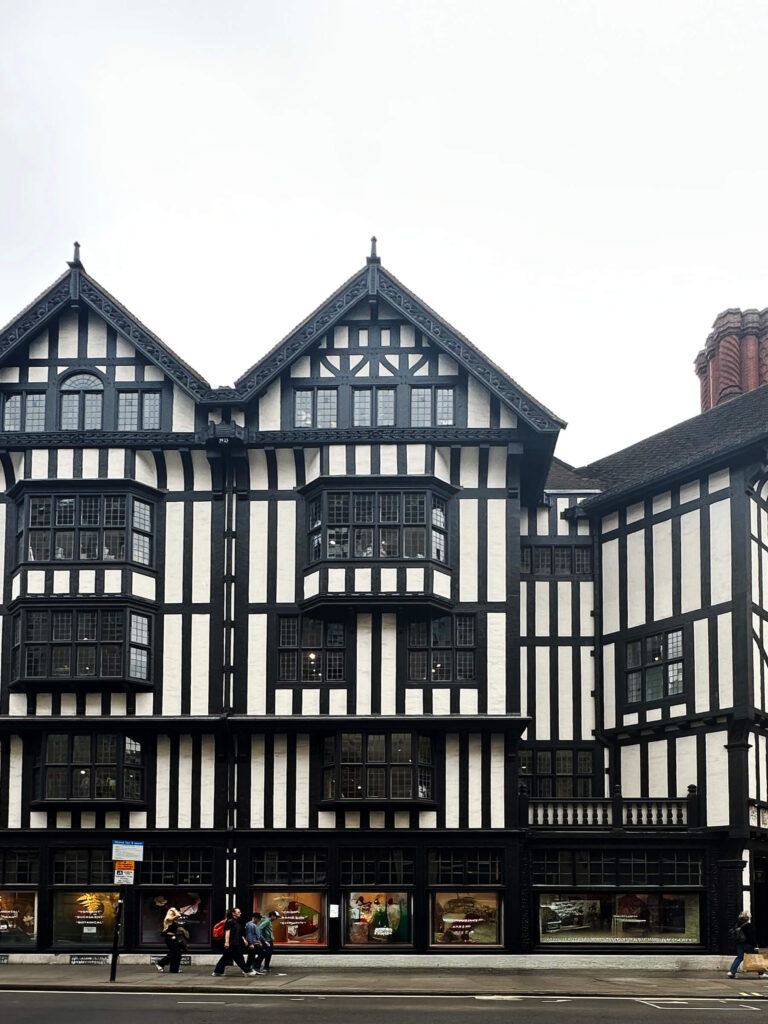
The Liberty London department store is one of those rare buildings that practically pulls you inside—the design of the building practially makes you want to spend money. Its exterior could double as a business strategy. The place was packed when I visited, and it’s easy to see why. Beyond the quality clothing, home goods, and Christmas collections, the building itself is the main attraction. While the U.S. is full of new build malls and concrete retail centers, this old-school structure proves that character sells. The building’s charm isn’t just part of the experience—it is the experience.
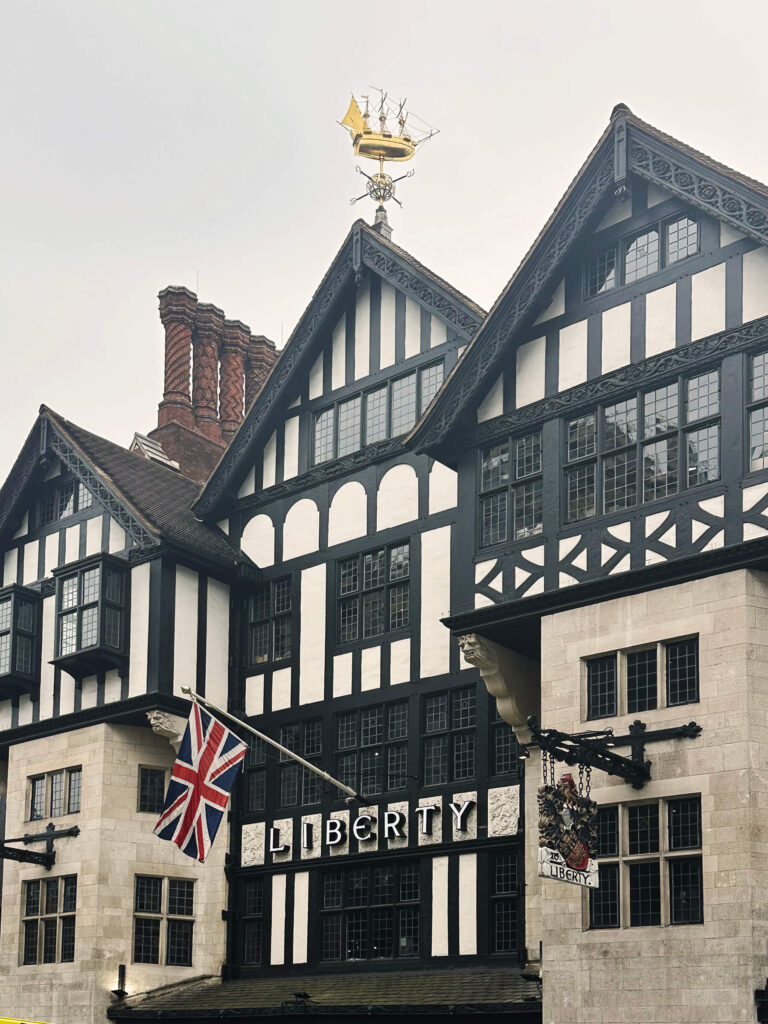
The store stands on Great Marlborough Street, just off Regent Street in London’s West End. Designed by architects Edwin T. Hall and E. Stanley Hall, it was completed in 1924 and built from the timbers of two ships—the HMS Hindustan and HMS Impregnable. The mock-Tudor façade, hand-carved oak beams, and leaded glass windows give it an unmistakable English charm. Inside, three central atriums fill the space with natural light and reveal carved wood, ironwork, and intricate joinery. The result feels warm and personal—closer to a grand home than a department store.

Light & Space
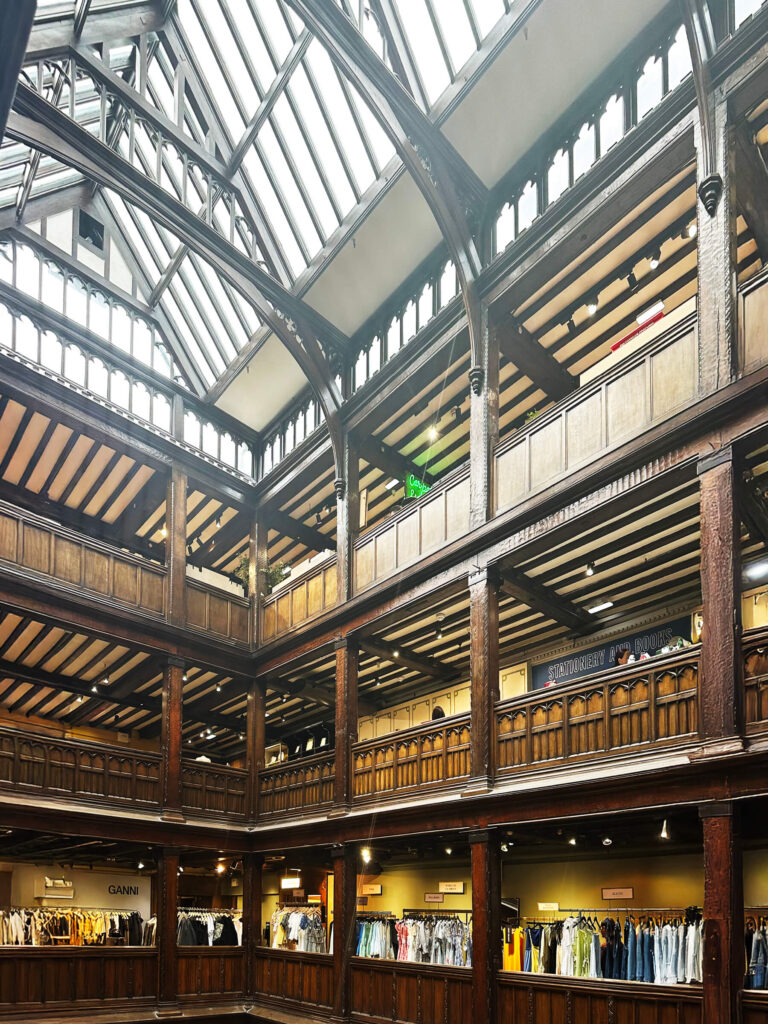
Inside, the central atrium reveals the building’s structure—literally showing what holds it up. A real estate agent might call it wasted square footage, but Liberty proves how light and space sell. The exposed timber rises from the ground floor to the ceiling, where glass skylights flood the interior with daylight. Around each atrium (tehre are three), each level branches into smaller departments that feel intimate yet connected.


Handwork Behind Every Surface
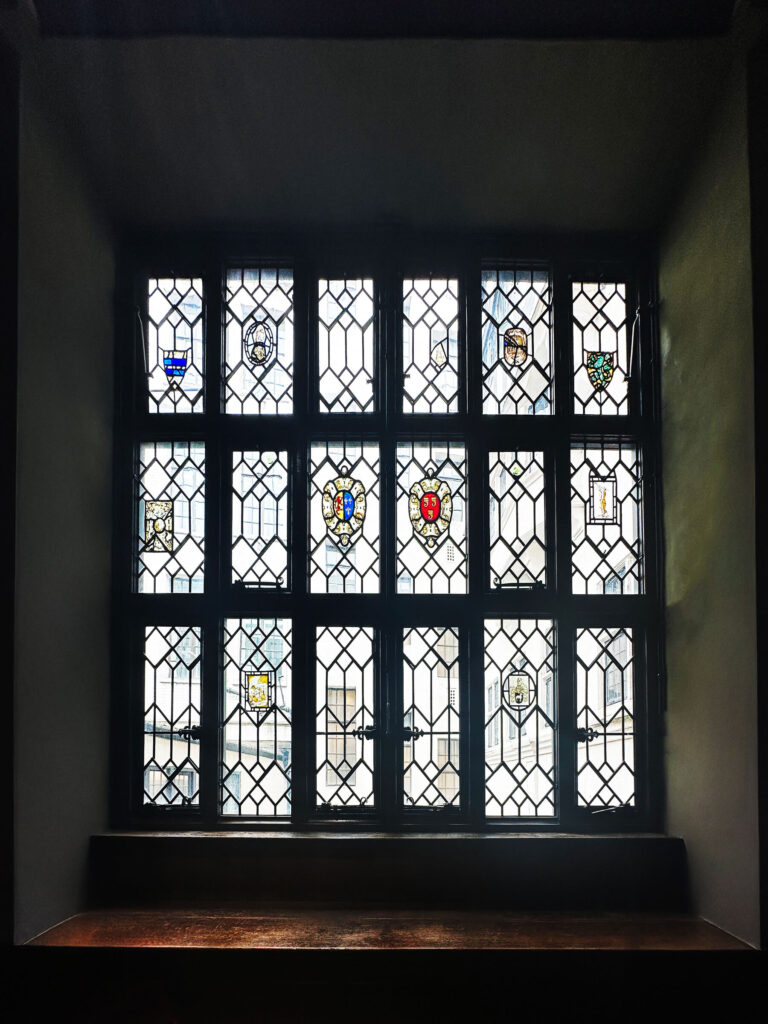
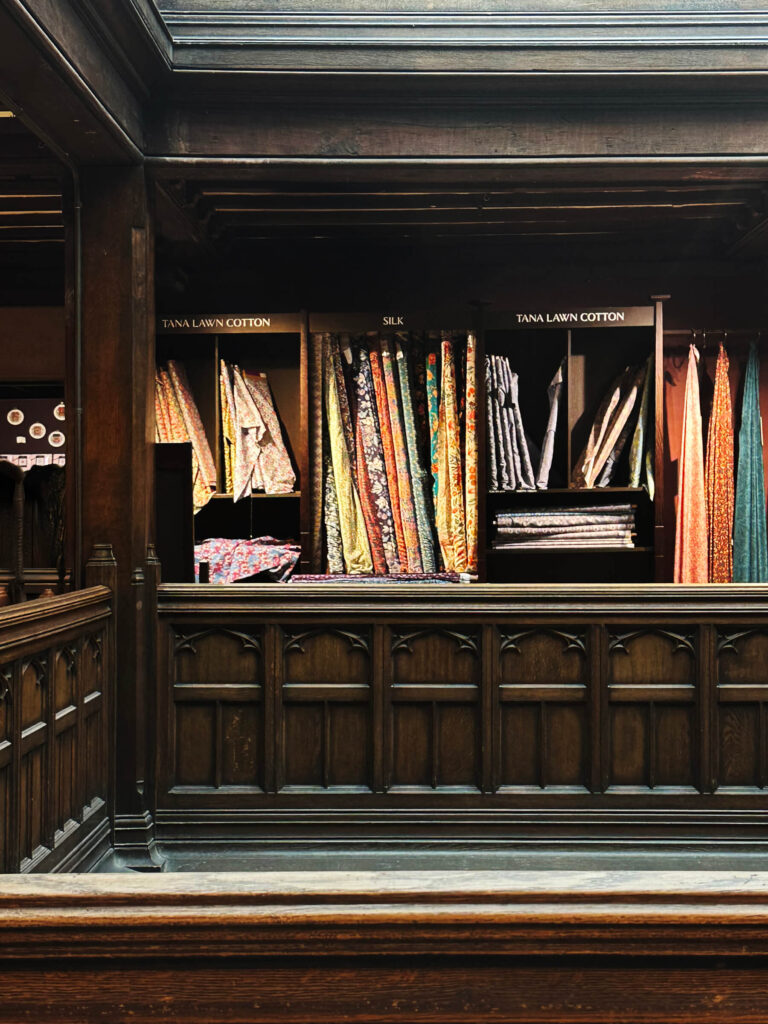
Designers notice the details others might miss. The stained-glass windows—mostly clear with small bursts of blue and red—frame the large staircase on one side of the building. In one atrium, the carved wood remains in its natural state, the aged finish revealing the handwork behind every surface… and giving view to Liberty’s fabric department. As a novice sewer, I loved seeing their original prints in person—cotton, silk, and more—all designed in-house. The destination offers something for everyone, whether you come for the architecture, yards of fabric, or the joy of a fabulous candle.
Selling Nearly Everything
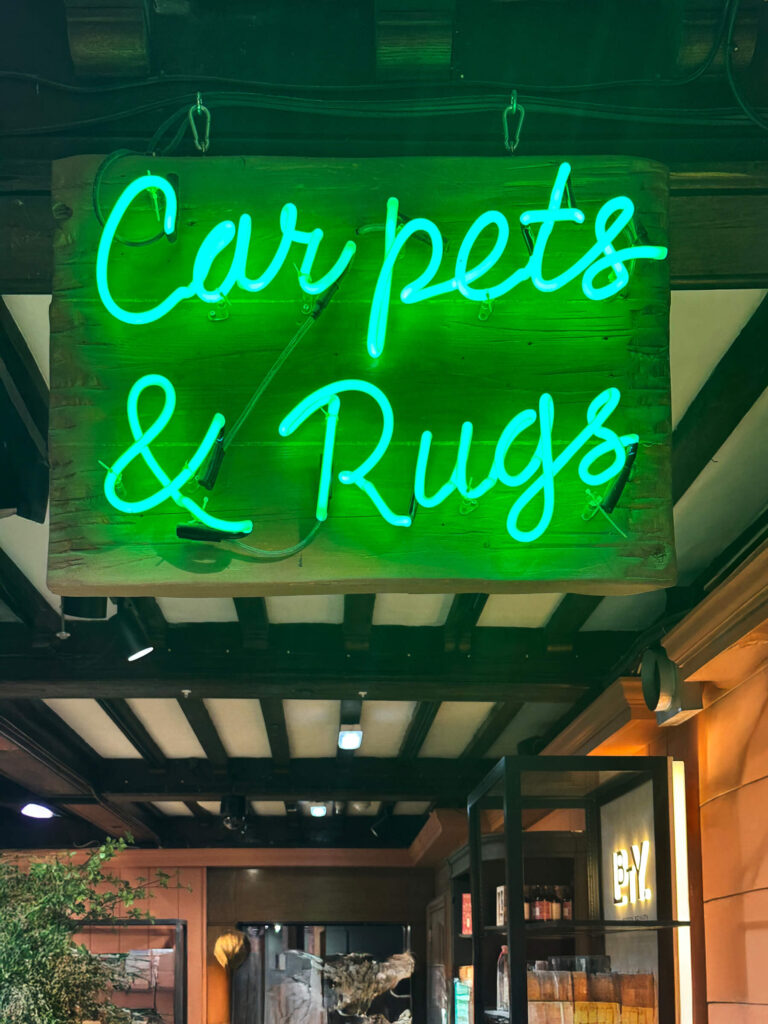
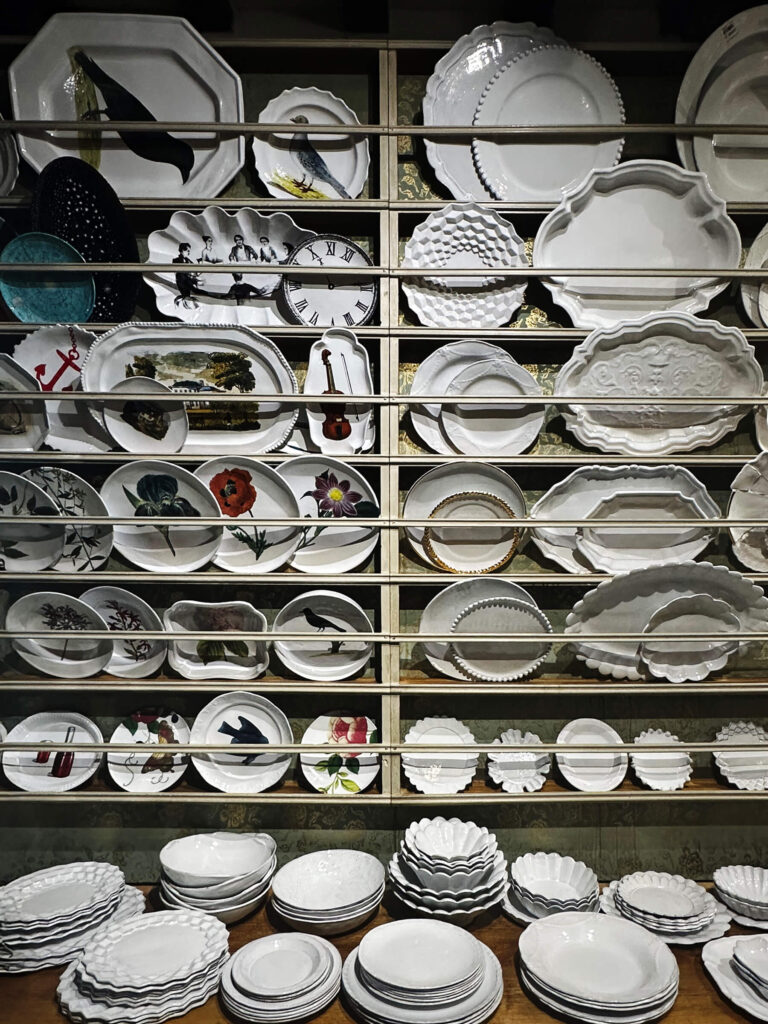
Beyond clothing and fabric, Liberty London sells nearly everything—ceramics, carpets, rugs, candles, and small décor. A few pieces immediately stood out: Persian Qajar–style vases painted with swimming fish in shades of blue, green, and yellow. In the carpet department, a glowing neon sign marks the entrance—no photos allowed—but the selection is unforgettable. Each piece is unique: vintage, antique, and handwoven from all over the world. Liberty even collaborated with The Rug Company on six rugs inspired by its 1875 fabric archive, all woven in Nepal. Finally, I found French ceramics from Astier de Villatte—also sold at John Derian in New York and Nickey Kehoe in Los Angeles. Liberty’s mix of art, craft, and commerce remains unmatched.

European Craftsmanship
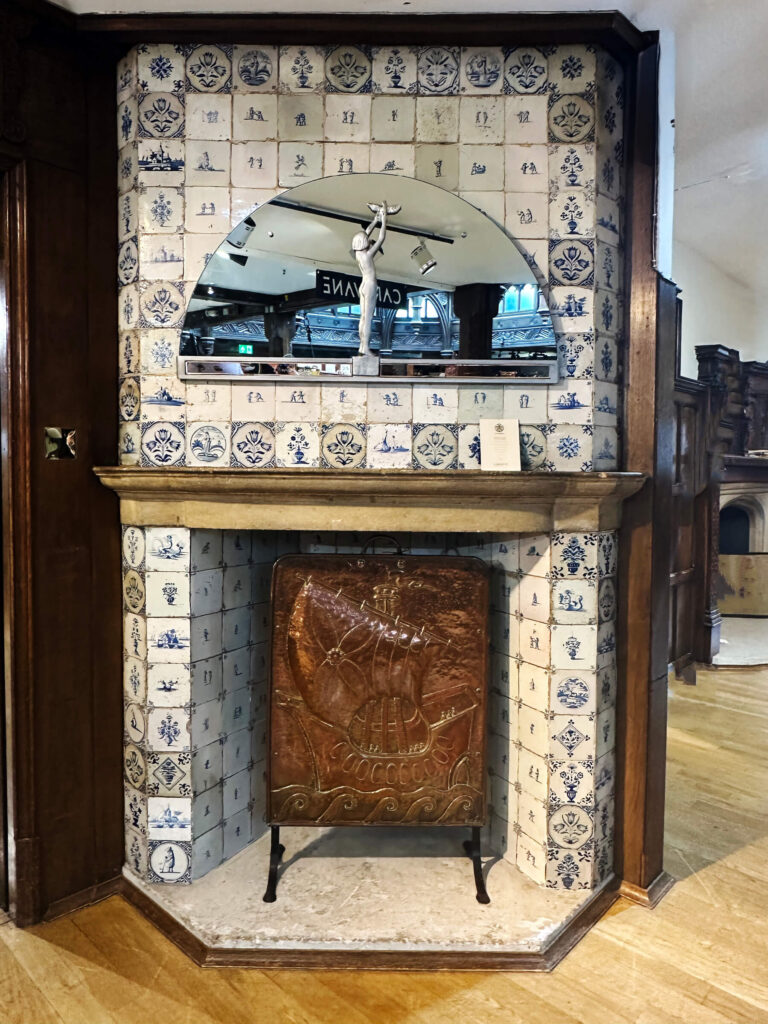
Liberty’s heritage archives mention fireplaces with 17th-century–style surrounds, several incorporating imported Dutch Delft tiles—blue and white ceramics hand-painted with pastoral and nautical scenes. These tiles were popular imports in late-Victorian and Edwardian Britain and often appeared in Liberty’s early home catalogues. The Delft fireplace aligns with Liberty’s decorative history and reflects the company’s link to European craftsmanship.
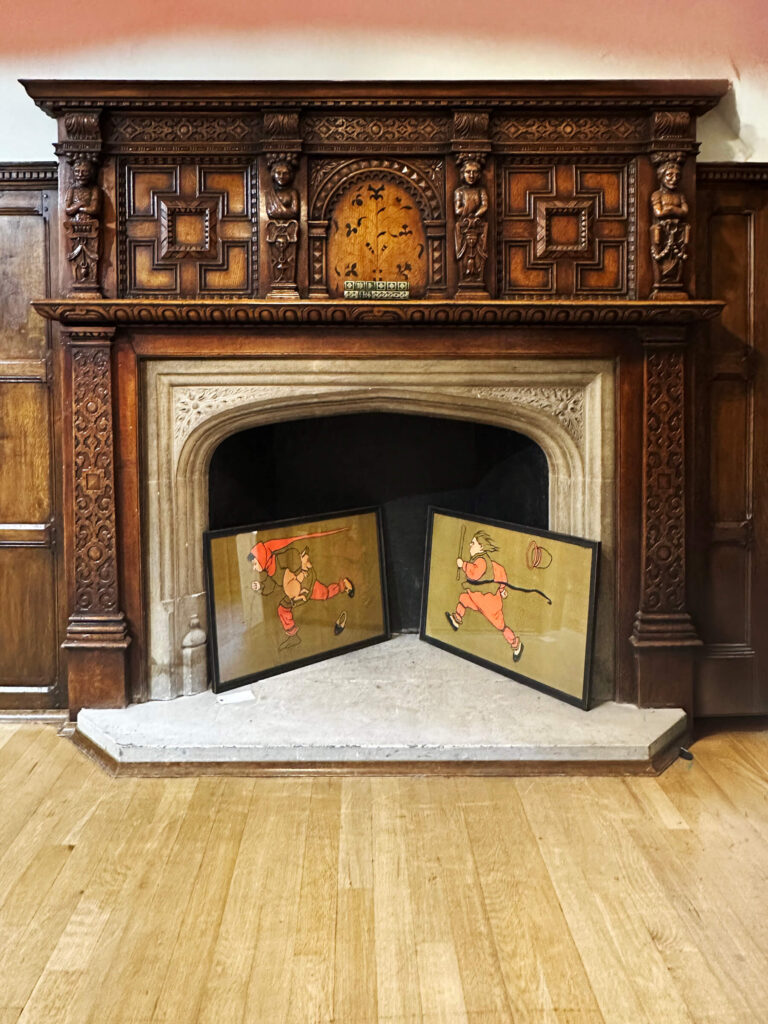
Other fireplaces were made from solid oak and walnut, matching the Tudor Revival aesthetic. These are likely original to the 1924 construction by Edwin T. Hall and E. Stanley Hall. The carvings follow 16th-century English motifs—floral scrolls, shields, and crests—echoing the hand-crafted furniture Liberty once sold in its Art Furnishings Department. No longer used for heat, they remain key architectural details expressing Liberty’s mission: uniting craftsmanship, history, and design.

Liberty London Department Store
It’s not often you find design inspiration in a fireplace inside a department store—but that’s part of Liberty’s allure. I always take home cuts of fabric, linger too long in the fashion department, and make mental notes in the ceramics section. I skipped the Christmas room this time—the line was too long, and it was only September. There’s only so much holiday one can handle that early.
See more in our Eat | Sleep | Shop London post, and read about our Design Tourism mantra—how travel continues to shape our interior design projects across New England and beyond.