King’s Gallery at Buckingham Palace
The King’s Gallery at Buckingham Palace serves one purpose: to bring the Royal Collection out of storage and into public view. Most of what you see here normally lives in private rooms, archive vaults, or other royal residences. These exhibitions are often the only chance to see the material up close, and the gallery builds each show around a specific period or them. Rotating the displays every few months, each installation pulls portraits, garments, furniture, and documents from the larger collection. The Edwardian exhibition (seen in September 2025) uses the gallery’s long rooms, high ceilings, and clear sightlines to show the scale of the era and the people who shaped it.
The Edwardian exhibition moves through three main rooms, each with its own color and focus: the deep green gallery of formal portraits, the red room filled with large ceremonial works, and the smaller blue gallery that holds landscapes. The layout makes the era easy to follow as the art shifts from court imagery to public events to quiet studies and objects. My notes below follow the same path, enjoy!
The Edwardian Story Through Formal Portraiture
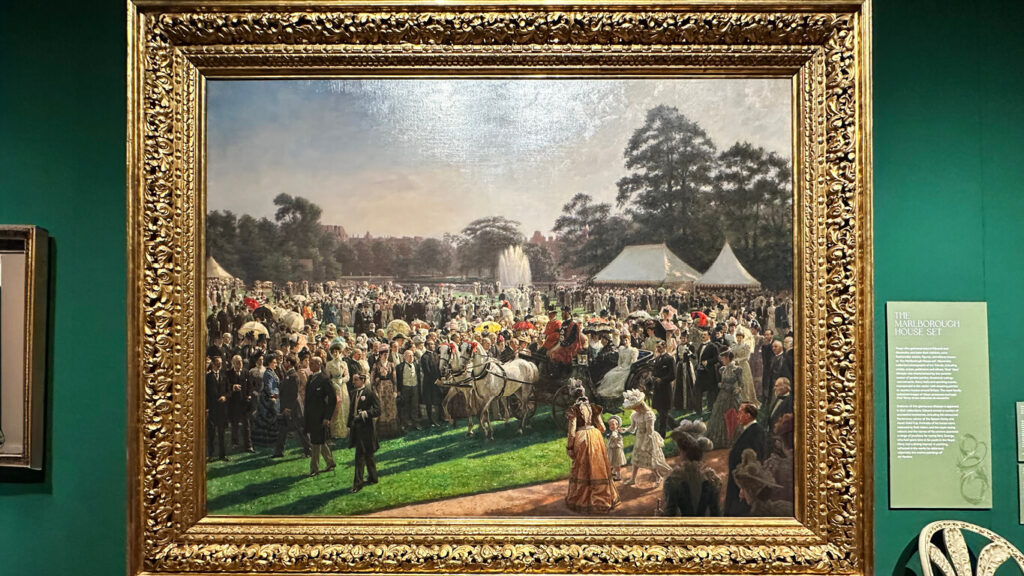
The first room in the gallery uses hunter-green walls, a black marble wall base, and glass cases at the center. Art fills every wall, and the largest works introduce the Edwardian story through formal portraiture. Franz Xaver Winterhalter’s 1864 portrait of Alexandra of Denmark shows her in a white gown trimmed with blue ribbons, and the crisp handling of the fabric defines the painting. Winterhalter’s 1864 portrait of the Prince of Wales, later Edward VII, hangs nearby. His uniform carries heavy gold embroidery, painted in detail with sharp clarity.
A smaller grouping sits to the right. A lion’s head painting, a Rosa Bonheur work included in the exhibition, shows the animal in profile with thick, textured fur. Below it, a carved chair from the Royal Collection adds scale and brings the display closer to a domestic arrangement rather than a sparse museum wall.


A Garden Party with Tuxen
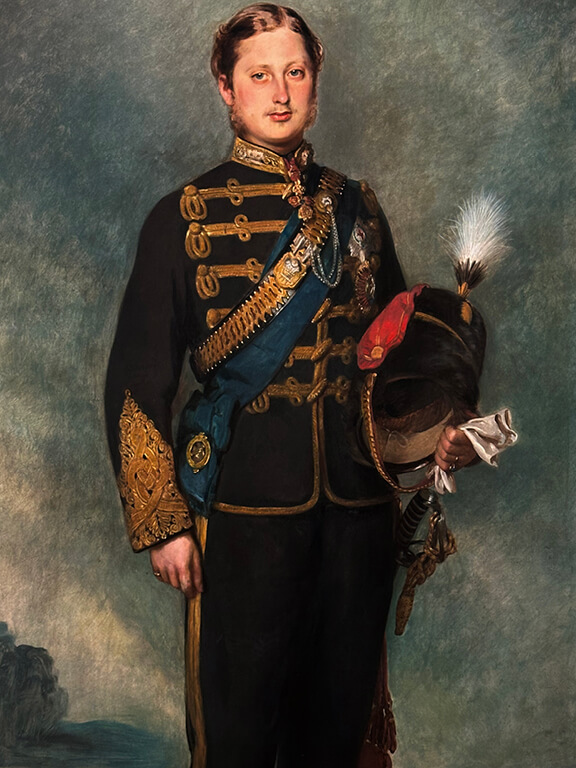
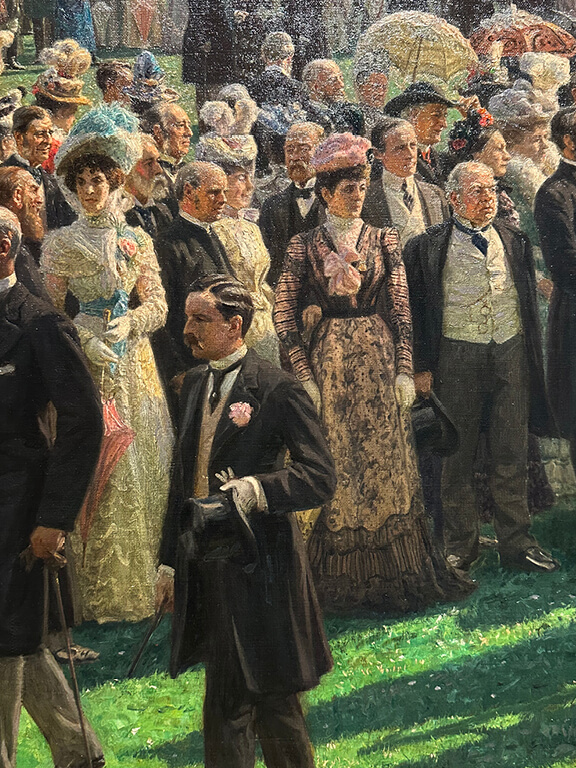
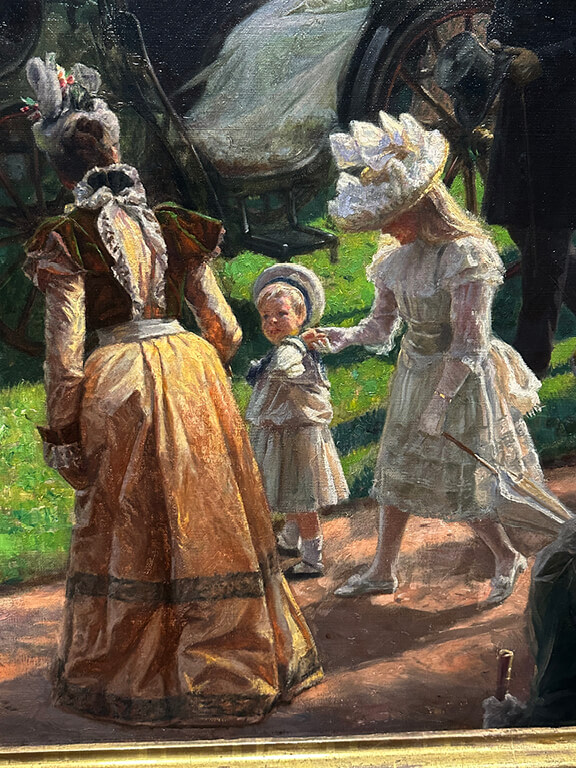
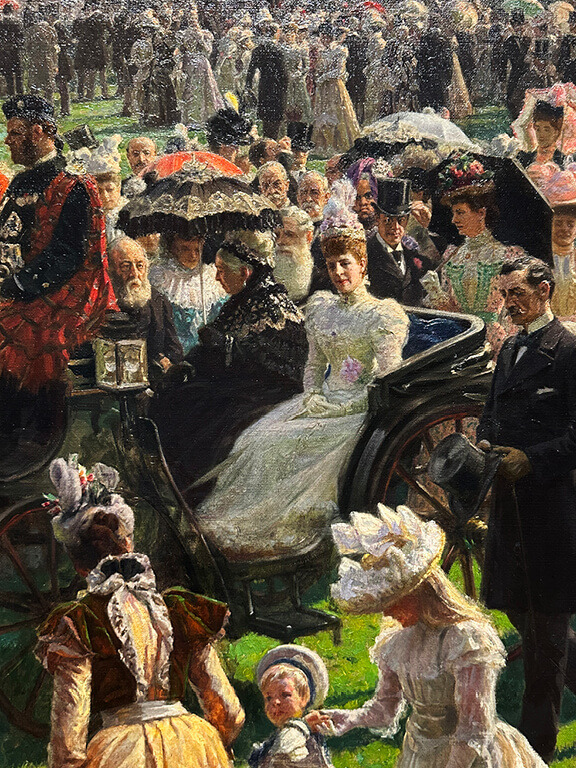
Another major artwork in the same room hangs opposite the portrait grouping, and it brings a full narrative scene into the space. “The Garden Party at Buckingham Palace, 28 June 1897,” by Laurits Regner Tuxen, shows a dense outdoor gathering on the palace grounds. Tuxen builds the scene with short, precise brushstrokes, and the close views reveal sharp highlights on satin, lace, and wool. The dresses shift from pale creams to deep golds, while the hats and parasols add bright accents that move through the crowd. Faces stay distinct even in the busiest areas because he paints each one with quick, exact marks. The foreground shows children in crisp white clothing, which reflects the era’s formality even in casual settings.
Coronation Worthy
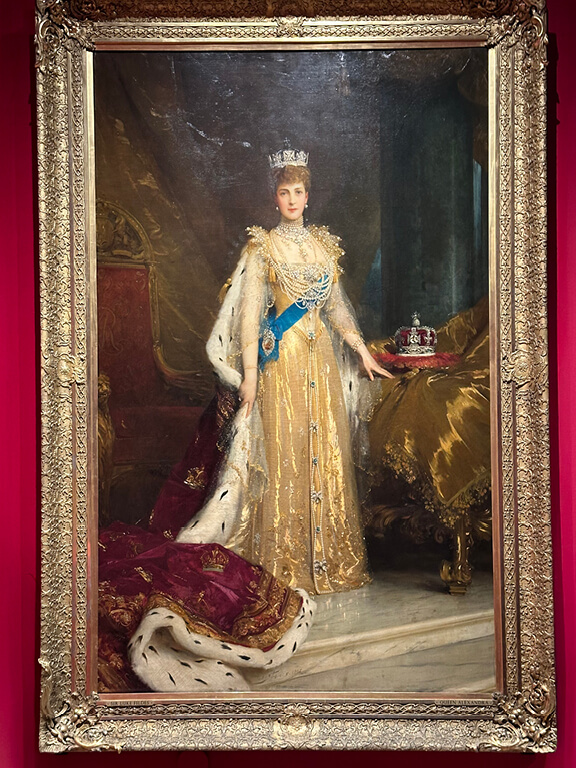
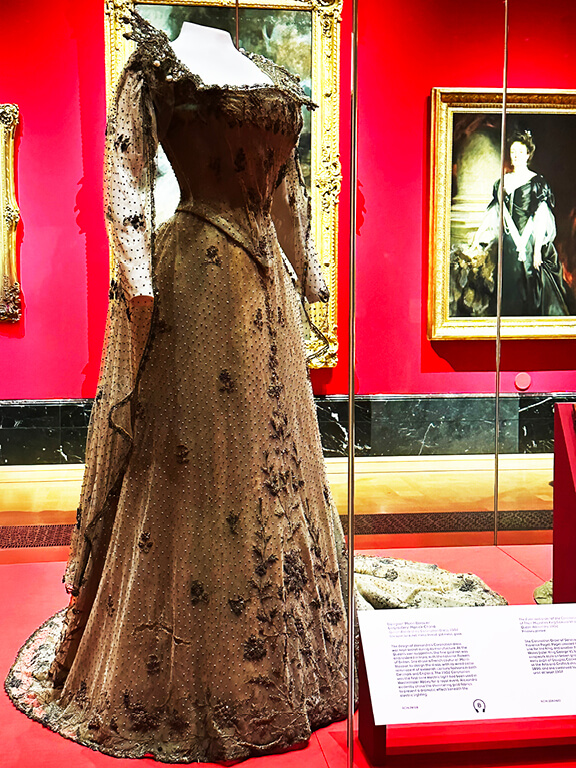
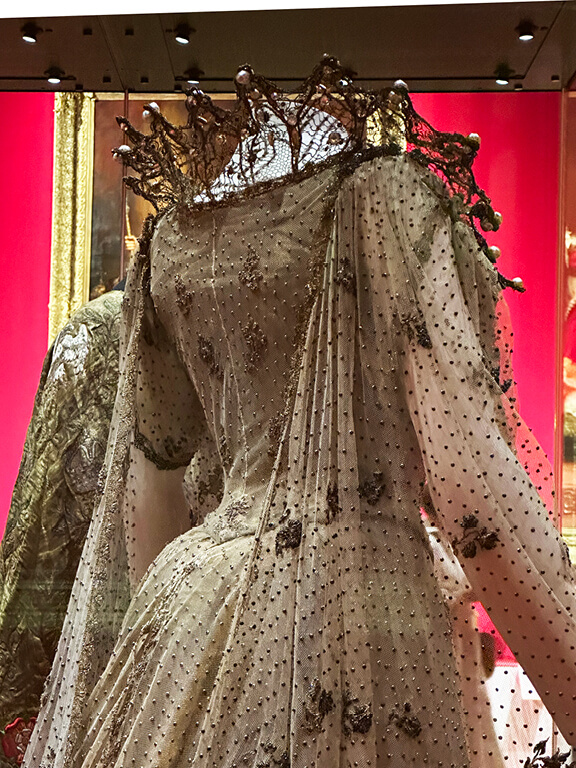
The gilded throne chair by Carlhian & Baumetz stands out first. With carved lion-head arms, a tall arched back carrying the royal coat of arms, and deep red velvet embroidered with royal emblems. Its weight and carving show how ceremonial furniture signaled authority inside royal settings. Nearby, the portrait of Alexandra presents her in full coronation robes. Wearing gold, ermine, and the blue Order of the Garter sash, with the crown set beside her on a draped table. Across from the portrait, her 1902 coronation dress appears in the case. The gown is made from gold net layered over gold silk, embroidered with gold spangles and metallic thread that forms floral motifs. Seen up close, the waist is shockingly small — far smaller than photos suggest — and the narrow cut makes it clear how demure and physically slight she was in reality.


More Tuxen: The Marriage Painting
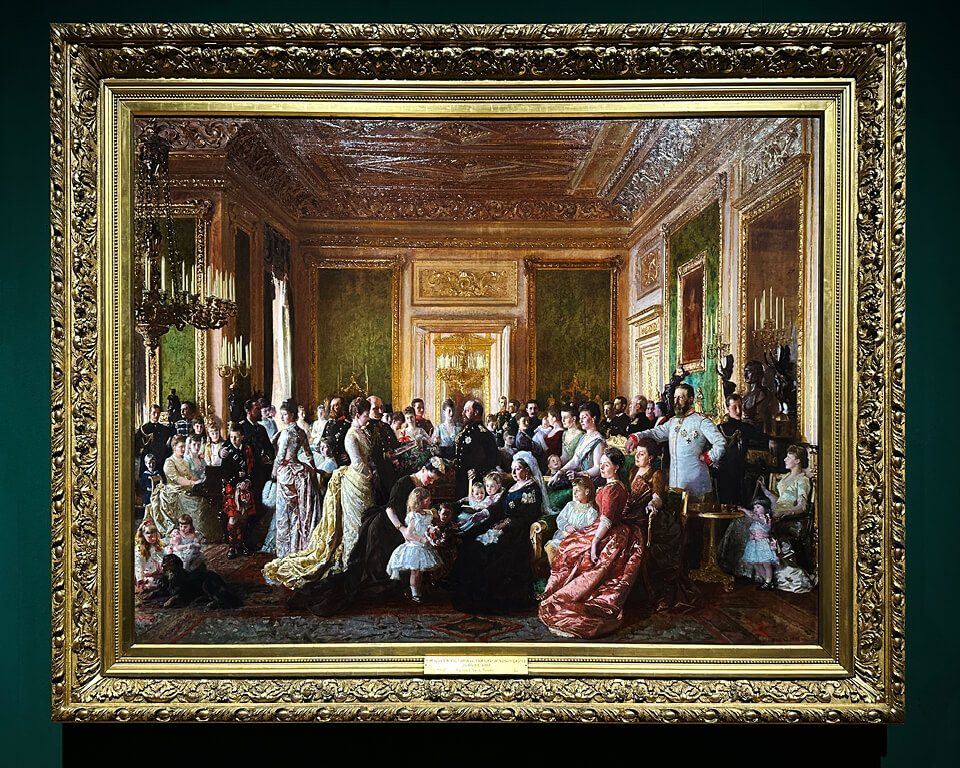
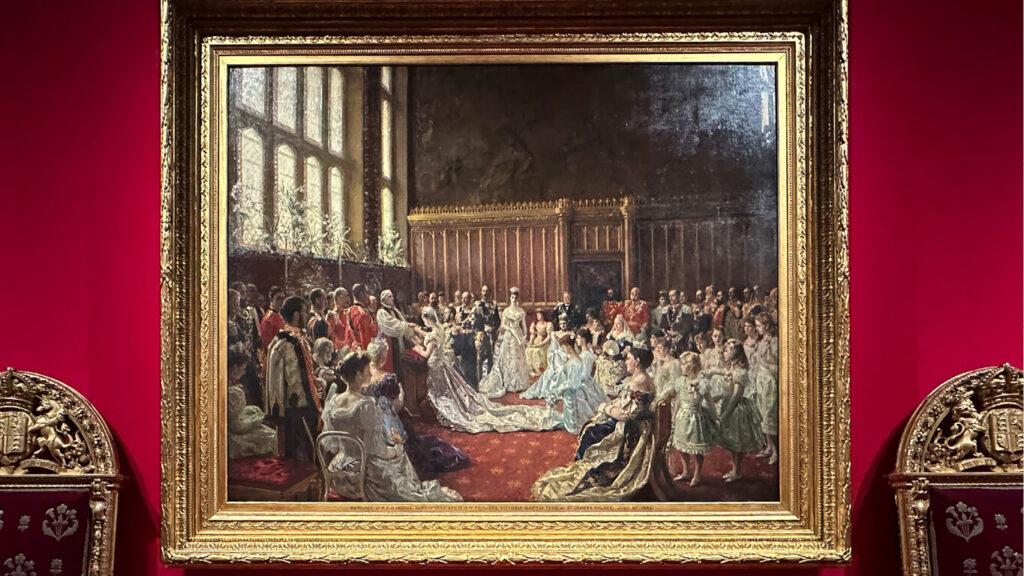
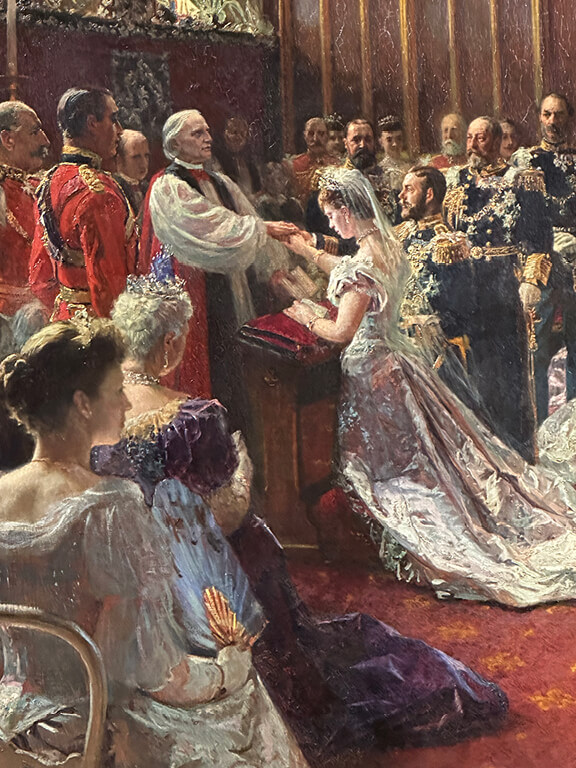
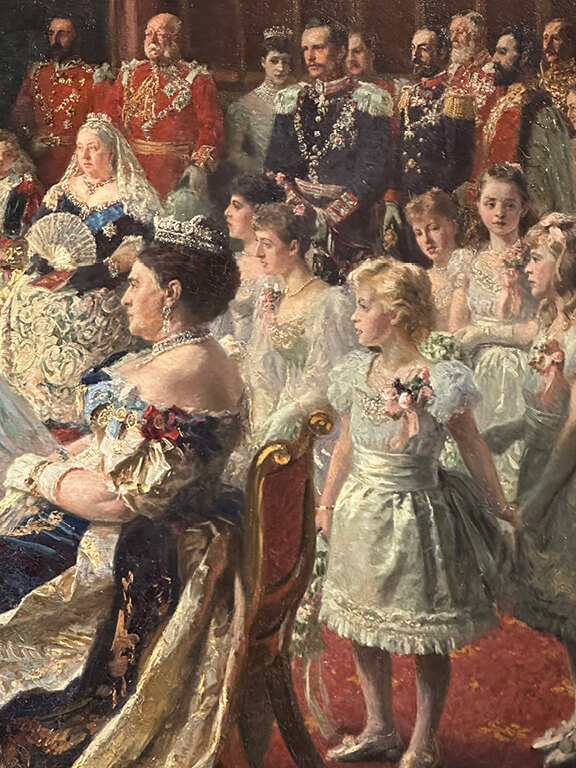
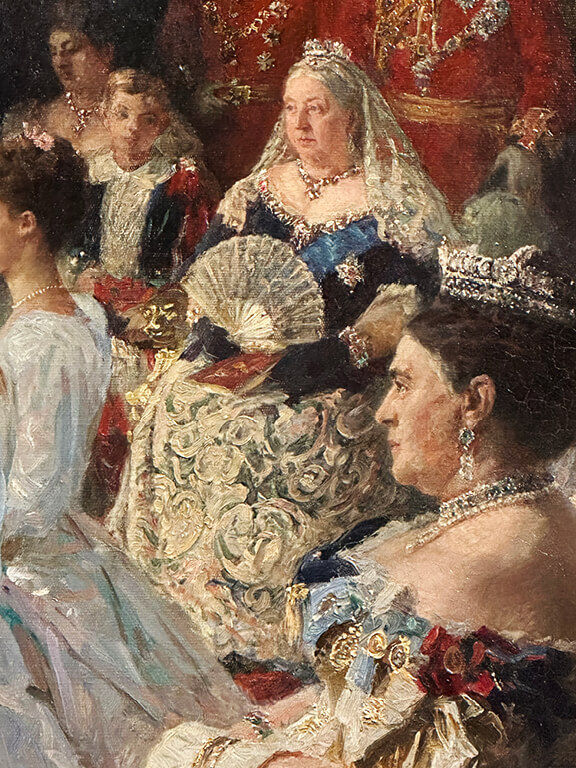
This painting shows the wedding of George, Duke of York, and Princess Mary of Teck at St James’s Palace—a place I’ve visited, but you’d never recognize it here because the room is packed with people. Tuxen fills the chapel with the full royal crowd: immediate family, extended family, and every senior courtier and official who had to be there. It feels less like a ceremony and more like a massive family gathering squeezed into one space. Queen Victoria sits near the front, painted with heavy strokes that build her lace, fan, and layers of ribbon. The bride kneels in her long white gown, and the thick paint shows how the satin catches the light. Around them, rows of women in pale dresses and men in red and navy uniforms form tight clusters.
A Strong Ceiling
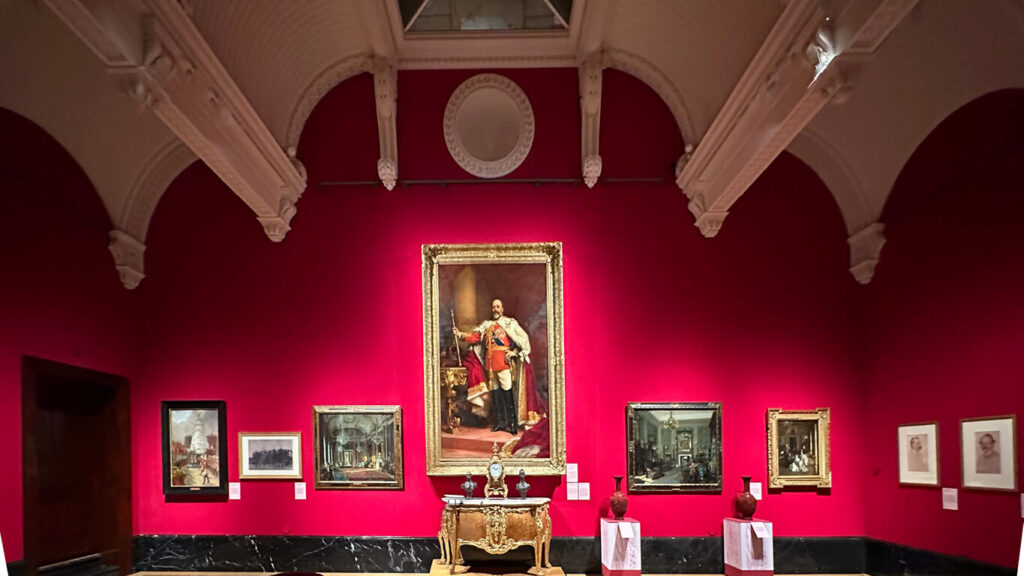
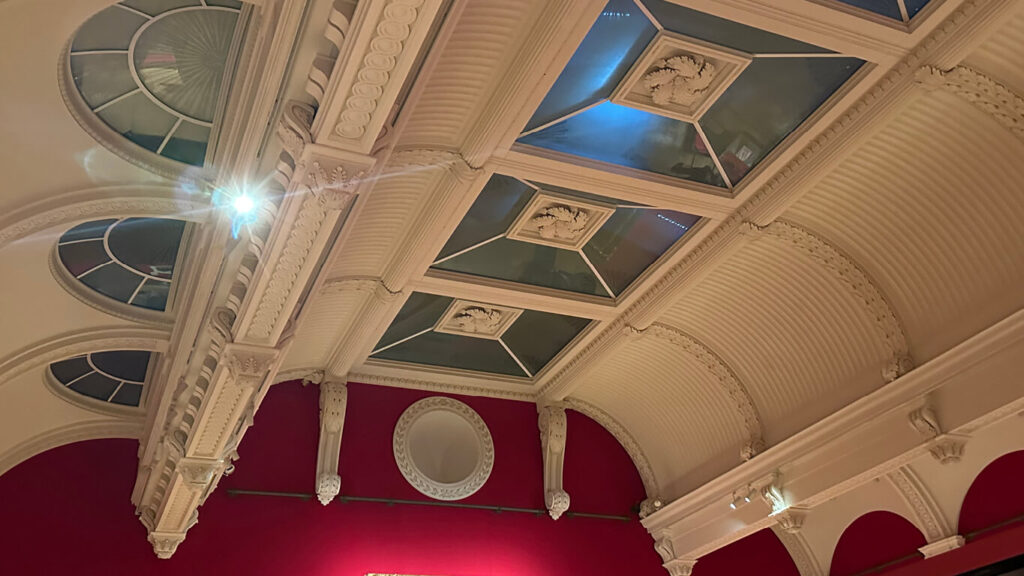
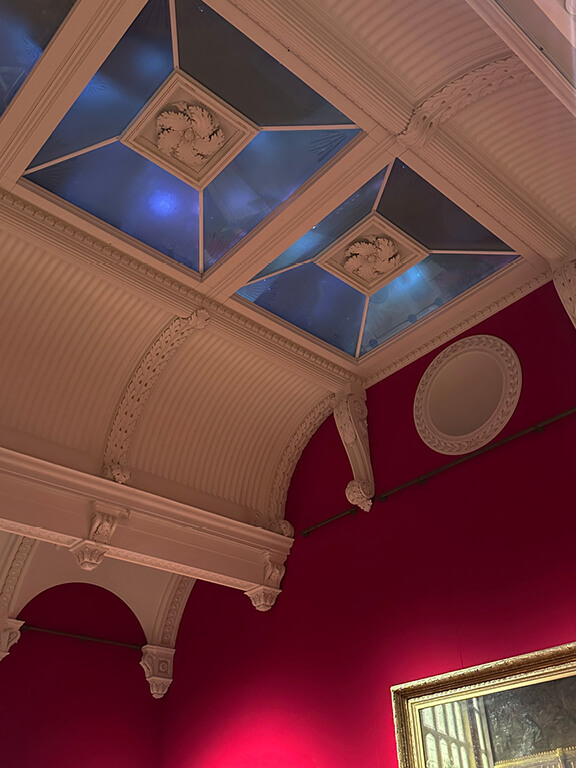
This red room sits under one of the strongest ceilings in the entire gallery. The arches rise high and meet a run of skylights framed by heavy plaster ribs. The light drops straight down without flattening the paintings, and the deep red walls create a regal backdrop. Paired with the black marble wall base, the colors and materials give the room real weight. The scale of the space can handle the oversized portraits and ceremonial scenes without feeling overfilled. The center stays open for glass cases and a few furniture pieces, and the tufted round banquette in the middle adds that classic bit of period flair. The ceiling height pulls your eye up first, and then the paintings take over. It’s a smart room for large, formal works, and the architecture holds all that visual drama without effort.

The Blue Gallery
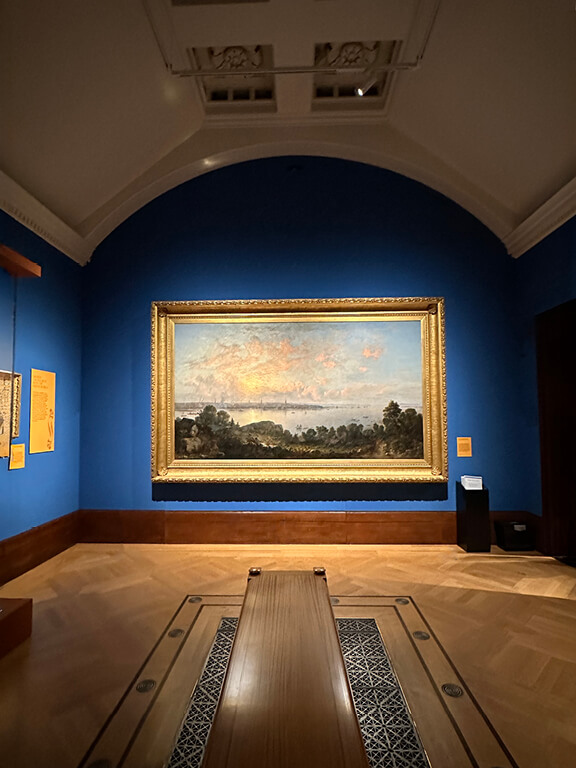
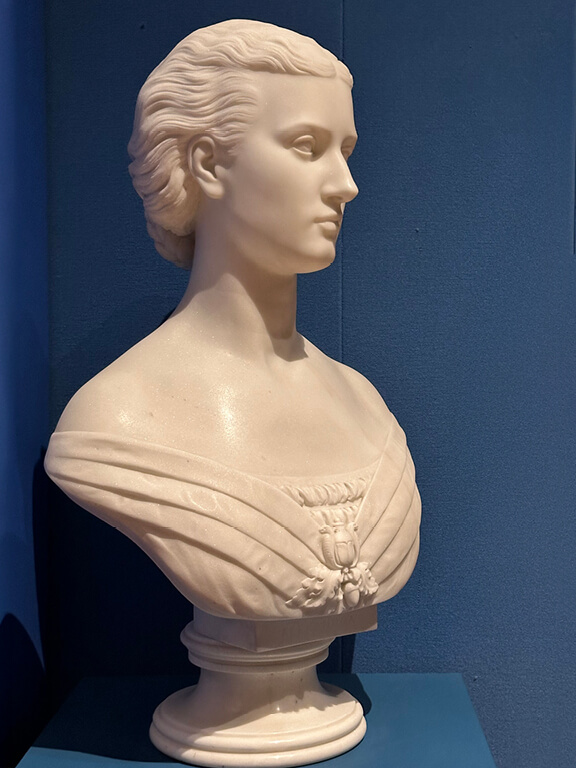
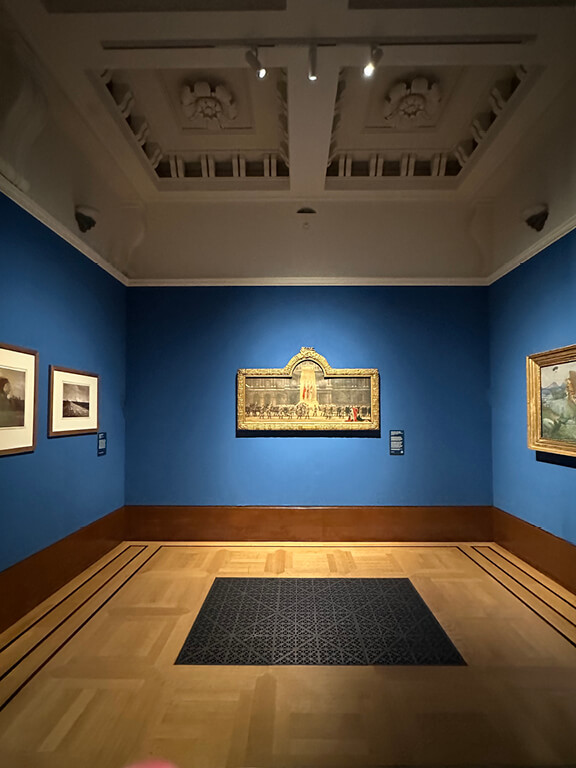
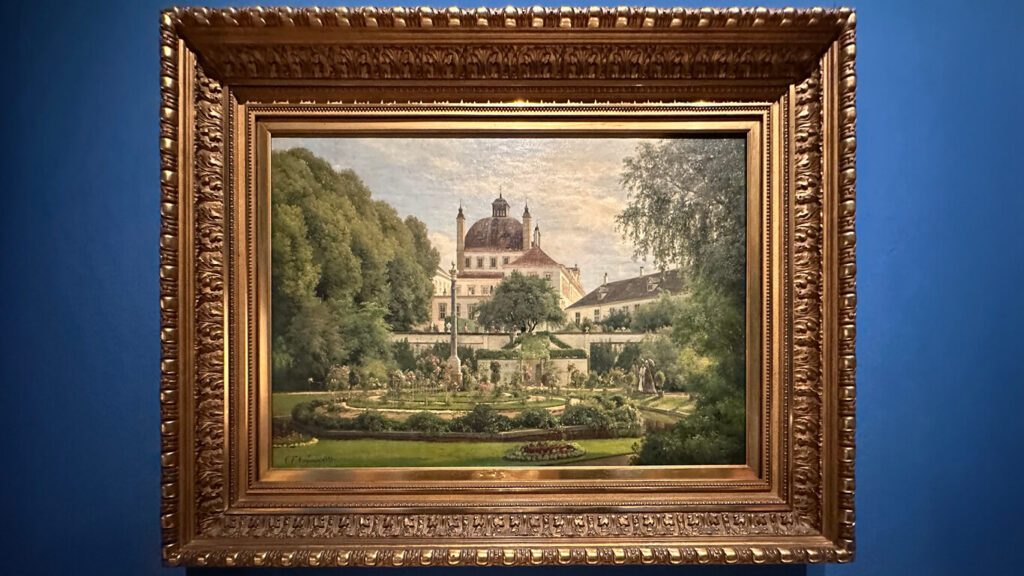
The Blue Gallery uses deep blue walls to frame a focused group of landscapes and marble busts. The color plays well with the ornate plaster ceiling, which has strong coffers, carved details, and deep ribs that catch the light. A warm wood wall base wraps the room and anchors the palette. The landscapes read clearly against the blue, especially the large Vienna landscape with its bright sky and dense tree line. The marble busts look sharp and bright, and the lighting hits the stone cleanly without glare. This room feels smaller and more controlled than the others, so each piece sits with more breathing room.
Family Jewels
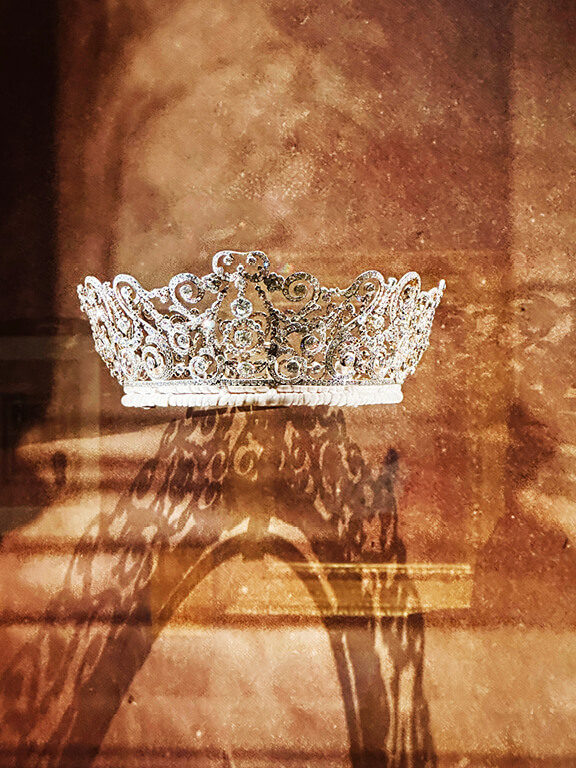
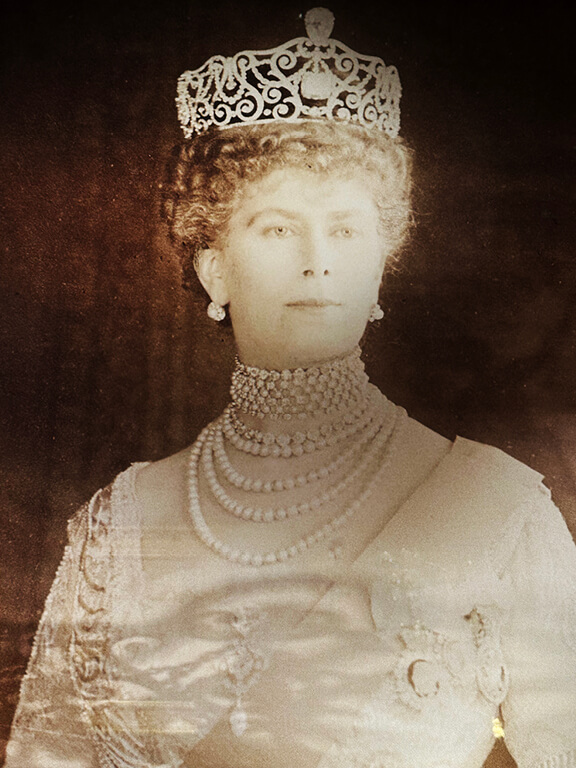
This section focuses on the people who defined the period, and it starts with Queen Mary. The archival photograph shows her in full court dress, wearing the stacked pearl collars she favored and the diamond tiara. The tiara itself reads as precise metalwork rather than a heavy crown. The open scrolls and tight clusters of stones create a clean pattern, and the lighting makes the structure easy to read. More on tiaras here — the Cartier kind.
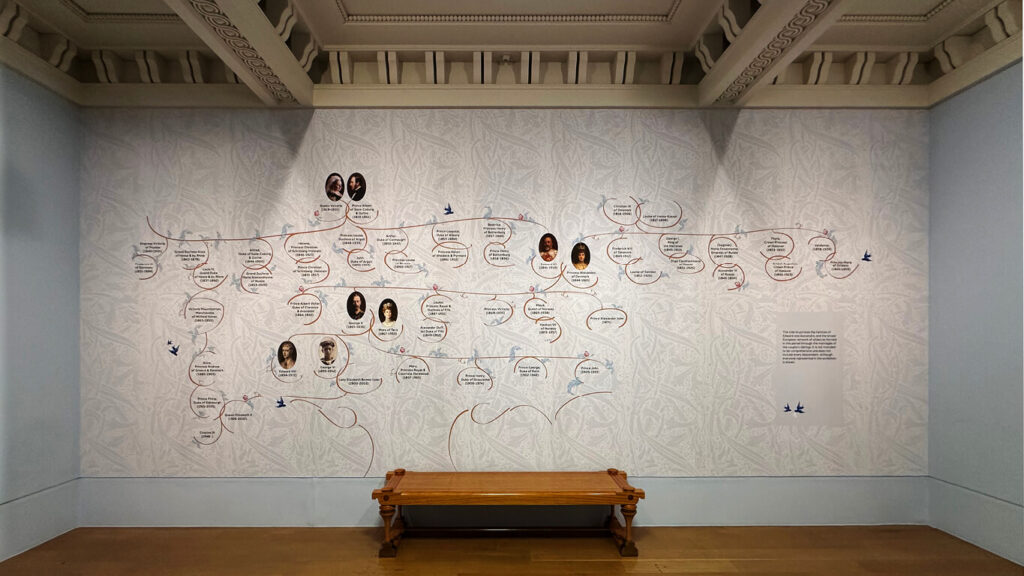
In another room, the exhibition expands into a full family tree. The graphic runs across the entire wall, so you can actually follow the marriages, titles, and generations. The portraits mark the key figures, and the line work keeps the branches organized, even with the volume of names. And it’s honestly a bit shocking, once you trace the lines, how many of them were related to each other. The bench is well placed, because you genuinely need a minute to take it all in.
Victorian and Edwardian London
Victorian and Edwardian London sit so close together that the architecture of one supports the story of the other, and much of it remains intact today. The buildings, not the portraits, are the real survivors, so it’s interesting to see the people behind the era that produced so much of the city’s fabric. This exhibition brings that world into focus through original works by Winterhalter, Rosa Bonheur, Tuxen, and more. Other artists like Sir Luke Fildes, Rudolf von Alt, J.M.W. Turner contribute, along with French fashion designers, Garrard & Co. jewels, and more. Beyond the paintings and gowns, the wider Royal Collection adds depth with Fabergé, Cartier objets, and historic porcelain and tableware.
Taken together, it’s a clear look at the individuals, the craft, and the design culture that shaped the period. A boring museum to some, but gold for me. The art, the fashion, the décor, and the building itself offer more than enough material to spark ideas. This is design tourism at its best, and exactly the kind of place I like for a good recharge.