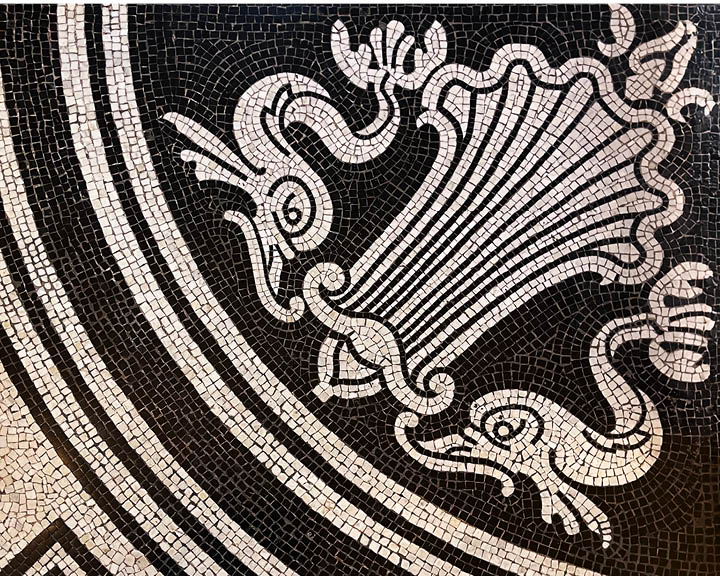
Victorian Tile Patterns at the V&A
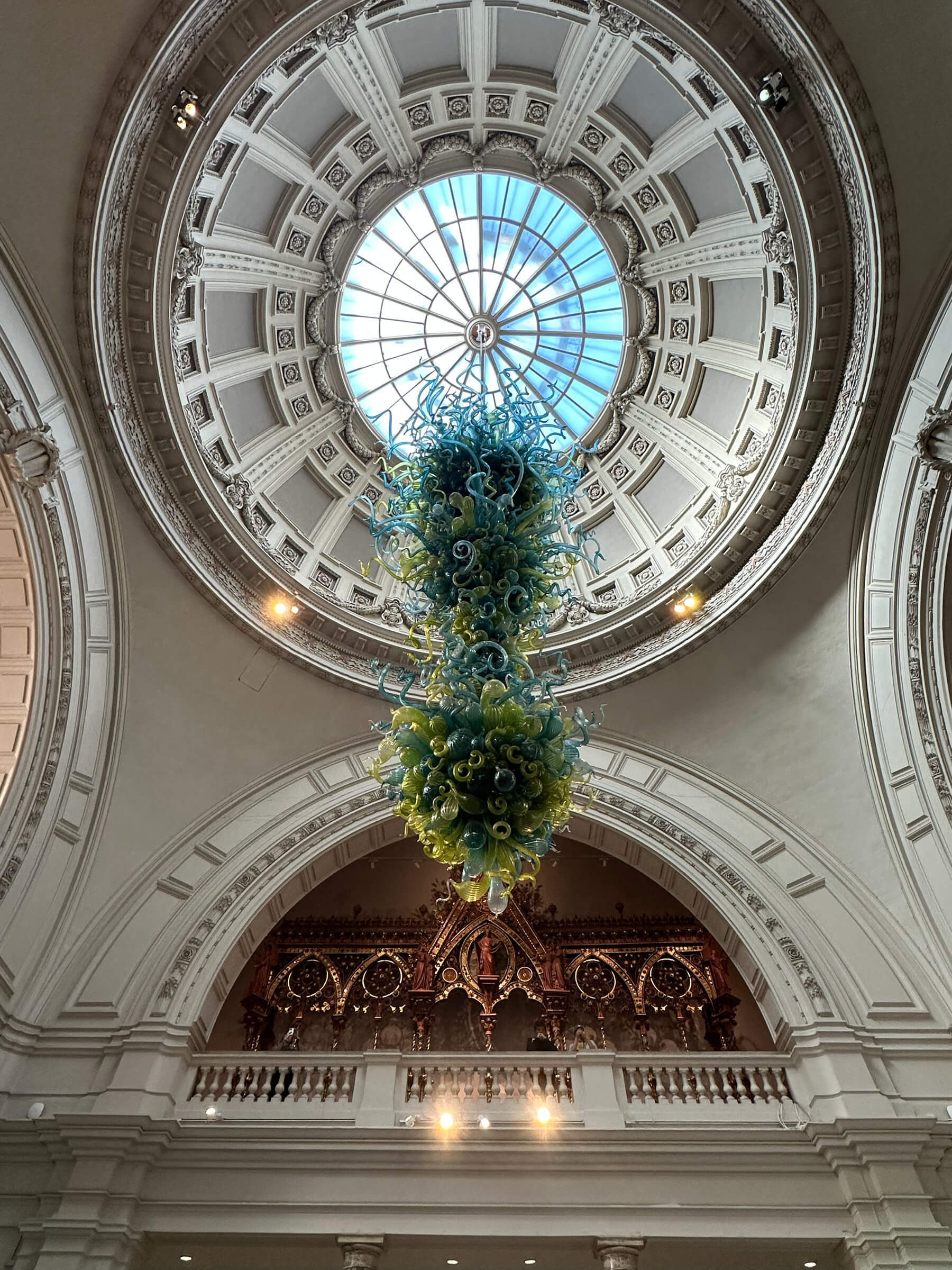
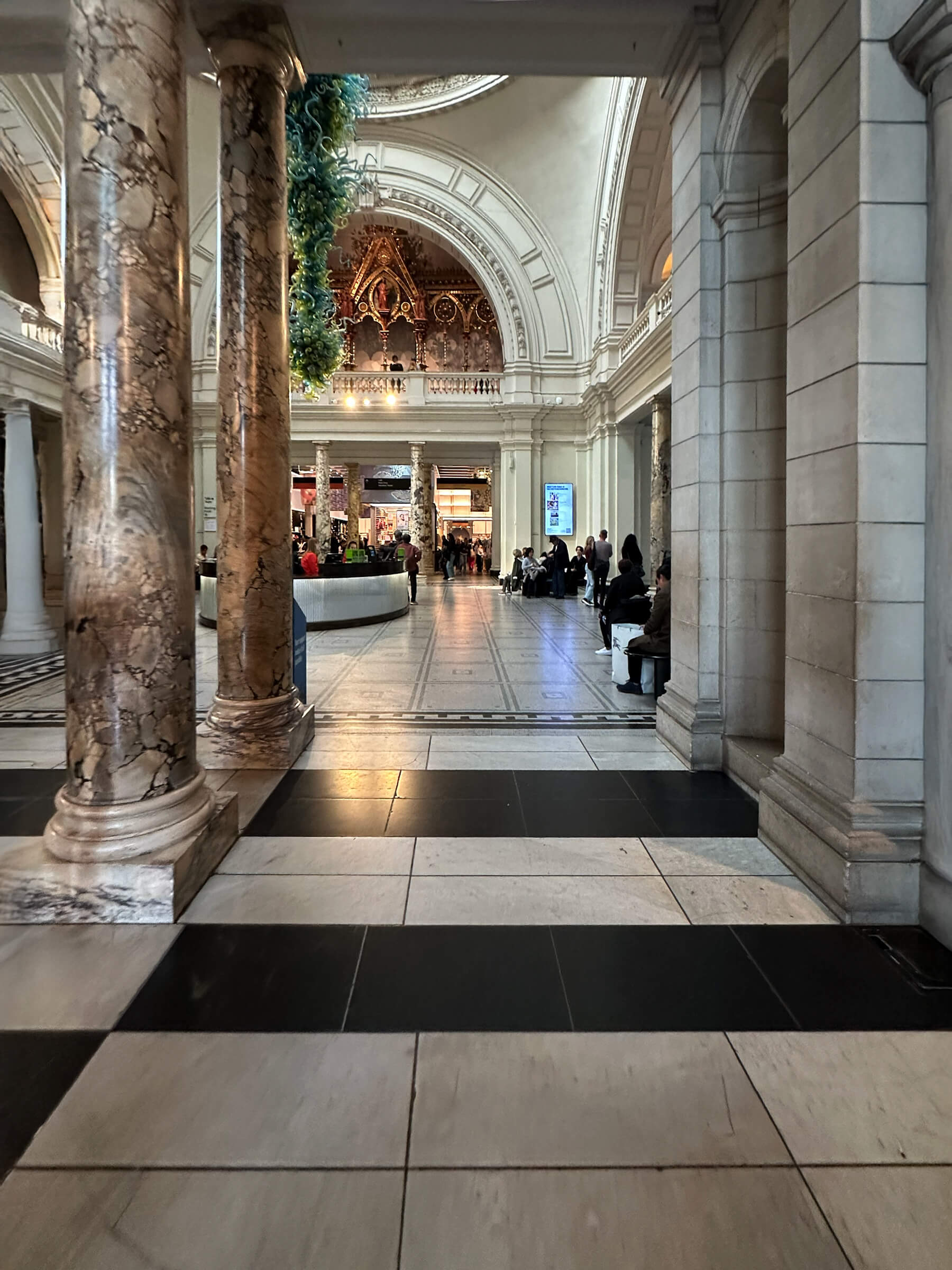
En route to the Cartier exhibit, I stopped at the main desk inside The Victoria and Albert Museum, and the flooring stopped me first—there’s always something in an old museum that gets me at the very first entry. Large stone pavers stretched across the hall, white and black beneath classic marble columns. The oversized Dale Chihuly glass sculpture hovered above the domed skylight at the main desk, but the floors pulled my attention. As I moved toward the exhibit, the mosaics began to appear, each one revealing a new tile pattern along the way. This quick post highlights the beauty of historic floors—large pavers, quiet mosaics, and colorful encaustic tiles—offering inspiration before I even reached the art or objects in the building itself.
Early Victorian Architecture
The large stone pavers set the foundation for the entire entrance. Early Victorian architects chose durable materials like marble and limestone, and the large scale makes sense in a building whose origins date to 1852. The foyer immediately impresses: marble columns rise in succession, and the dome-skylight above the main desk floods the space with light. Grand classical arches frame the approach, echoing the museum’s formal entrance design by Aston Webb. As you step in, the feet meet the floor first, and you sense that everything above—the archways, the dome, the light—exists to highlight the ground beneath.
Quiet Tiles: A Softer Feel
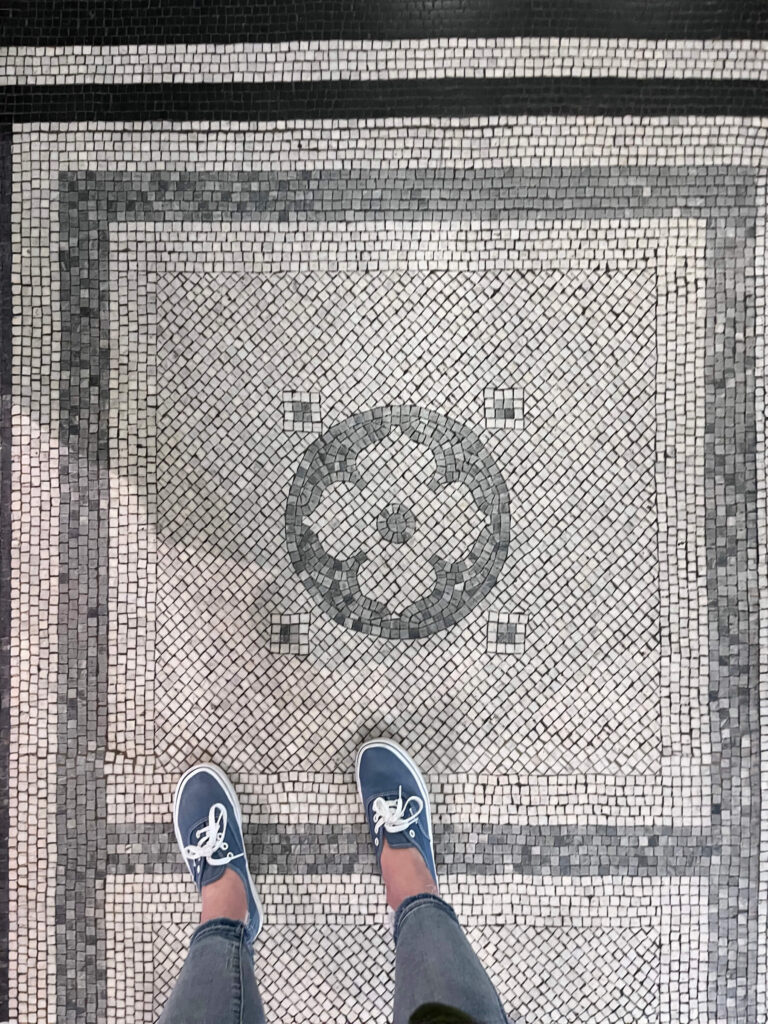
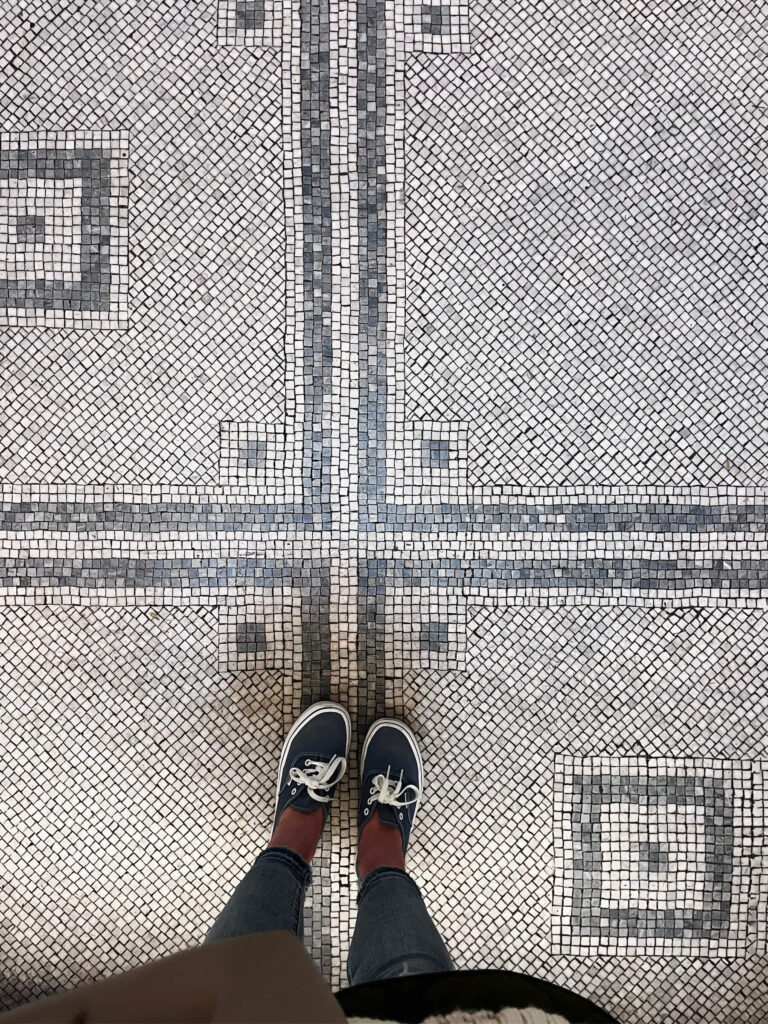
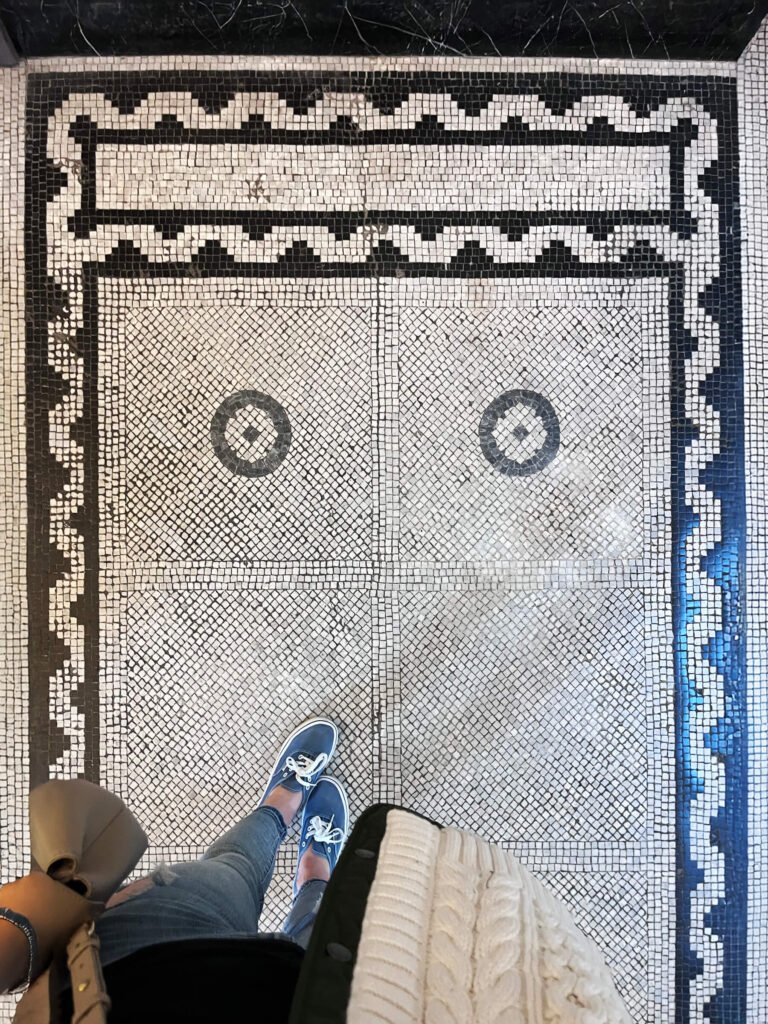
The next floor felt softer. White and light grey tiles created a quiet rhythm under the arches, and the pattern held steady until a thin line of black slipped into the design. The palette stayed neutral, but the scale shifted just enough to catch the eye. The geometry still took the lead—circles, squares, and bordered groupings of both—and the whole layout worked like a visual reset before the bolder patterns appeared. I always expect the classic black-and-white mosaic, but the light grey felt fresh and offered a welcome break for the eye.
Graphic Force
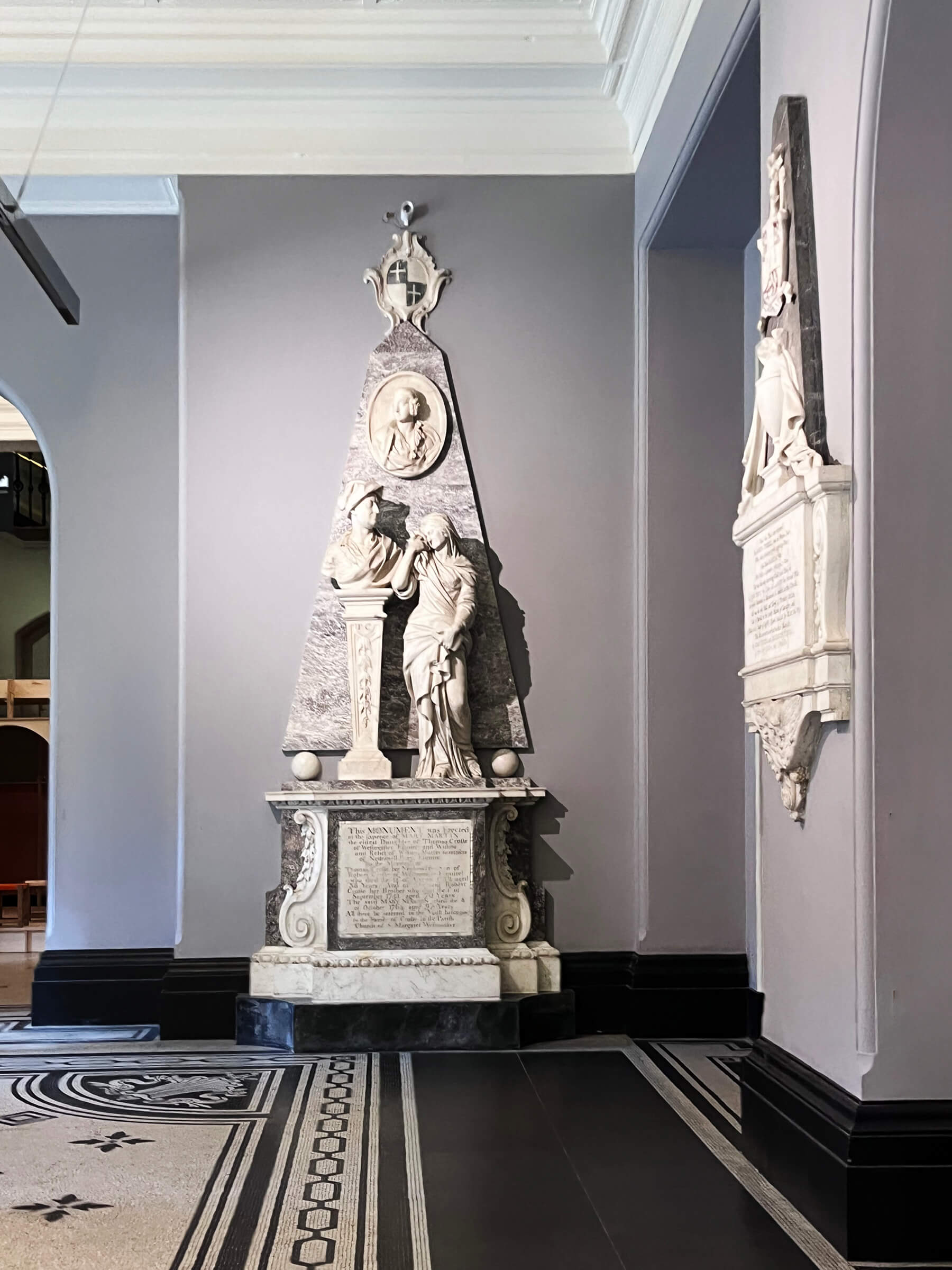
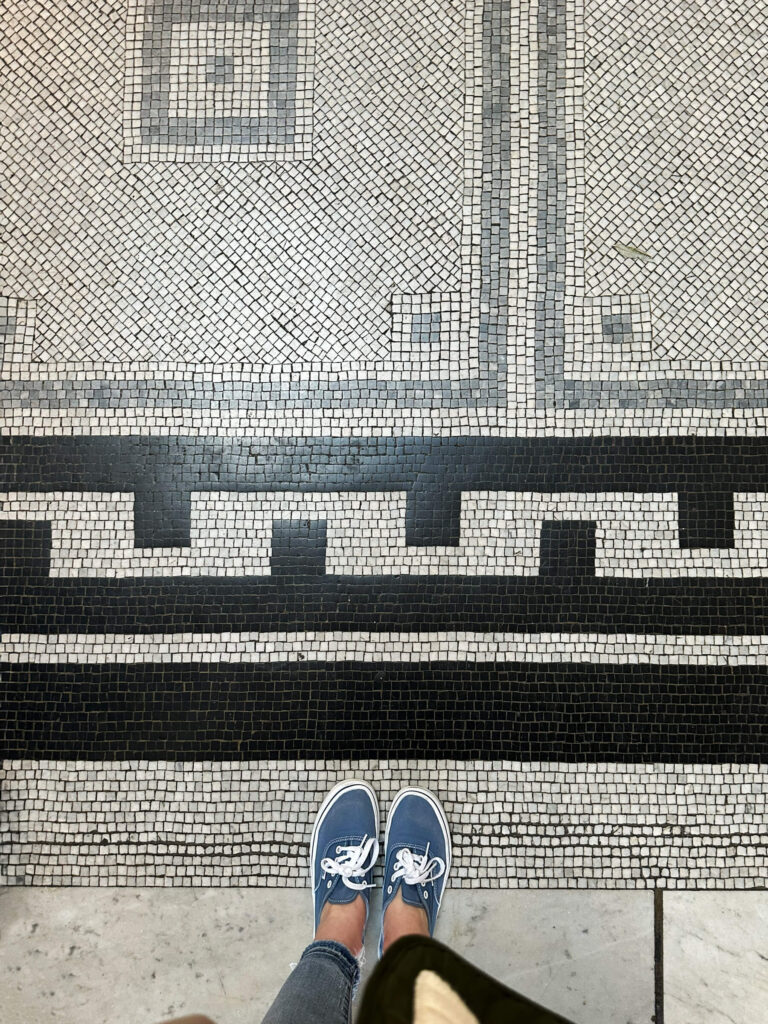
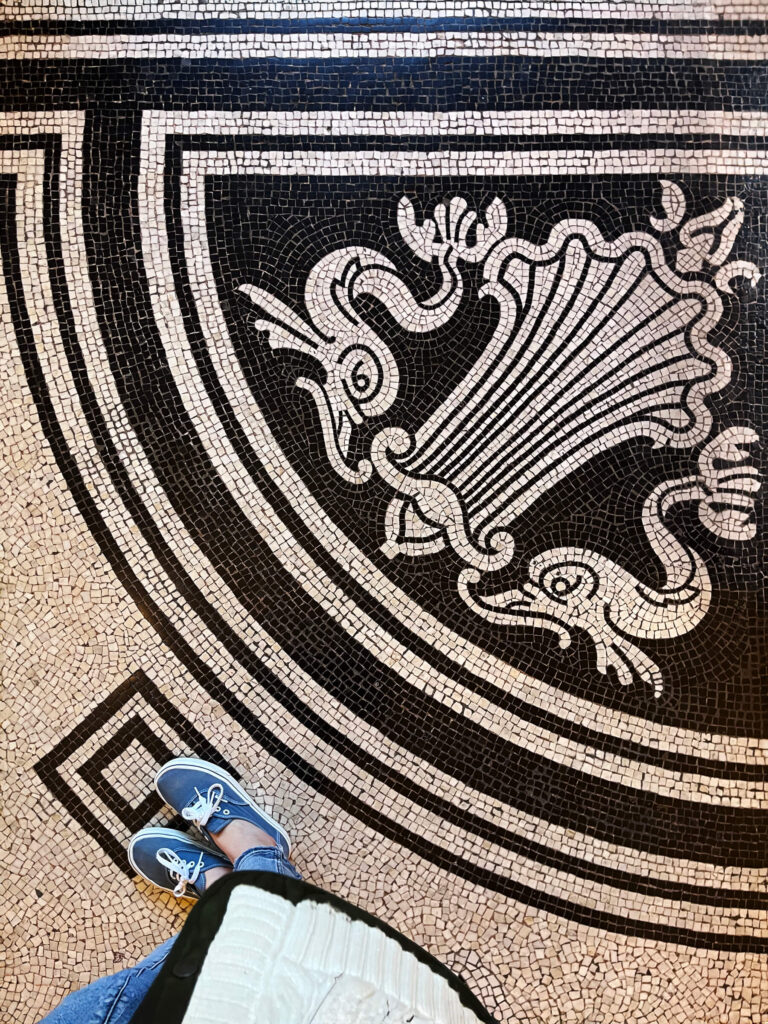
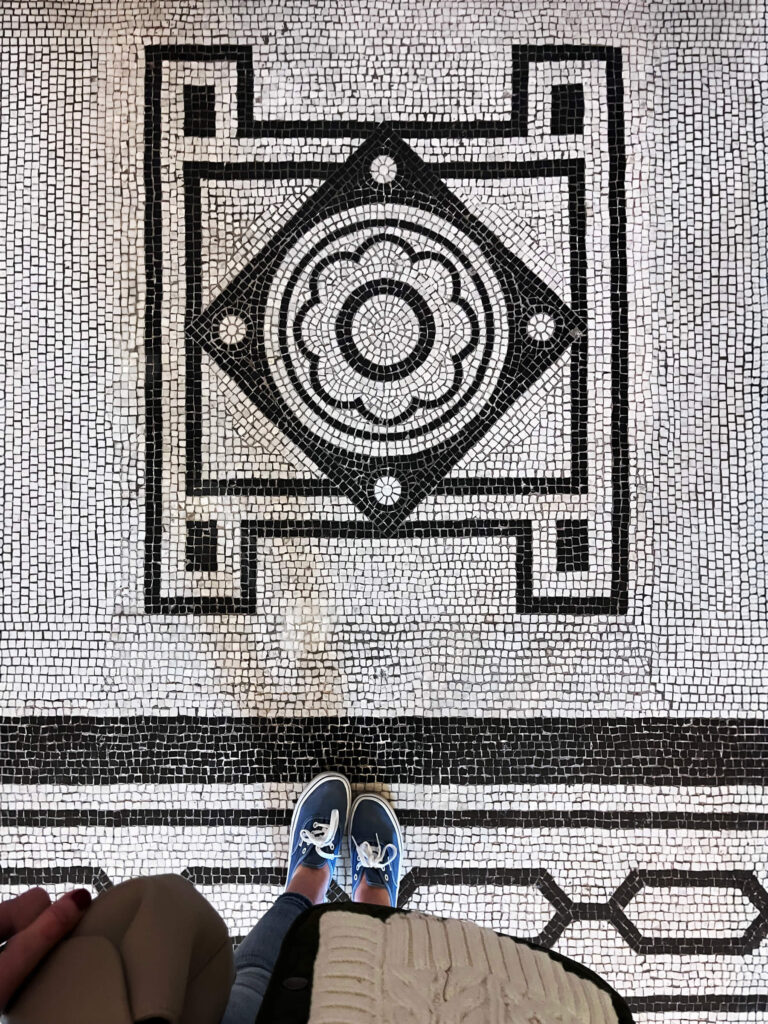
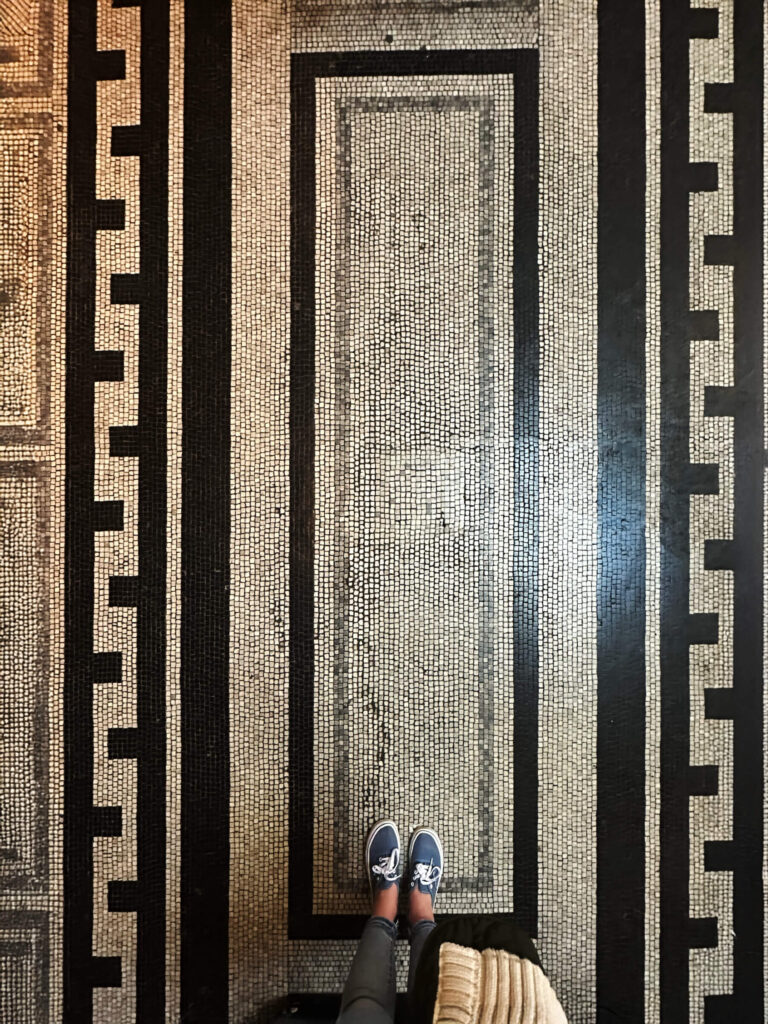
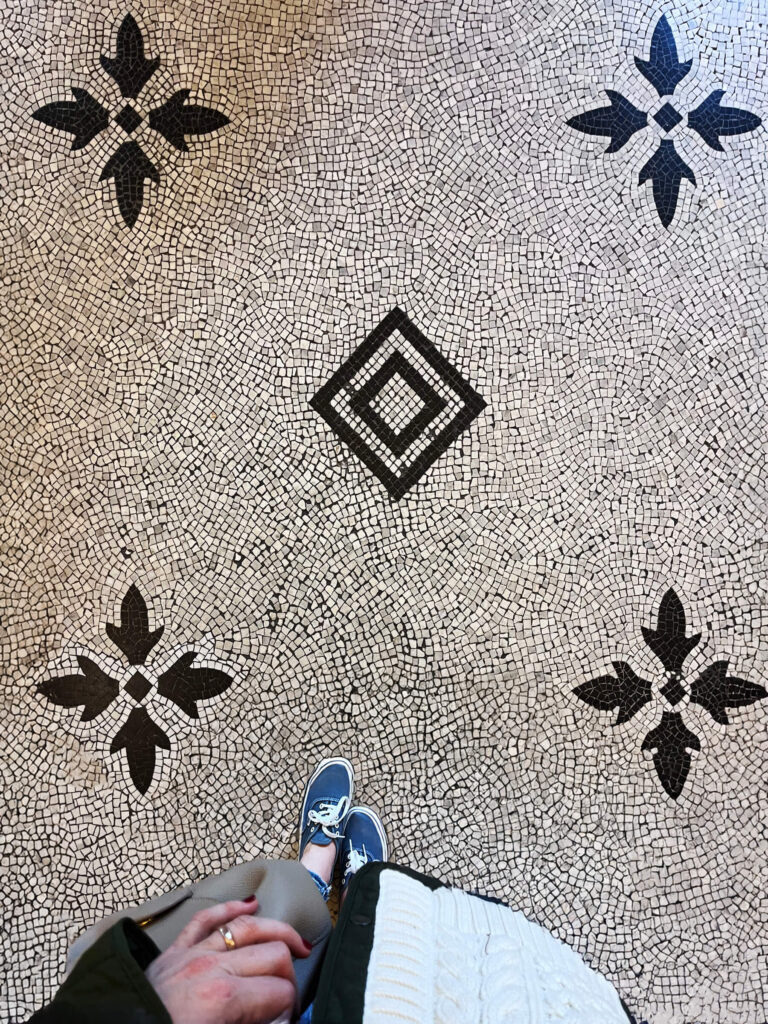
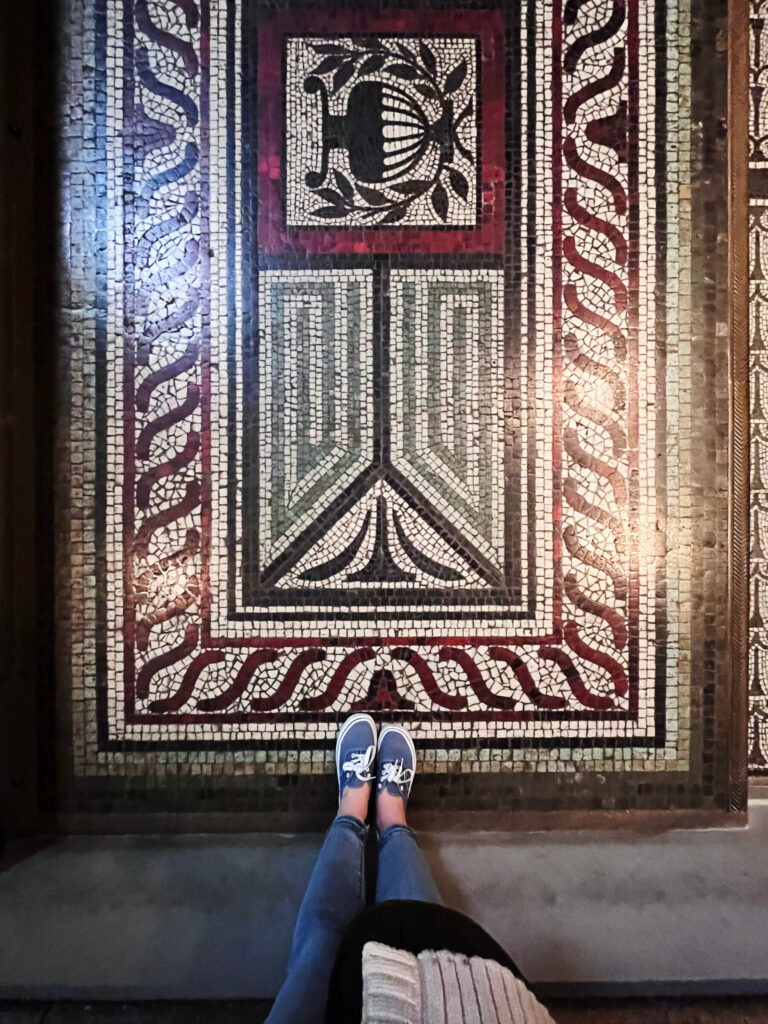
The black-and-white mosaics shifted the mood instantly. These tiles carried real graphic force, and the contrast hit hard the moment I stepped into the corridor. A Greek fret border framed the layout and grounded the geometry. Inside that border, the patterns multiplied—floral motifs, tight grids, concentric squares, and small repeating shapes that felt almost mathematical. Every turn revealed a new version of the same idea. The museum holds so many black-and-white patterns that you start to recognize a language of Victorian geometry, each floor with its own dialect.
A Modern Shift
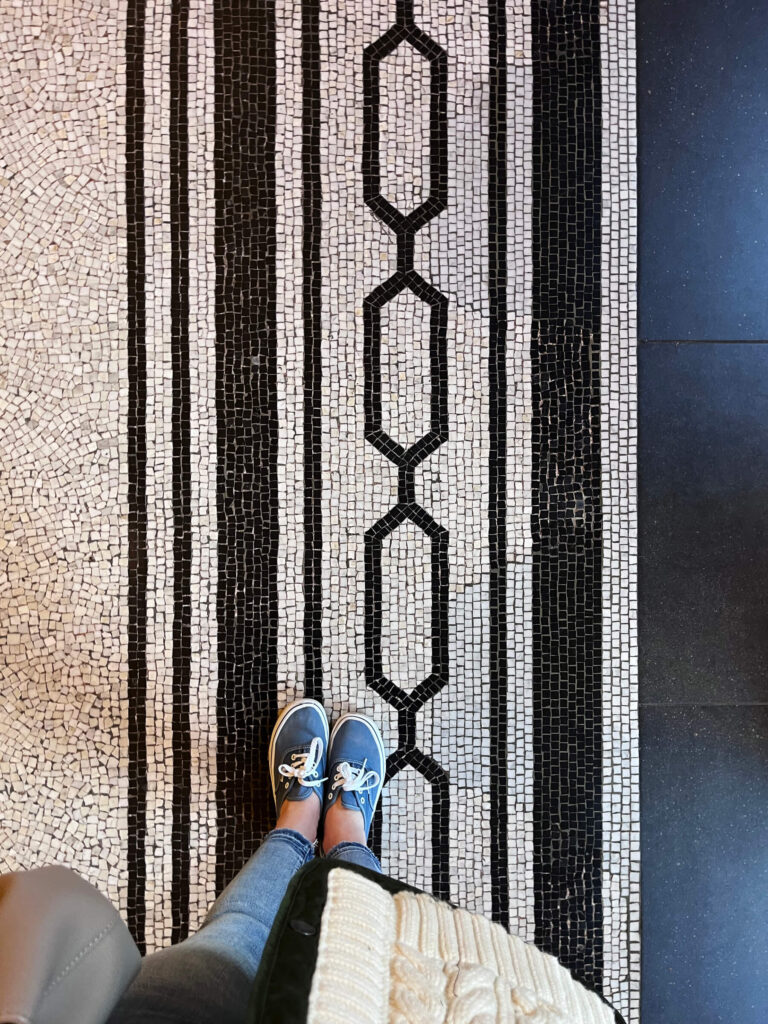
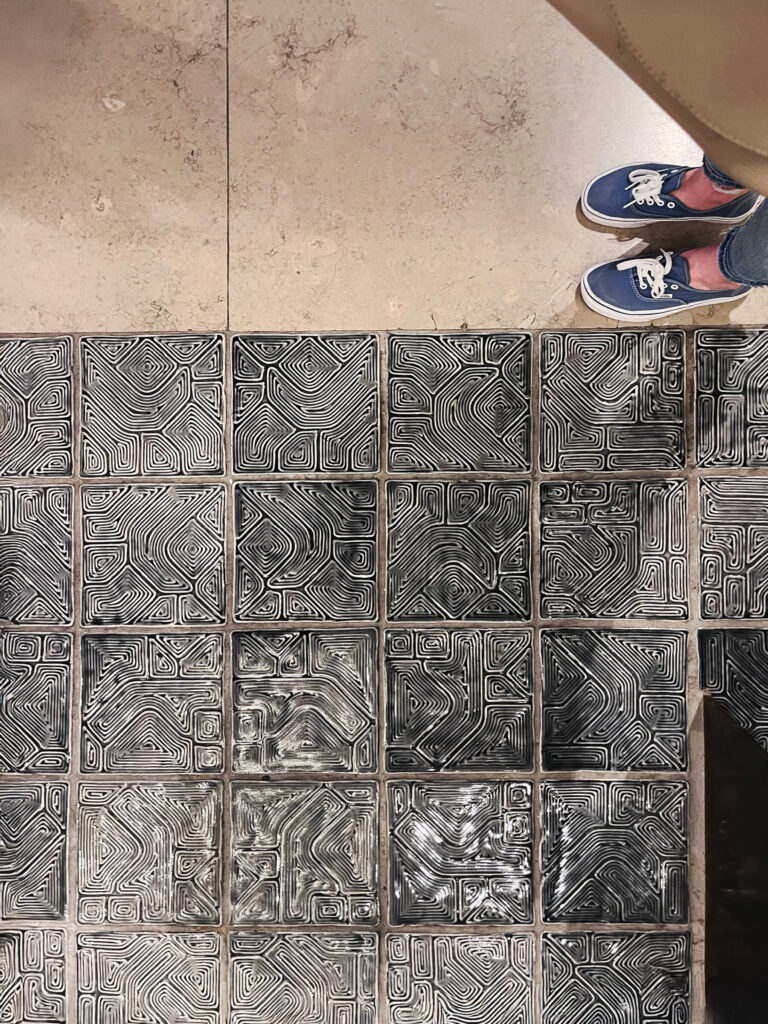
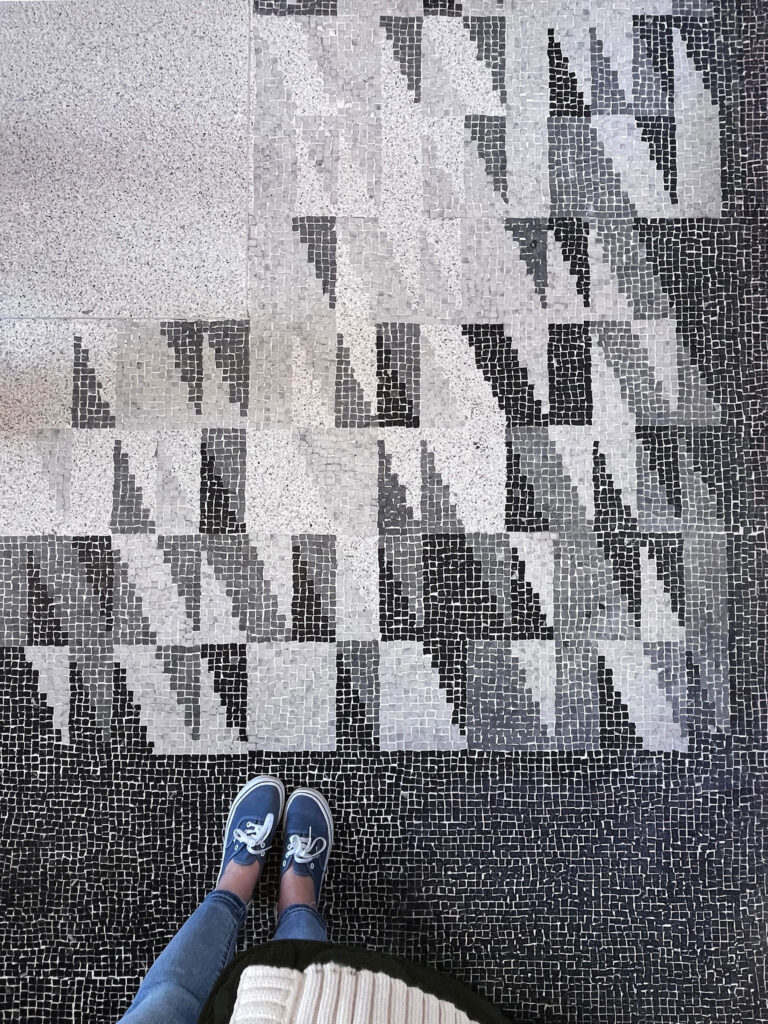
Then the building shifted again. The newer corridors introduced modern interpretations of the historic floors, and the change felt immediate. Light grey, white, and black tiles formed crisp geometric layouts with sharper edges and more open spacing. The patterns nodded to the Victorian originals but stripped away the ornament, leaving a cleaner, more contemporary rhythm. These halls moved differently, and the updated floors marked the transition into the museum’s newer wings without losing the connection to the past.
A Full Hit of Color
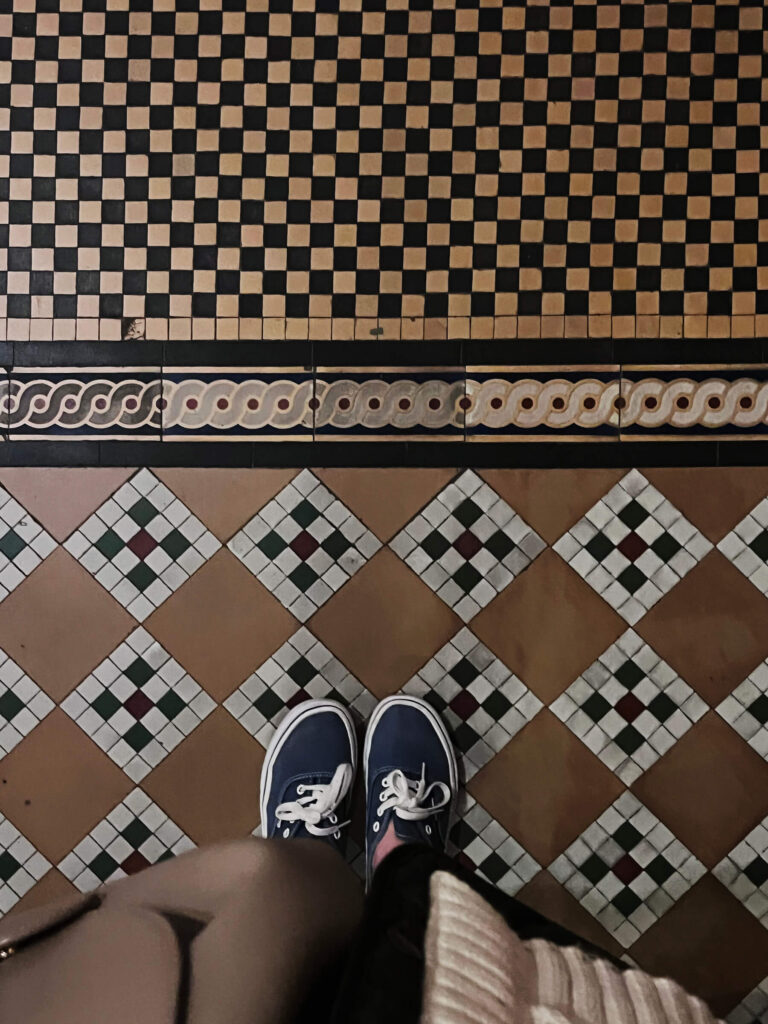
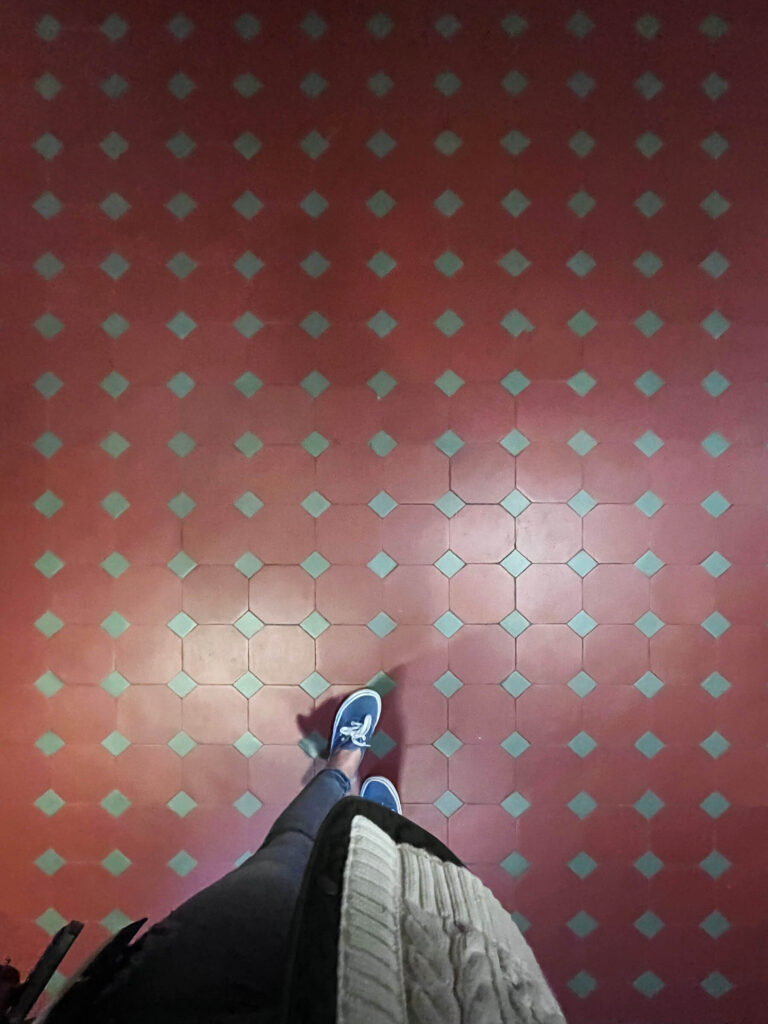
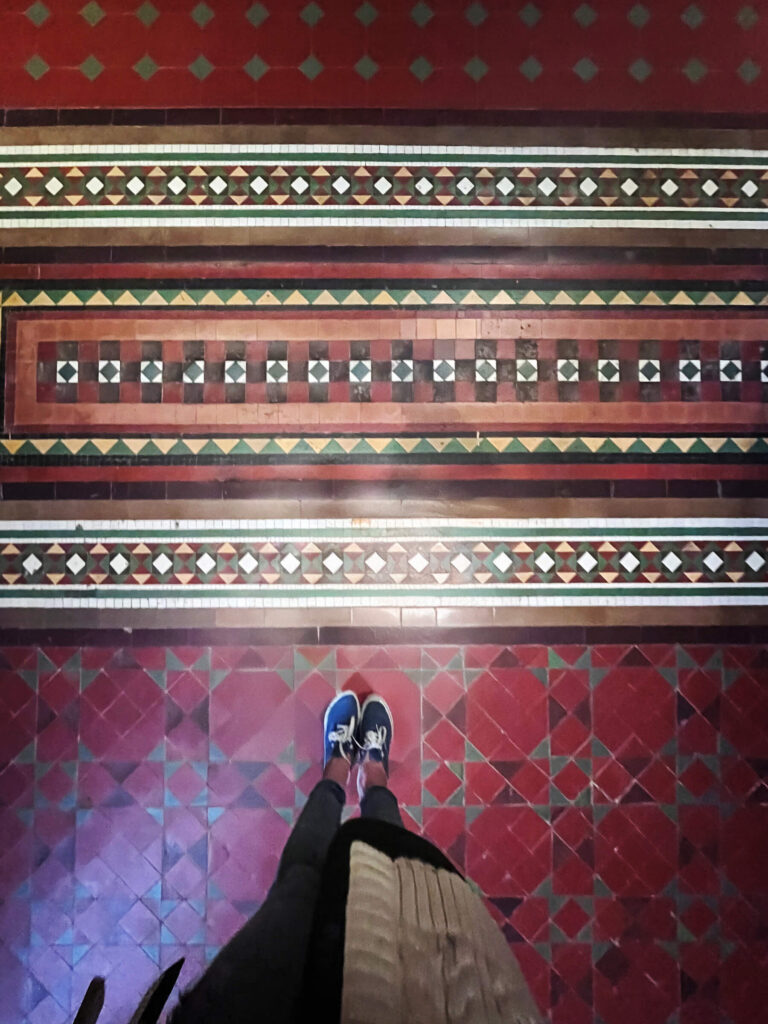
The last stretch brought a full hit of color. Red, green, camel, black, and white encaustic tiles wrapped the stairwells and landings, and the shift felt dramatic after so many neutrals. The patterns carried that confident Victorian energy—bold shapes, layered borders, and saturated tones that held their ground against the architecture. Every step revealed another detail, and the palette worked harder than any of the quieter floors. These tiles came from the museum’s earliest era, and they still deliver the same punch they did more than a century ago.
The Small Details
We travel for cool ideas, and the V&A’s floors offered as much inspiration as the exhibits themselves. The mix of geometry, color, and history felt like its own design lesson (beyond the art itself). If you want to see more of how travel shapes the way we work, explore our Design Tourism page. Or, if you love the way historic details guide modern projects, visit our Historic Homes Design page. Even in a museum filled with masterpieces, the small details—like the flooring—still spark the best ideas.